01/
Contact
02/
About
Célio Braga is a multidisciplinary artist
whose/career has been marked by his ability to redefine and to expand
conventional categories such as photography, painting, drawing, textiles and
sculpture, making reference to a broad spectrum of visual language and
traditions of making.
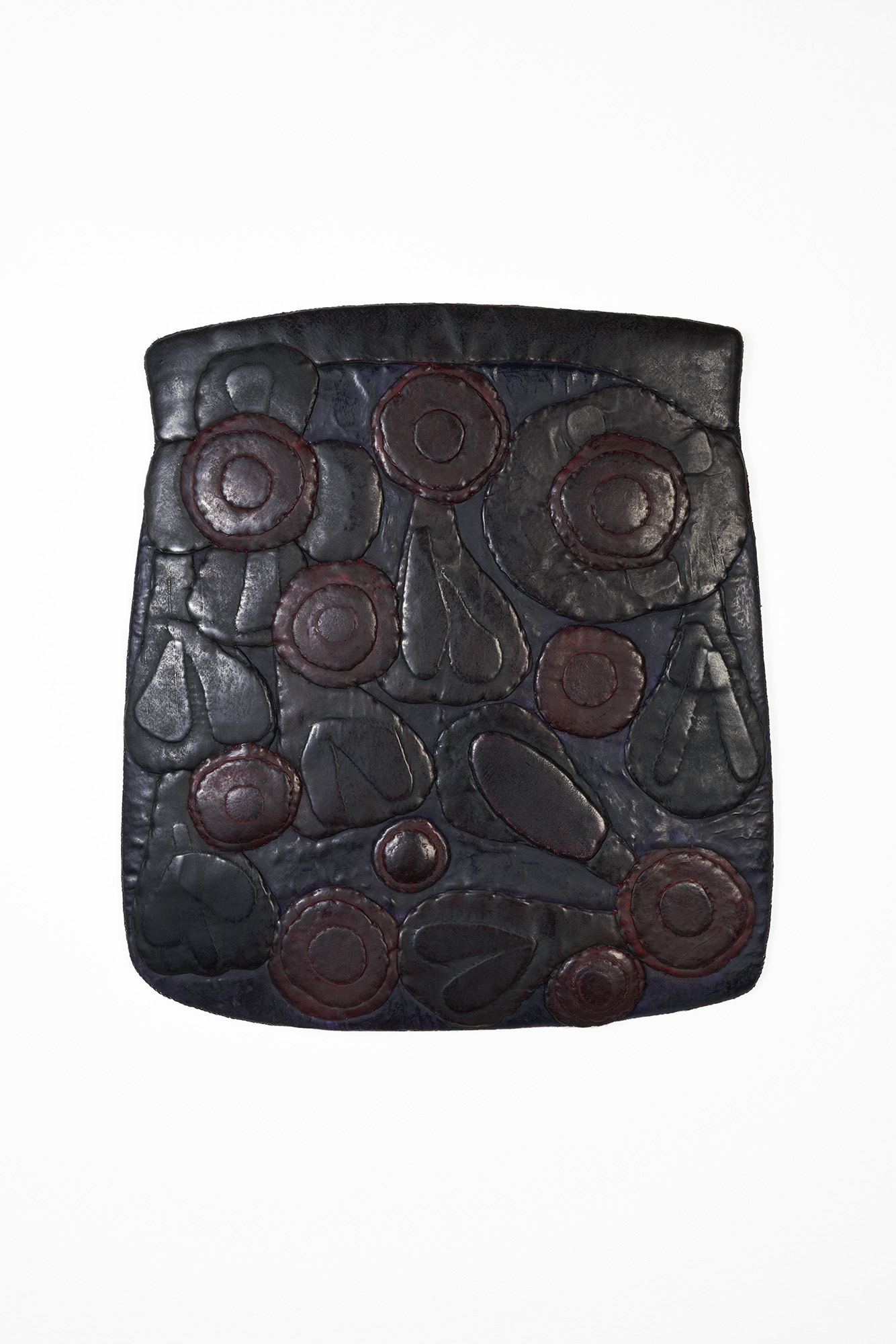
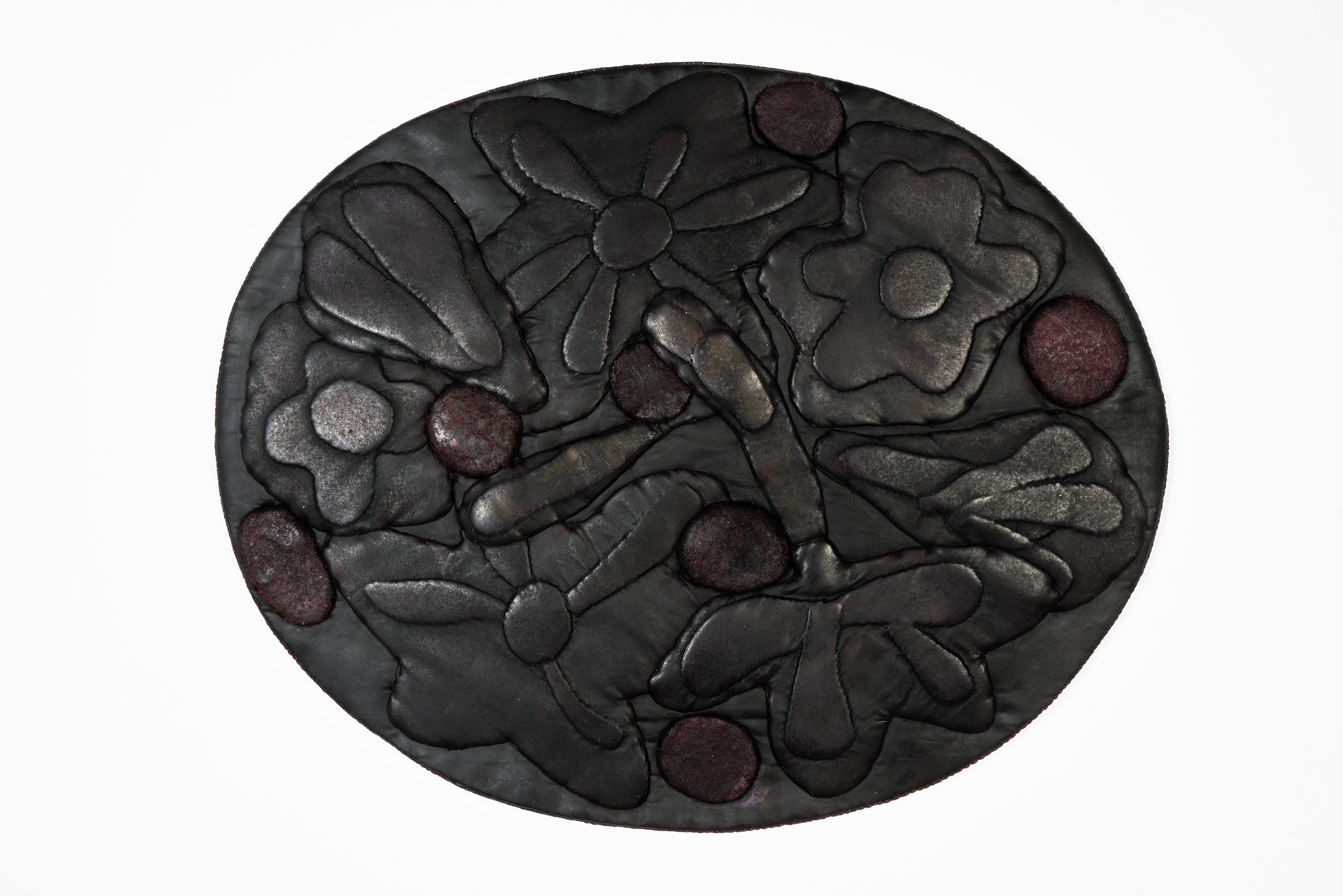
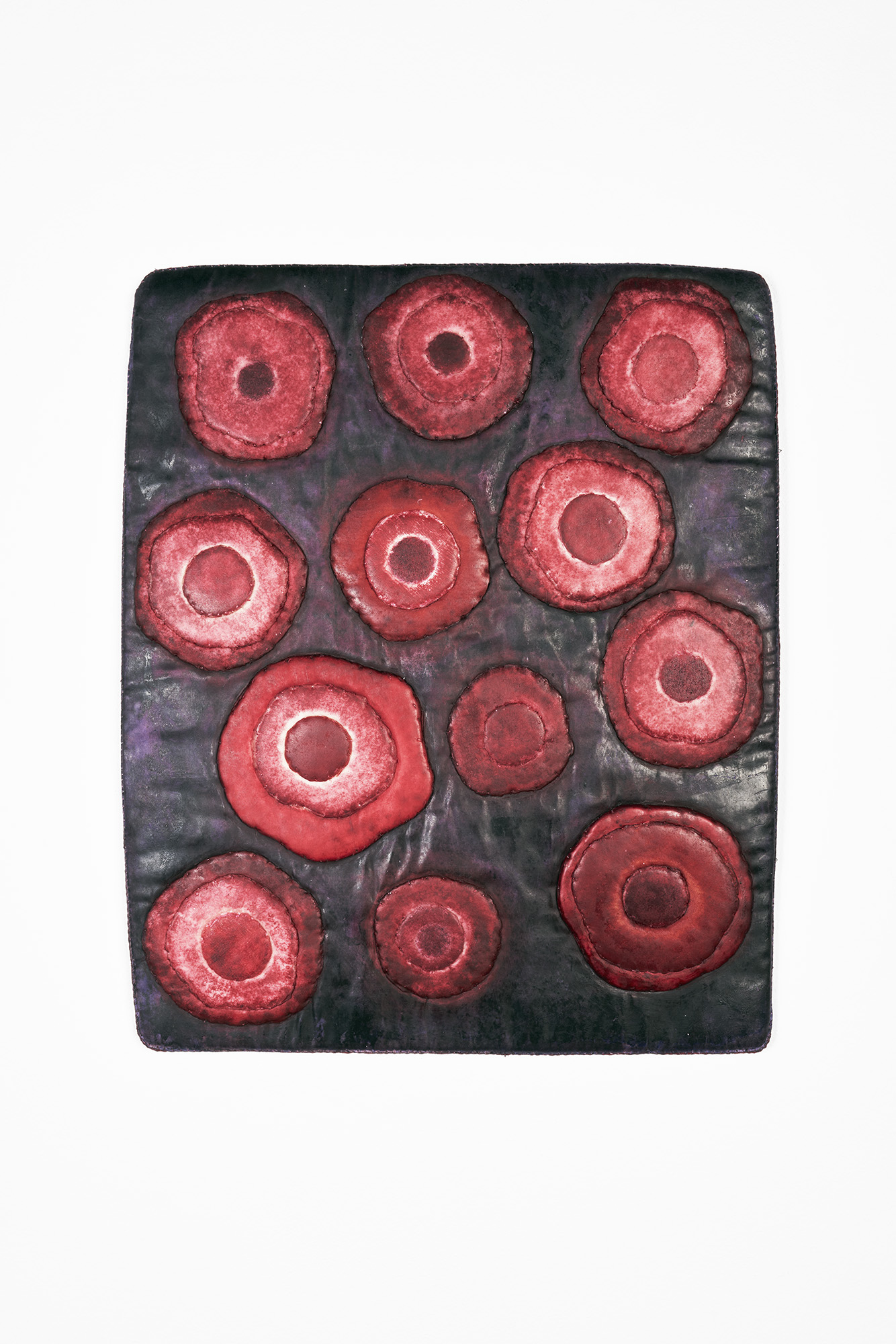
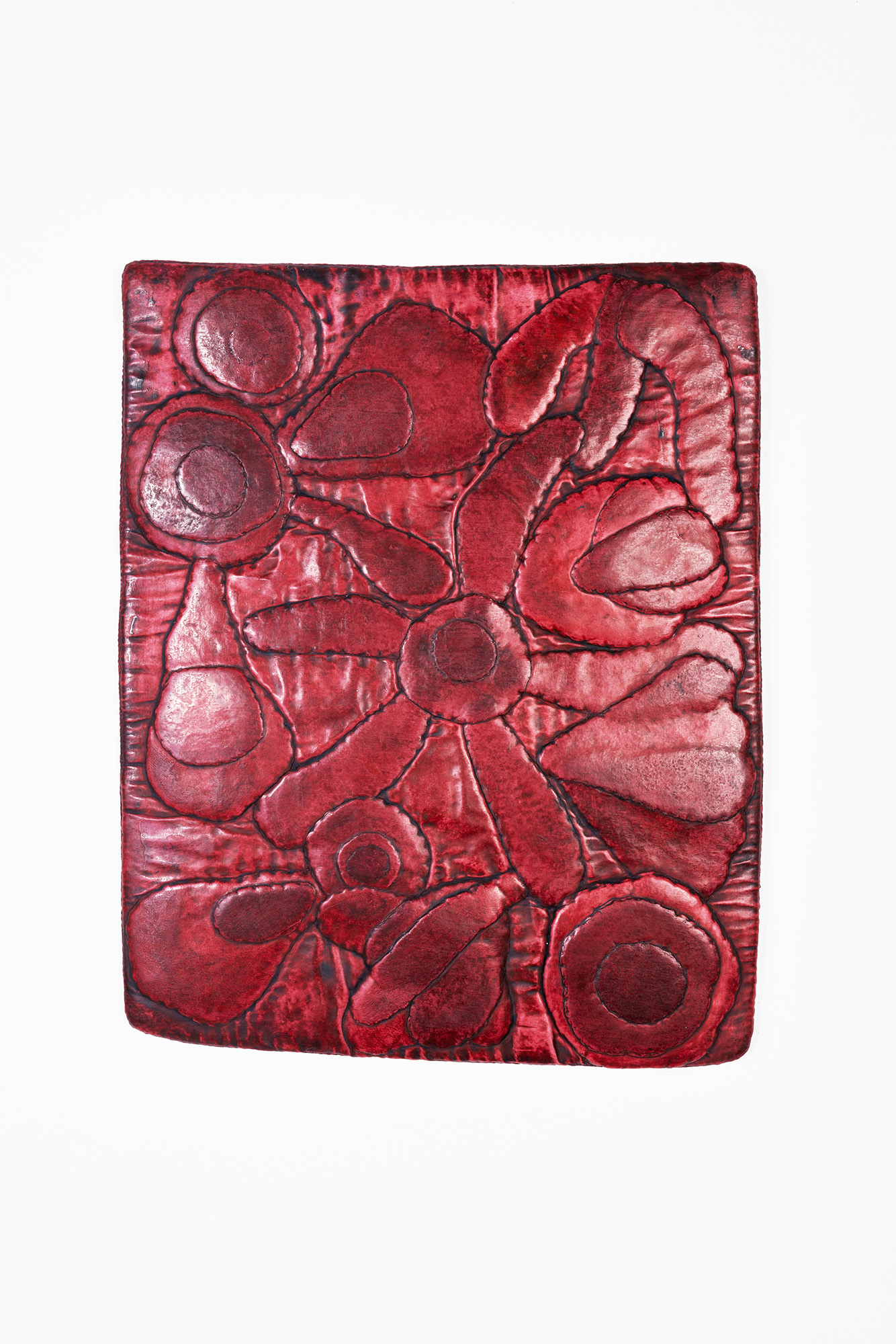
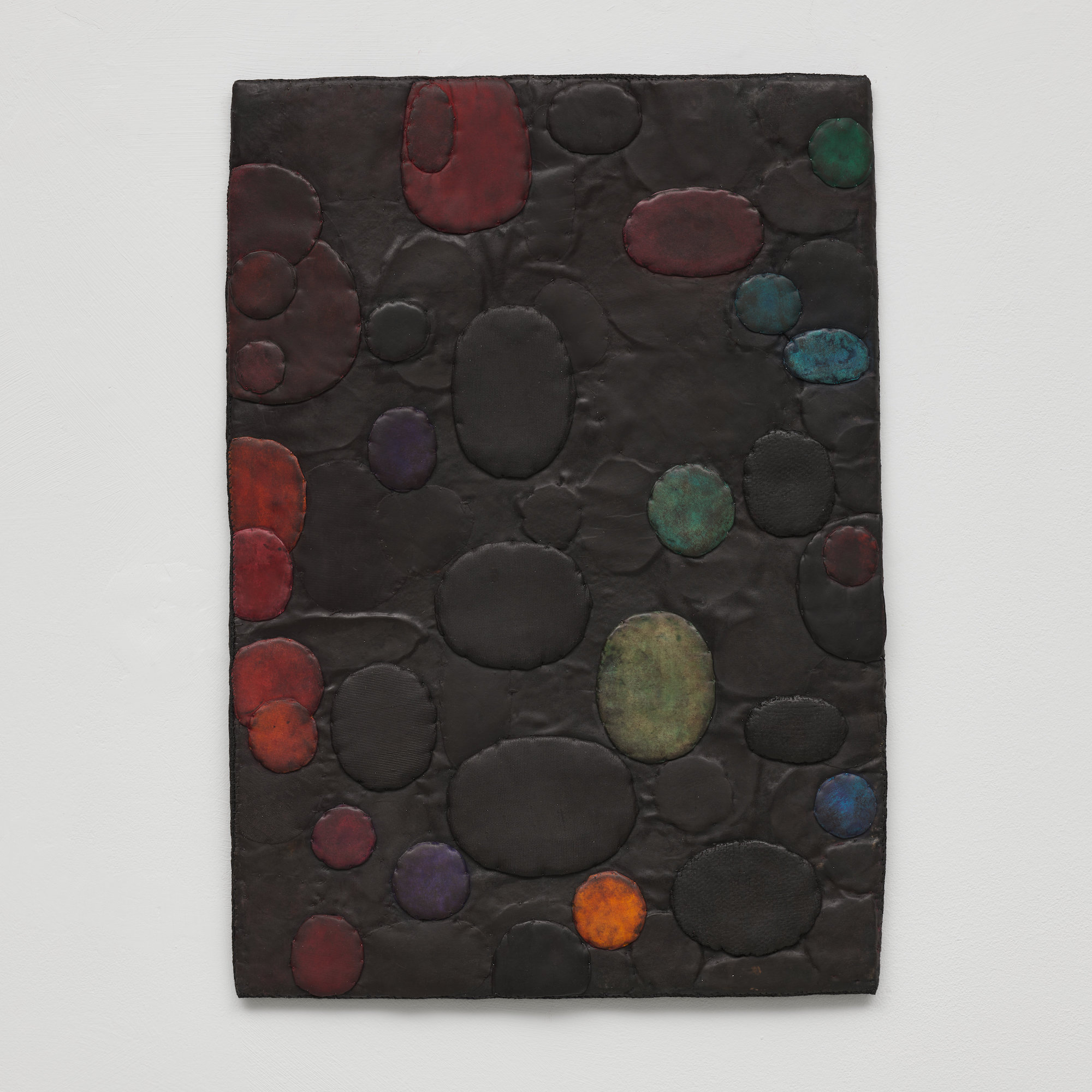
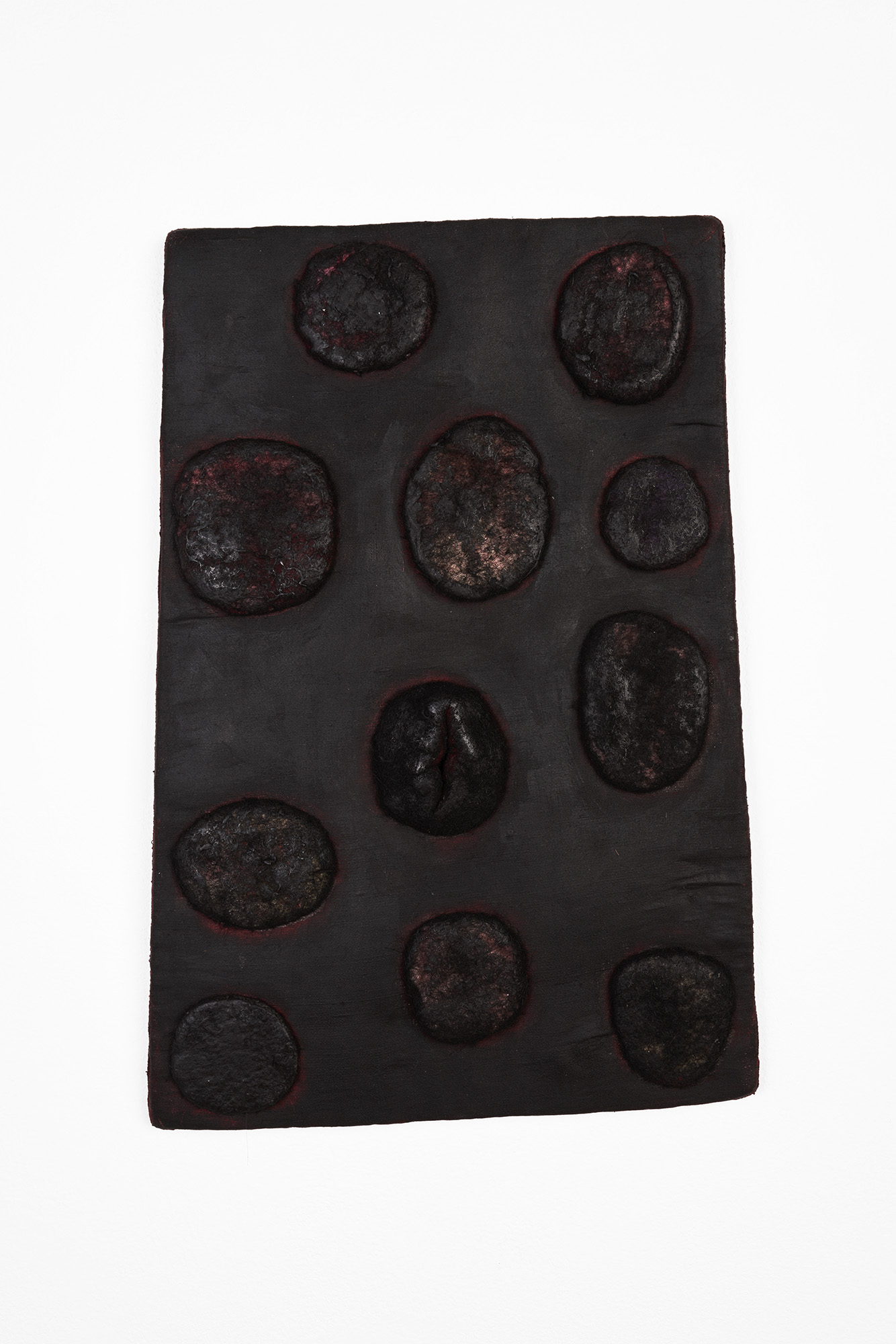
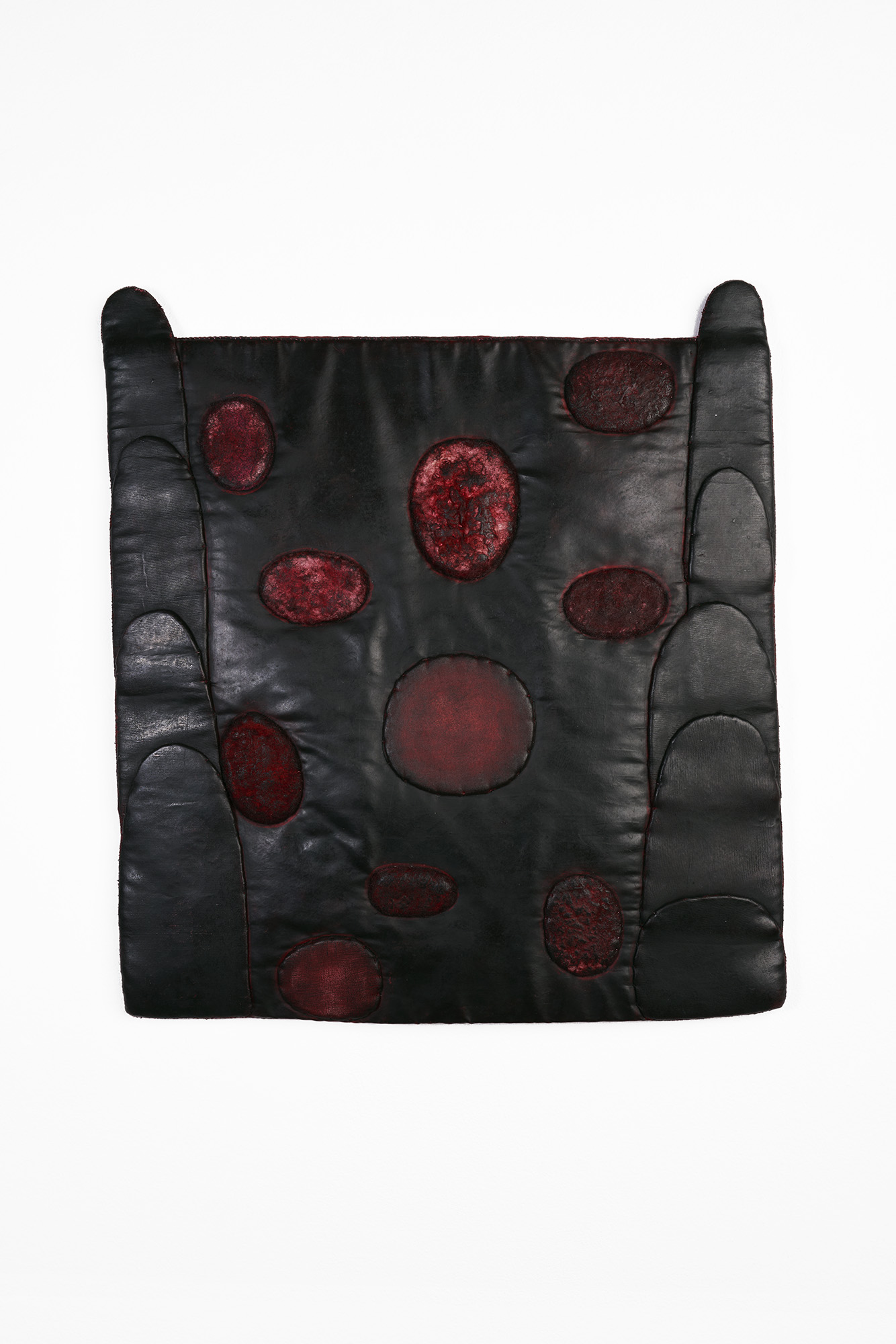
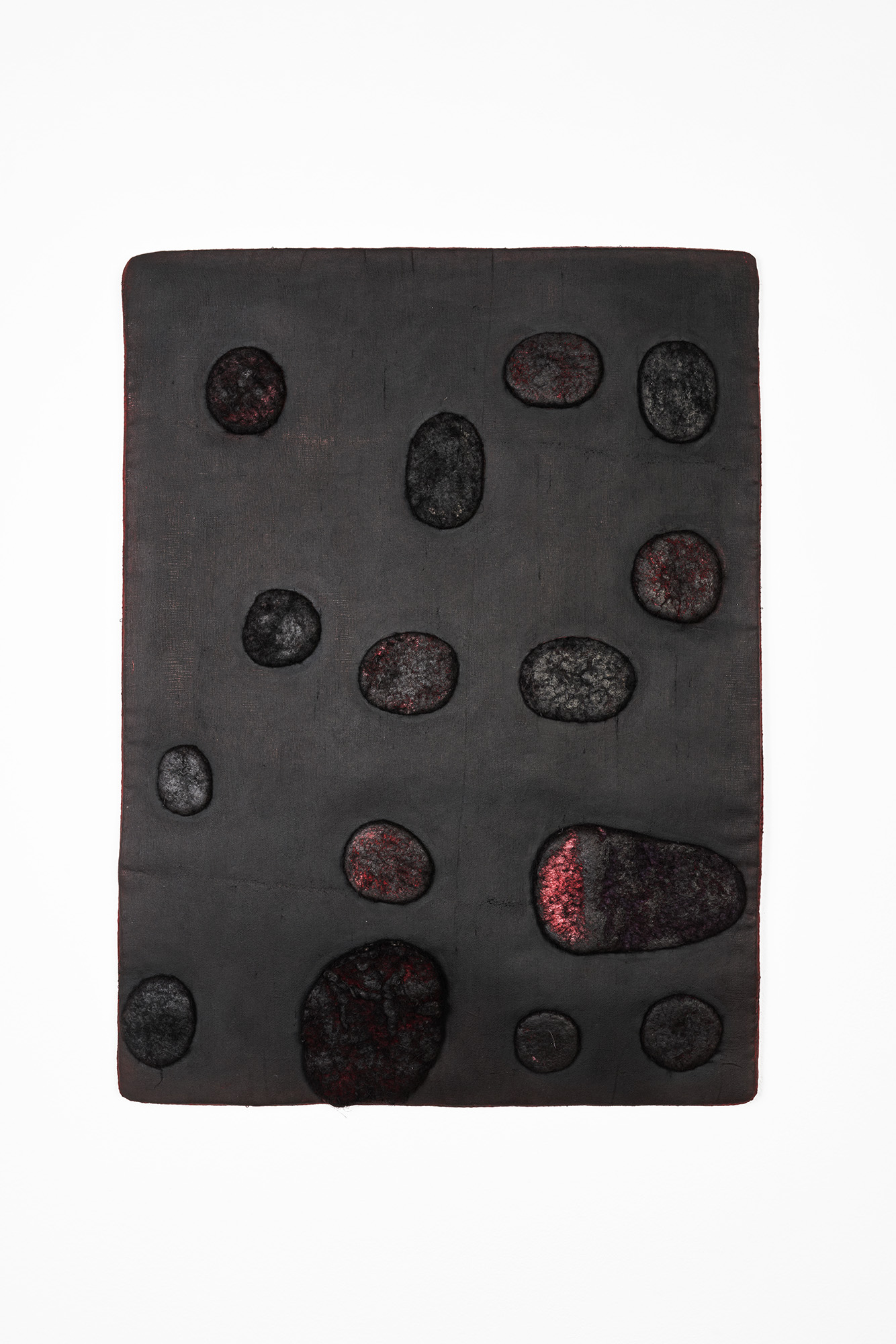
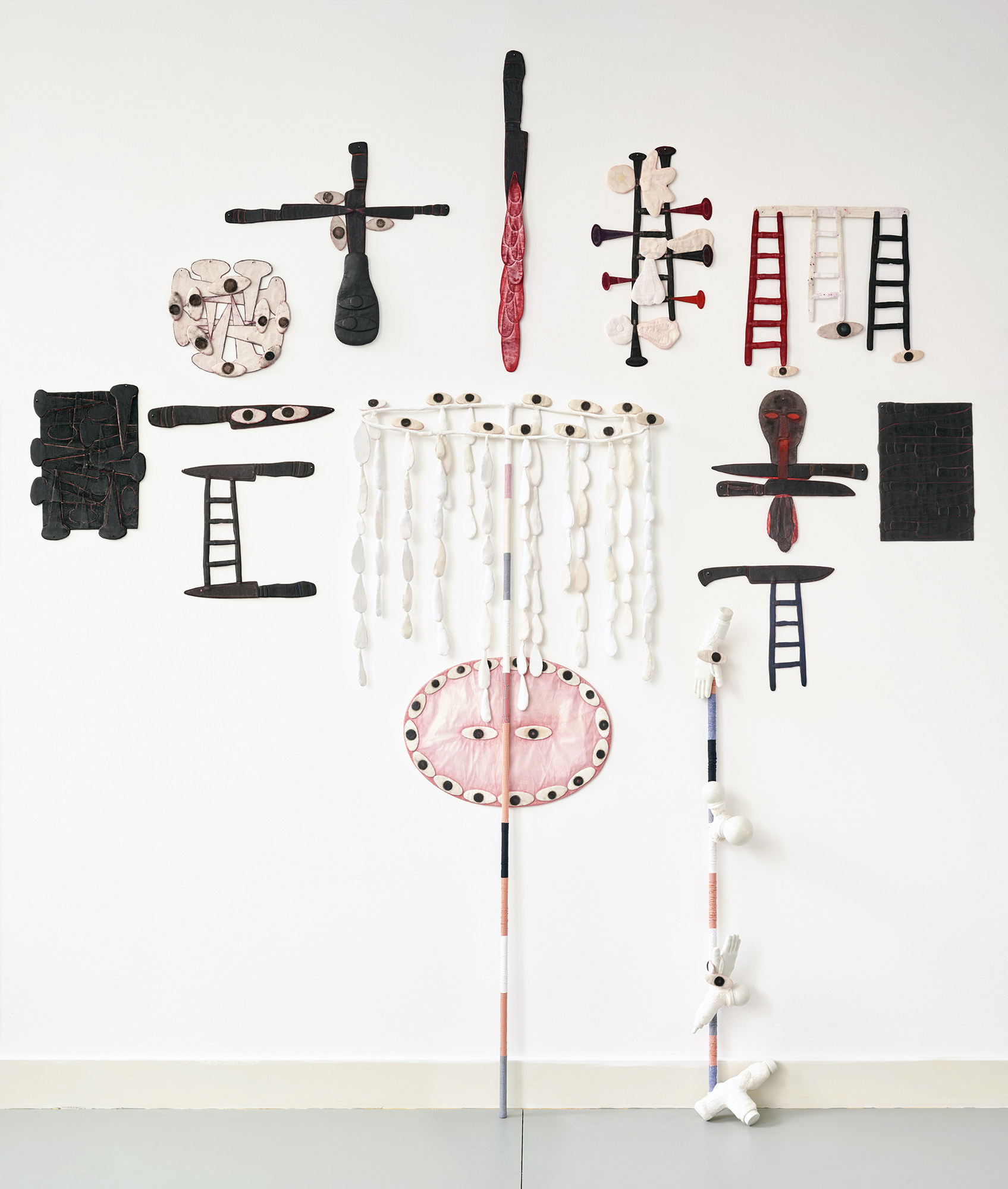
He experiments with different media and pushes them to the limit through successive construction techniques. These time-consuming processes of making include, collage, perforation, layering, mending, stitching, embroidery and weaving, coalescing in a constant process of construction, destruction and reconstruction.
The complex nature of his work embodies a sense of impermanence, doubt and transformation that he considers implicit in the act of creating, both formally and in its potential for generating meaning.
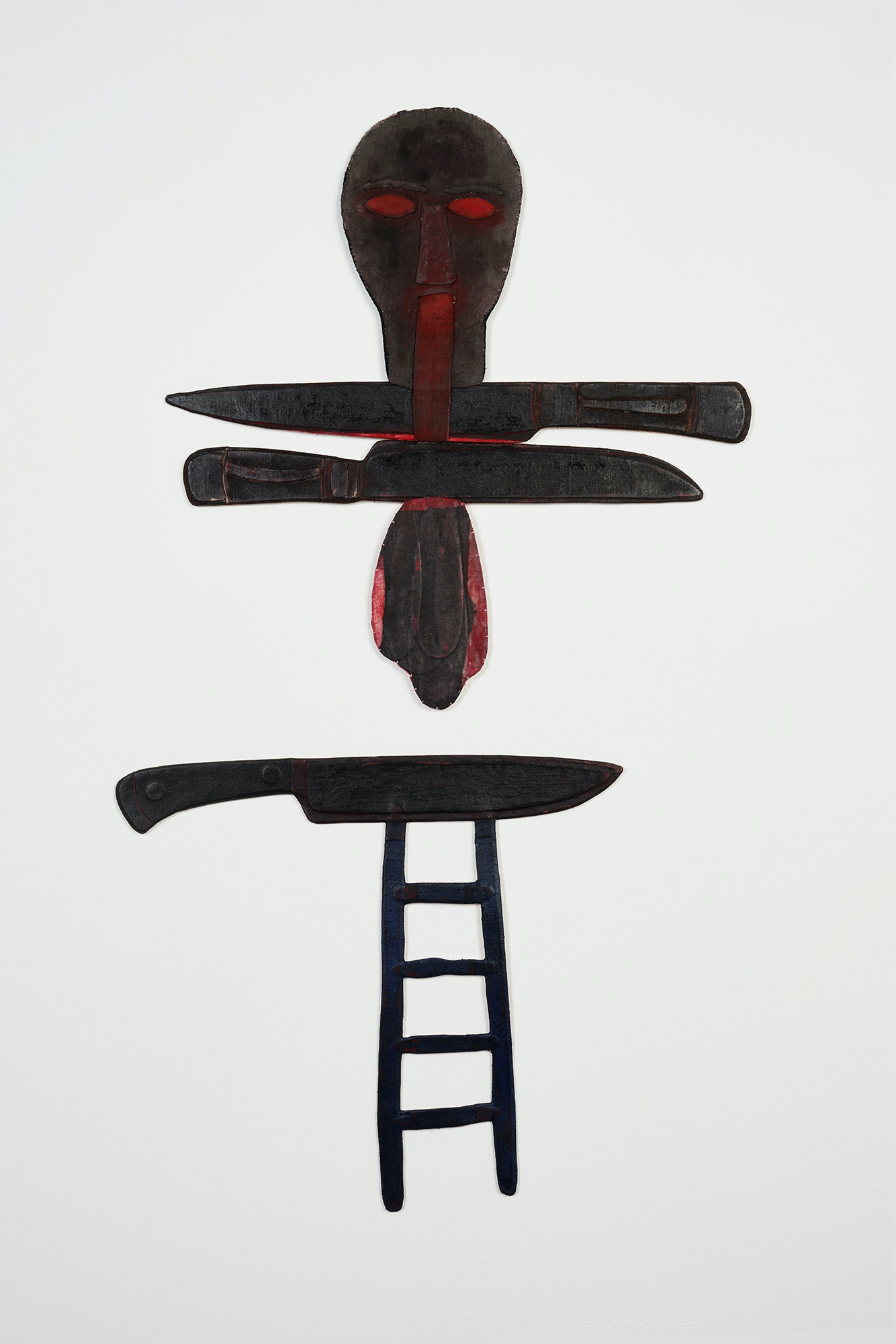
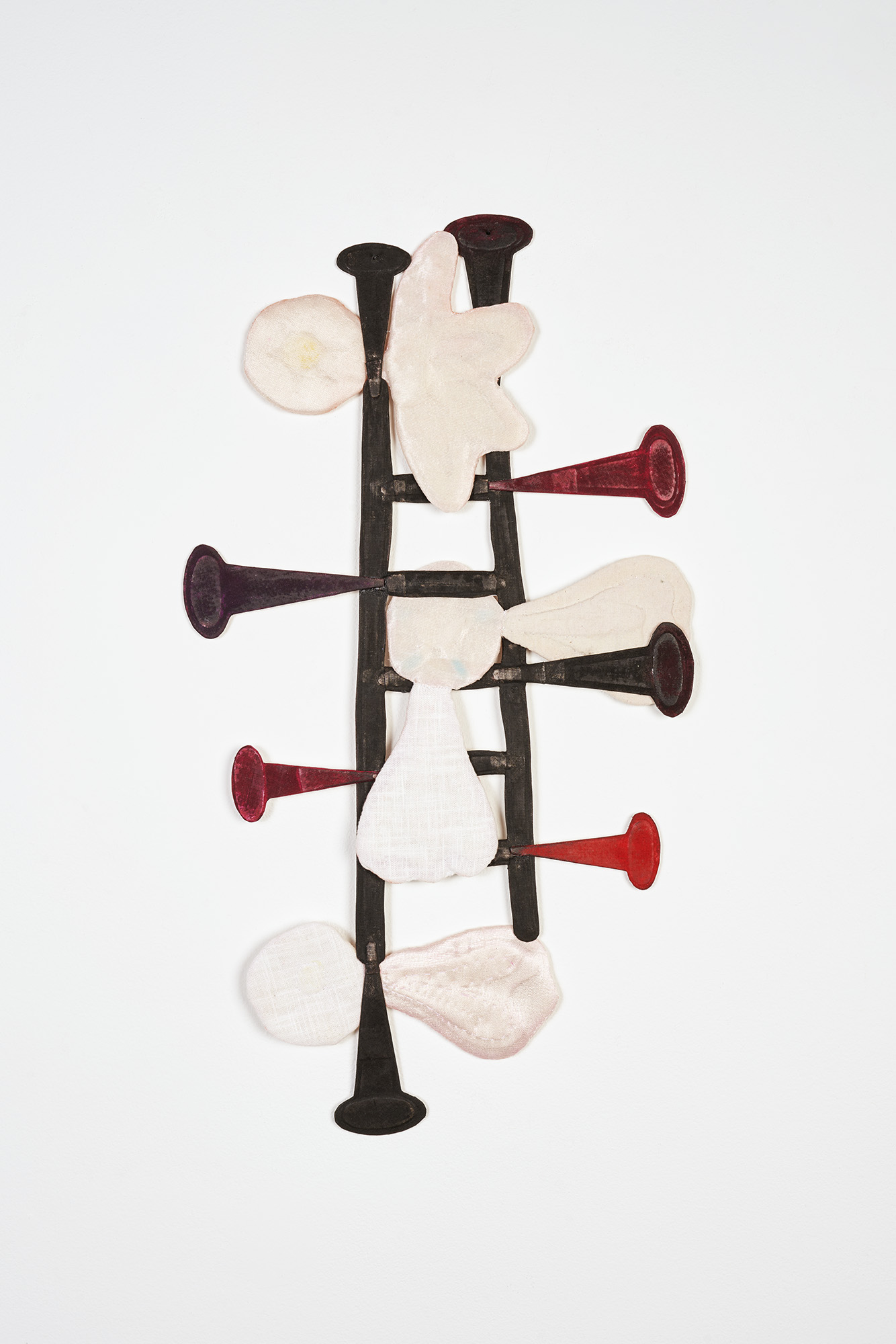
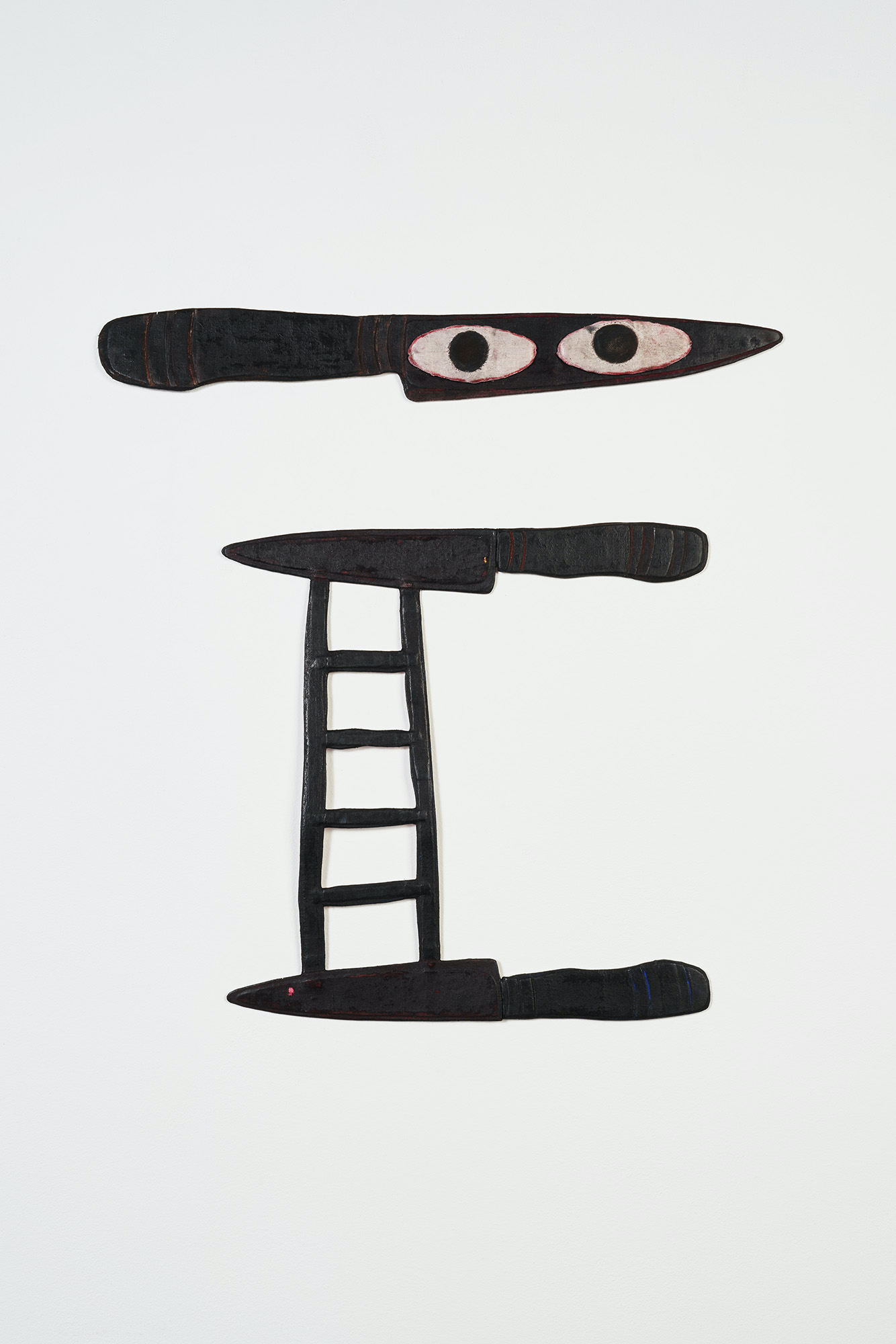
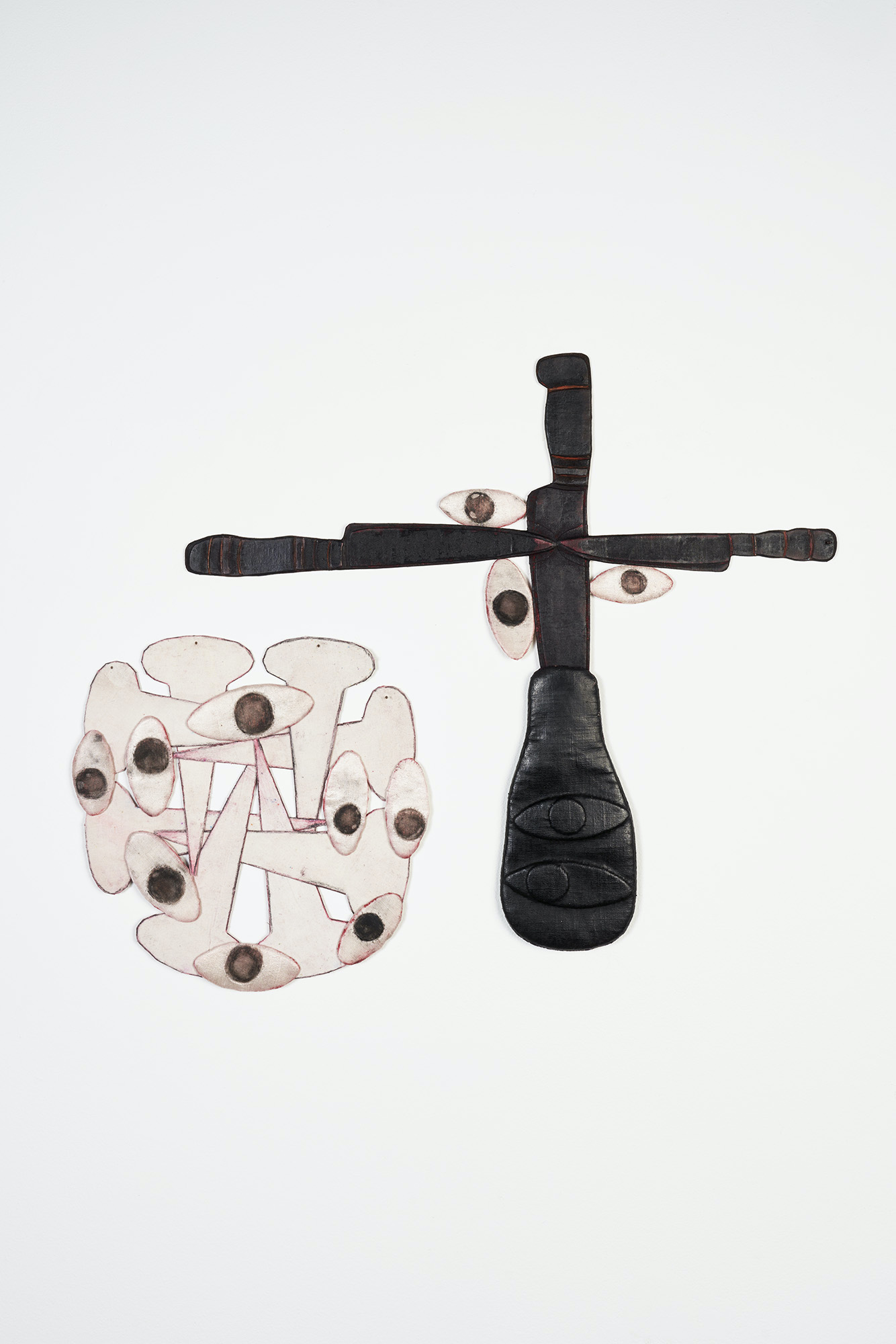
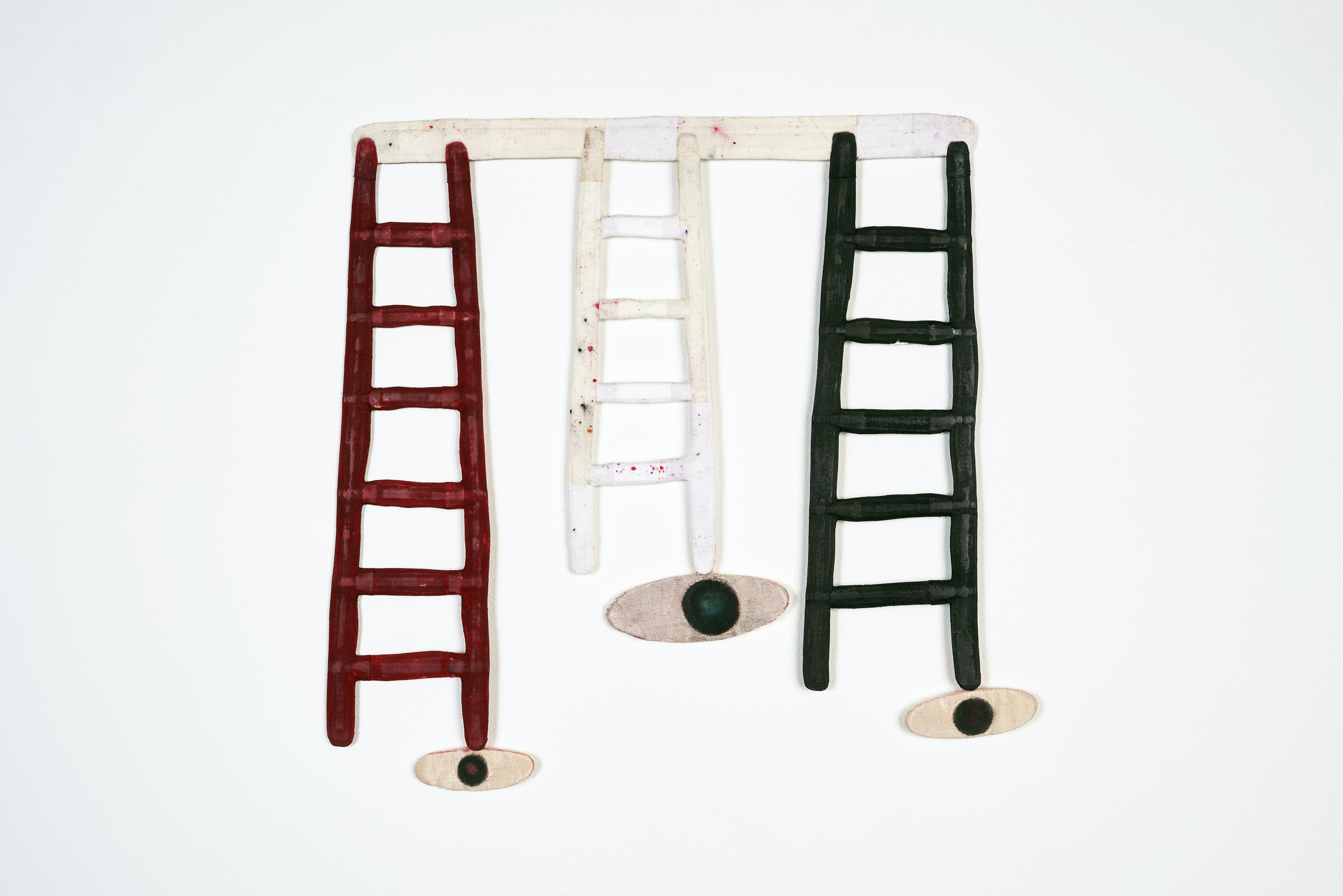
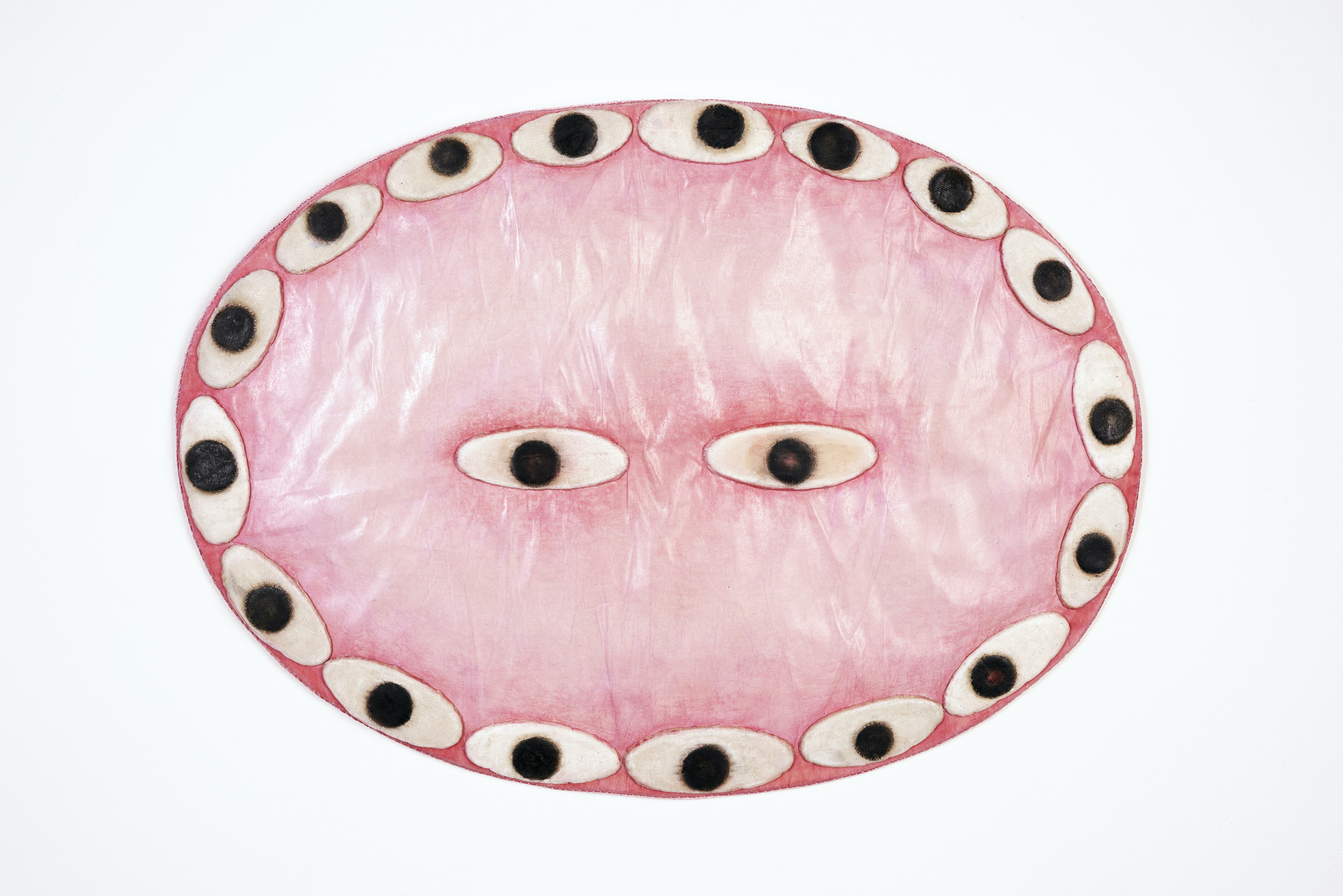
In his recent works, we find elements and formal associations to the openings of the body, the so-called contact zones, to natural growth, to scars, wounds, vulvas, phallus, eyes, tears, blood, mouths, thorns, and teeth. Those elements and visual forms proliferate in rich compositions dealing with themes of sexuality, homoeroticism, religion, gender, violence, birth and death.
The new works are ambiguous in their refusal to be categorized, they are open to a myriad of interpretations which creates a constant friction between bodily presence and absence.
He experiments with different media and pushes them to the limit through successive construction techniques. These time-consuming processes of making include, collage, perforation, layering, mending, stitching, embroidery and weaving, coalescing in a constant process of construction, destruction and reconstruction.
The complex nature of his work embodies a sense of impermanence, doubt and transformation that he considers implicit in the act of creating, both formally and in its potential for generating meaning.
In his recent works, we find elements and formal associations to the openings of the body, the so-called contact zones, to natural growth, to scars, wounds, vulvas, phallus, eyes, tears, blood, mouths, thorns, and teeth. Those elements and visual forms proliferate in rich compositions dealing with themes of sexuality, homoeroticism, religion, gender, violence, birth and death.
The new works are ambiguous in their refusal to be categorized, they are open to a myriad of interpretations which creates a constant friction between bodily presence and absence.
03/
Biography / CV
Célio Braga
Brazil
Lives and works in Amsterdam (The Netherlands) and São Paulo (Brazil)
Education
1996-2000
Gerrit Rietveld Académie, Amsterdam – The Netherlands
Solo Exhibitions
(selection)
2025
-’Perfect Friends - Perfect Lovers’, Phoebus Rotterdam, The Netherlands
-’ENVIESADO’, Massapê Projects, São Paulo - Brasil
2023
-’SKIN . WOUND . QUEER’, KunstMuseum Den Haag, The Netherlands
2022
-‘Flesh and Flowers’, Galerie Phoebus Rotterdam, The Netherlands
2019
-’80 Bullets’ - Barklund & Co., Stockhom - Sweden
-‘Lama e Arco-Íris Azul e Rosa’ - Galeria Pilar - São Paulo - Brasil
2018
-‘The Years . The Tears . The Rainbow . The Endless Sea - PLATINA Stockholm - Sweden
-‘Field of Flowers’, Phoebus Rotterdam - The Netherlands
2017
-‘White Blur’, Phoebus Rotterdam - The Netherlands
2016
-‘Abluções’, Museu de Arte Contemporânea de Goiás - MAC - Goiânia - Brasil (cat.)
-‘Ablutions’, Museu Victor Meirelles, Florianópolis - Brasil (cat.)
2014
-‘MultiColoridos’, Galeria PIILAR, São Paulo - Brasil
-‘GRID’, Hein Elferink Galerie, Staphorst - The Netherlands
2013
-‘Célio Braga (Solo)’, PINTA Art Fair / Galeria Pilar-SP, London - United Kingdom
2012
-‘Pharmacia Deluxe’, Galeria Amparo 60, Recife - Brasil
-‘Litanies’, Galerie Hein Elferink, Staphorst - The Netherlands
-‘Doloridos.Coloridos’, Galeria PILAR, São Paulo - Brasil
2011
-‘Abstrações para Morrer de Amor’, Galeria da FAV - Goiânia - Brasil
2010
-‘Lacerations’, Galerie Hein Elferink, Staphorst - The Netherlands
2009
-‘Unveil’, Teto Projects, Amsterdam - The Netherlands
2008
-‘Caio, Felix, Cuts and Perforations’, Galeria Vermelho, São Paulo – Brasil
2007
-‘Recent Works’ Galerie Hein Elferink, Staphorst, The Netherlands
-‘Possible Jewellery and Related Objects’, Rob Koudijs Galerie, Amsterdam -The Netherlands
2006
-‘B.L.U.E’, BalinHouseProjects, London - England
-Galerie Hein Elferink, Staphorst - The Netherlands
2005
-Galerie van der Mieden, Antwerpen - België
-‘Liquescent’, Platina Gallery, Stockholm - Sweden
2004
- ‘Brancos’, Galerie Louise Smit, Amsterdam - The Netherlands
2003
- ‘White Shirts’, HuisRechts, Amsterdam - The Netherlands
2000
-‘Objeto desejado (e para sempre) ausente’, MAC-Goiás, Goiânia - Brasil
Group Exhibitions
(selection)
2025
-’HAUS OF FIBER’, TextielMuseum Tilburg - The Netherlands
2024
-’A Summer’s Tale’, Josilda da Conceição Gallery, Amsterdam - The Netherlands
2023
-’Un-Solid. Still Being Formed’- Célio Braga & Juliette de Graaf’. Josilda da Conceição Gallery, Amsterdam - The Netherlands
2022
-’UNTITLED 1, Célio Braga & Yang Ha’. Josilda da Conceição Gallery, Amsterdam - The Netherlands
2021
-‘HUID’, BONNEFANTEN Museum, Maastricht -The Netherlands
-‘DE PEST’, Het Valkhof Museum, Nijmegen - The Netherlands
2019
-‘Verdadero es lo hecho’, Museo José Hernández, Buenos Aires - Argentina
-‘HUID’, Tentoonstelling Zaal Zwijgershoek, Antwerpen - België
-‘Black & White’, TextielMuseum Tilburg - The Netherlands
2018
-‘Cultural Threads’, TextielMuseum Tilburg - The Netherlands (cat.)
-‘QUEERMUSEU’, EAV Parque Laje, Rio de Janeiro - Brasil (cat.)
-‘Beyond the Body’, Art Center Silkeborg Ban - Denmark (cat.)
2017
-‘EVOÉ’, Galeria Amparo 60 - Recife, Brasil
-‘QUEERMUSEU’, Satander Cultural, Porto Alegre – Brasil (cat.)
-‘HIGHLY VOLATILE’, Vishal Haarlem – The Netherlands
2016
-’TUDO JOIA’, Bergamin & Gomide, São Paulo, Brasil
2015
-‘Born of Concentration’, RAM Foundation Rotterdam - The Netherlands
-‘Under the Skin’, Textile Museum Tilburg - The Netherlands (cat.)
-‘Fashion & Mortality’, Lentos Museum Linz - Áustria (cat.)
2014
-‘O que ainda não é’, Galpão TAC, Rio de Janeiro - Brasil
-‘Threads’, Museum voor Moderne Kunst Arnhem - The Netherlands (cat.)
2012
-‘Beyond the Body’, WELTKUNSTZIMMER, Dusseldorf - Germany (cat.)
2011
-‘Us, in Flux’, Lawrimore Project / Greg Kucera Gallery, Seattle - USA. (cat.)
-‘ONTKETEND’, Museum voor Modern Kunst, Arnhem - The Netherlands
-‘Drawing Now Staphorst’, Galerie Hein Elferink, Staphorst - The Netherlands
-‘Salon du Dessin Contemporaine’/Galerie Hein Elferink, Paris - France
-‘PULSE Art Fair’/Sienna Gallery, New York - USA.
-‘EMBRACED’, GustavsBergs Konsthall - Sweden (cat.)
2010
-‘THINK TWICE’, MAD-Museum of Arts and Design, New York - USA
2009
-‘SLASH - Paper Under the Knife’ (cat.), Museum of Arts and Design, New York - USA
-‘Start’, Galerie Hein Elferink, Staphorst - The Netherlands
2008
-‘Papier Biënnale 2008’, Museum Rijswijk - The Netherlands (cat.)
-‘SOFT (Autonomous Textiles)’, LandsMuseum, Linz - Austrian
2007
-‘Licht’, RC de Ruimte , Ijmuiden - The Netherlands
-‘Hard Candies’, Motive Gallery, Amsterdam - The Netherlands
-‘GlassWear’, Toledo Museum of Art - U.S.A / SchmuckMuseum Pforzheim - Germany (cat.)
-‘Act//’, Huisrechts, Amsterdam - The Netherlands
-‘Fragmentos do Corpo’, Galeria da FAV, Goiânia, - Brasil (cat.)
-‘Focus 4’, KCO CultuurSalon, Zwolle - The Netherlands
-‘2MOVE: Double movement’, Sala Verónicas-Centro Párraga, Murcia – Spain / ZuiderzeeMuseum, Enkhuizen - The Netherlands (cat.)
-‘Brazil Art Lounge’, TAC Eindhoven - The Netherlands
-‘.G.E.B.O.R.D.U.U.R.D.’, TextilMuseum, Tilburg - The Netherlands (cat.)
-‘Schmuck 2006’, Internationalen Handwerksmesse München - Germany / Museum of Arts and Design, New York - U.S.A
2005
-‘Bock mit Inhalt’, Stedelijk Museum CS, Amsterdam - The Netherlands
2004
-‘LOSS’, Stedelijk Museum Bureau Amsterdam - The Netherlands (cat.)
-‘Doações MAC 1999-2004’, Museu de Arte Contemporânea de Goiás, Goiânia - Brasil
-‘Oogstrelend Schoon’, CODA-Apeldoorns Museum - The Netherlands
-‘Solo’, Galerie Marzee, Nijmegen - The Netherlands
2003
-‘Ravary Project’, Galerie Marzee, Nijmegen - The Netherlands
-‘BLUR, The Bluring of Categories in the Applied Arts’, Stedelijk Museum Amsterdam -The Netherlands
2002
-‘FRAU WILLHELM’, Fanshop Amsterdam - The Netherlands
-‘Nature and Time - International Jewelery Competition’, Deutsches Goldschmiedhaus, Hanau – Germany (cat.)
-‘Hair Stories’, Adam Baumgold Gallery, New York - USA
-‘Beziehungen’, Nederlandse Bank, Amsterdam - The Netherlands
-‘DISPLAY’, A Proposal for Municipal Art Acquisitions-2000/2001, Stedelijk Museum Amsterdam - The Netherlands (cat.)
-‘FILZ FELT’, Landsmunseum für Vorgeschichte Dresden – Germany / Deutsches Textilmuseum Krefeld - Germany (cat.)
2001
-‘SIERADEN’, The Choice of Apeldoorn, Van Reekum Museum, Apeldoorn - The Netherlands / Badisches Landesmuseum Kalsruhe - Germany (cat.)
2000
-‘Eindexamententoonstelling’ - Kunstpaviljoen, Nieuw-Roden - The Netherlands
-‘Annual International Graduation Show’, Galerie Marzee, Nijmegen - The Netherlands (cat.)
-‘HAUTNAH’, Kunsthalle, Wien - Áustria
1998
-SBK Ijmond-Noord, Beverwijk - The Netherlands
1993
-‘Bienal do Incomum’, Museu de Arte Contemporânea, Goiânia - Brasil (cat.)
1990
-‘Fragments/Wholeness’, Ariel Gallery, New York - USA
Performances
2010
-’Full Blown/Walking on Flowers’, De Oude Kerk Amsterdam/MuseumNacht 11 - The Netherlands
2009
-‘Similitude’ (with Rose Akras), Galeria Vermelho, São Paulo - Brasil
2008
-‘7 maneiras…’ (with Rose Akras)/VERBO, Galeria Vermelho, São Paulo - Brasil
2002
-‘A self Portrait with many faces’ (with Antonio P. de Souza), De BrakkeGrond, Amsterdam - The Netherlands
2001
-‘Natural Diversity’ (with Antonio P. de Souza), The Veem Theatre Amsterdam - The Netherlands
Prizes/Subsidies
2008
-Basisstipendium, Fonds BKVB, Amsterdam - The Netherlands
2004
-Startstipendium, Fonds BKVB, Amsterdam - The Netherlands
2002
-Startstipendium, Fonds BKVB, Amsterdam - The Netherlands
2000
-Marzeer Prize, Nijmegen - The Netherlands
Workshops
2015
- The Skin I Live in (Centro Cultural Valparaiso) – Chile
2005
- Konstfack (Art Academie) – Stockholm - Sweden
- Lichaamssnoep (Stedelijk Museum CS), Amsterdam - The Netherlands
2006
- Lichaamssnoep (Textile Museum Tilburg), Tilburg - The Netherlands
2019
-‘Odradek, The Making, Unmaking and Remaking of the Elephant’,TallerEloi), Buenos Aires -Argentinian
-‘Odradek, The Making, Unmaking and Remaking of the Elephant’, Museo Caraffa, Cordoba - Argentinian
Residency
2018
-IASPIS Stockholm - Sweden
2016
-Sobrado na Ladeira, Florianopólis - Brazil
-TextilMuseum Tilburg - The Netherlands
2012
-Hans Peter Stiftung, Dusseldorf – Germany
2006
-European Ceramic Work Centre, ‘s-Hertgenbosch - The Netherlands
Public Collections
-Stedelijk Museum Amsterdam - The Netherlands
-Museum Booijmans Van Beuningen, Rotterdam - The Netherlands
-CODA Museum, Apeldoorn - The Netherlands
-TextielMuseum, Tilburg - The Netherlands
-KunstMuseum Den Haag, The Netherlands
-MAC - Goiás, Goiânia - Brasil
-Coleção da FAV-UFG-Go, Goiânia - Brasil
-Fundação Jaime Camâra - Goiânia - Brasil
-Marzee Collection, Nijmegen - The Netherlands
-Rotasa Trust Collection – USA
Publications (selection)
-’Célio Braga - ARMORED/WOUNDED’, Ernst Van Alphen - Skin.Wound.Queer- KunstMuseum Den Haag, The Netherlands . 2023
-’Remains - Tomorrow: Themes in Contemporary Latin American Abstraction’, Cecilia Fajardo-Hill - Hatje Cantz Publication, 2022
-‘HUID’ (onderdeel van ELEMENTS - Gerd Dierck) ), 2021, Bonnefanten Museum Maastricht - The Netherlands
-‘Célio Braga borduurt over de kwetsbare mens’, 2018 ( Chris Reinewald) – TXP, # 246, Jaargang 62, Winter 2018 - Magazine Over TextielKunst
-‘Beyond the Body’ (Anne Berk), Art Center Silkeborg Bad – Denmark - SBN 978-87-91252-81-5
-‘Cultural Threads - 2017 (Christel Vesters) - TextielMuseum Tilburg - The Netherlands -ISBN/EAN 978-90-70962-64-7
-‘Balin House Projects 10 Years’ – 2017, London - UK - ISBN: 978-0-9956300-0-0
-‘Abluções’, (Hercules Goulart Martins) 2016, Museu Victor Meirelles, Florianópolis - Brasil
-‘Abluções’, (Hercules Goulart Martins / Gilmar Camilo) 2016, MAC-Goiás - Brasil
-‘Multiple Exposure (Ursula Ilse-Newman), The Museum of Arts and Design-MAD-NY, 2014
-‘Nós Afetivos’, Revista Bamboo nr. 40, 10.2014 - Brasil
-‘Threads’ (Mirjan Westen), 2014, Museum Arnhem - The Netherlands
-‘Embraced: Jewellery Sites’, 2011(Anders Ljungberg), Gustavsbergs Konsthall - Sweden -ISBN978-91-978426-5-5
-‘Beyond the Body’ (Anne Berk, Astrid Meyerde, Wolfgang Schäfer), 2012 HPZ Stiftung
-‘Cutting Edges-Contemporary Collages’ (Robert Klanten, Hendrik Heillige, James Gallager), Die Gestalte, Berlin - Germany
-‘EXIT 32’ Estéticas Migratorias: Movimento Double, MIeke Bal (Madrid, 2008)
-‘Items 2’, 2007, ‘Sieraden, over de dingen die voorbijgaan’ (Roelin Plaatsman) - Amsterdam, The Netherlands
-‘Kunstbeeld.nl nr. 5’, 2006 – reviews - pg. 90 ( Wim van der Beek) - The Netherlands
-‘Deliriously’, (2006 - ISBN 90 70680 750) Sharing a Common Skin (Ernst van Alphen)
-‘G.E.B.O.R.D.U.U.R.D, (2006 ISBN 90-70962-37-3) Louise Schouwenberg
-‘Schmuck 2006’, Herausgeber, 2006, München - Duitsland
-‘Itens 1’, January/February 2006, Opsmuk-Jonge Sieraadontwerpers in Nederland.
-‘GZ Art+Design’, Stuttgart (3-2005), Jewelry in a new costume ( Katja Poljanac)
-‘Stedelijk Museum Bulletim (Nr.06, 2004), Loss (Marjan Boot), Amsterdam – The Netherlands
-‘Het Financieele Dagblad’ (13,11,2004), ‘Verwelkende porselein’ (Chris Reinewald)
-‘Loss’, Braga/Eichenberg/Mackert, ISBN 90-809189-1-1 - 2004
-‘Nieuwsbrief NO 83’ - SMBA, Loss, (Marjan Boot)
-‘Tableau’ (26ste Jaargang nr.4 Sep./Okt. 2004), ‘De illusie van het Voorbije’ (Chris Reinewald)
-‘Diario da Manhã’, Goiânia-Brazil (07.31.2004), Panorama da Arte Contemporânea (Ivair Lima)
-‘Marzee Magazine nr 35’, November 2003 - January 2004
-‘Cahier Ravary’ # 18-27 September 2003 - Galerie Marzee
-‘De Telegraaf’, Zaterdag 27 Juli 2002, Hip en oergezellig ( Fiona Hering)
-‘Het PAROOL’, Donderdag 25 Juli 2002, Instant Knus breien is hip ( Pam van der Veen)
-‘Frankfurter Allgemeine Sonntagszeitung,’ 21. April 2002, Nr 16, Auffrisiert Hair Stories-eine Ausstellung in New York (jordan Mejias)
-‘New York Review’, N.Y May 6, 2002, On View: Locks Opening
-‘TimeOut’, New York, May 2-9, 2002, ‘Hair Stories’ (Linda Yablonsky)
-‘Volkskrant’, 22 april 2002, SieraadKunst in de etalage van het Stedelijk (Mieke Zijlmans)
-‘Bulletim Stedelijk Museum Amsterdam,’ 2/2002-Sieraden in Display (Liesbeth den Besten)
-‘Het PAROOL’, Maandag 22 april 2002, Hout en goud in etalage van Stedelijk (Marleen Hengeveld)
-‘DISPLAY-A Proposal for Municipal Art Acquisitions 2000/1’, Stedelijk Museum Amsterdam
-‘International Textilkunst’, (Marz 2001), Ausstellung im Badisches Landsmuseum Karslruhe
-‘Frankfurter Allgemeine Zeitung’, Germany(24.01.2001), Alles im Griff dem stinkenden Schiff
-‘Felt/Art’, Crafts and Design, Arnoldsche Art Publishers.2000, Peter Schmitt
-‘Gazetta’, Goiânia - Brasil (May 2000), ‘Diversas faces do desejo’
-‘O Popular’, Goiânia -Brasil (May 2000), ‘Sexo e misticismo na arte contemporânea’
Brazil
Lives and works in Amsterdam (The Netherlands) and São Paulo (Brazil)
Education
1996-2000
Gerrit Rietveld Académie, Amsterdam – The Netherlands
Solo Exhibitions
(selection)
2025
-’Perfect Friends - Perfect Lovers’, Phoebus Rotterdam, The Netherlands
-’ENVIESADO’, Massapê Projects, São Paulo - Brasil
2023
-’SKIN . WOUND . QUEER’, KunstMuseum Den Haag, The Netherlands
2022
-‘Flesh and Flowers’, Galerie Phoebus Rotterdam, The Netherlands
2019
-’80 Bullets’ - Barklund & Co., Stockhom - Sweden
-‘Lama e Arco-Íris Azul e Rosa’ - Galeria Pilar - São Paulo - Brasil
2018
-‘The Years . The Tears . The Rainbow . The Endless Sea - PLATINA Stockholm - Sweden
-‘Field of Flowers’, Phoebus Rotterdam - The Netherlands
2017
-‘White Blur’, Phoebus Rotterdam - The Netherlands
2016
-‘Abluções’, Museu de Arte Contemporânea de Goiás - MAC - Goiânia - Brasil (cat.)
-‘Ablutions’, Museu Victor Meirelles, Florianópolis - Brasil (cat.)
2014
-‘MultiColoridos’, Galeria PIILAR, São Paulo - Brasil
-‘GRID’, Hein Elferink Galerie, Staphorst - The Netherlands
2013
-‘Célio Braga (Solo)’, PINTA Art Fair / Galeria Pilar-SP, London - United Kingdom
2012
-‘Pharmacia Deluxe’, Galeria Amparo 60, Recife - Brasil
-‘Litanies’, Galerie Hein Elferink, Staphorst - The Netherlands
-‘Doloridos.Coloridos’, Galeria PILAR, São Paulo - Brasil
2011
-‘Abstrações para Morrer de Amor’, Galeria da FAV - Goiânia - Brasil
2010
-‘Lacerations’, Galerie Hein Elferink, Staphorst - The Netherlands
2009
-‘Unveil’, Teto Projects, Amsterdam - The Netherlands
2008
-‘Caio, Felix, Cuts and Perforations’, Galeria Vermelho, São Paulo – Brasil
2007
-‘Recent Works’ Galerie Hein Elferink, Staphorst, The Netherlands
-‘Possible Jewellery and Related Objects’, Rob Koudijs Galerie, Amsterdam -The Netherlands
2006
-‘B.L.U.E’, BalinHouseProjects, London - England
-Galerie Hein Elferink, Staphorst - The Netherlands
2005
-Galerie van der Mieden, Antwerpen - België
-‘Liquescent’, Platina Gallery, Stockholm - Sweden
2004
- ‘Brancos’, Galerie Louise Smit, Amsterdam - The Netherlands
2003
- ‘White Shirts’, HuisRechts, Amsterdam - The Netherlands
2000
-‘Objeto desejado (e para sempre) ausente’, MAC-Goiás, Goiânia - Brasil
Group Exhibitions
(selection)
2025
-’HAUS OF FIBER’, TextielMuseum Tilburg - The Netherlands
2024
-’A Summer’s Tale’, Josilda da Conceição Gallery, Amsterdam - The Netherlands
2023
-’Un-Solid. Still Being Formed’- Célio Braga & Juliette de Graaf’. Josilda da Conceição Gallery, Amsterdam - The Netherlands
2022
-’UNTITLED 1, Célio Braga & Yang Ha’. Josilda da Conceição Gallery, Amsterdam - The Netherlands
2021
-‘HUID’, BONNEFANTEN Museum, Maastricht -The Netherlands
-‘DE PEST’, Het Valkhof Museum, Nijmegen - The Netherlands
2019
-‘Verdadero es lo hecho’, Museo José Hernández, Buenos Aires - Argentina
-‘HUID’, Tentoonstelling Zaal Zwijgershoek, Antwerpen - België
-‘Black & White’, TextielMuseum Tilburg - The Netherlands
2018
-‘Cultural Threads’, TextielMuseum Tilburg - The Netherlands (cat.)
-‘QUEERMUSEU’, EAV Parque Laje, Rio de Janeiro - Brasil (cat.)
-‘Beyond the Body’, Art Center Silkeborg Ban - Denmark (cat.)
2017
-‘EVOÉ’, Galeria Amparo 60 - Recife, Brasil
-‘QUEERMUSEU’, Satander Cultural, Porto Alegre – Brasil (cat.)
-‘HIGHLY VOLATILE’, Vishal Haarlem – The Netherlands
2016
-’TUDO JOIA’, Bergamin & Gomide, São Paulo, Brasil
2015
-‘Born of Concentration’, RAM Foundation Rotterdam - The Netherlands
-‘Under the Skin’, Textile Museum Tilburg - The Netherlands (cat.)
-‘Fashion & Mortality’, Lentos Museum Linz - Áustria (cat.)
2014
-‘O que ainda não é’, Galpão TAC, Rio de Janeiro - Brasil
-‘Threads’, Museum voor Moderne Kunst Arnhem - The Netherlands (cat.)
2012
-‘Beyond the Body’, WELTKUNSTZIMMER, Dusseldorf - Germany (cat.)
2011
-‘Us, in Flux’, Lawrimore Project / Greg Kucera Gallery, Seattle - USA. (cat.)
-‘ONTKETEND’, Museum voor Modern Kunst, Arnhem - The Netherlands
-‘Drawing Now Staphorst’, Galerie Hein Elferink, Staphorst - The Netherlands
-‘Salon du Dessin Contemporaine’/Galerie Hein Elferink, Paris - France
-‘PULSE Art Fair’/Sienna Gallery, New York - USA.
-‘EMBRACED’, GustavsBergs Konsthall - Sweden (cat.)
2010
-‘THINK TWICE’, MAD-Museum of Arts and Design, New York - USA
2009
-‘SLASH - Paper Under the Knife’ (cat.), Museum of Arts and Design, New York - USA
-‘Start’, Galerie Hein Elferink, Staphorst - The Netherlands
2008
-‘Papier Biënnale 2008’, Museum Rijswijk - The Netherlands (cat.)
-‘SOFT (Autonomous Textiles)’, LandsMuseum, Linz - Austrian
2007
-‘Licht’, RC de Ruimte , Ijmuiden - The Netherlands
-‘Hard Candies’, Motive Gallery, Amsterdam - The Netherlands
-‘GlassWear’, Toledo Museum of Art - U.S.A / SchmuckMuseum Pforzheim - Germany (cat.)
-‘Act//’, Huisrechts, Amsterdam - The Netherlands
-‘Fragmentos do Corpo’, Galeria da FAV, Goiânia, - Brasil (cat.)
-‘Focus 4’, KCO CultuurSalon, Zwolle - The Netherlands
-‘2MOVE: Double movement’, Sala Verónicas-Centro Párraga, Murcia – Spain / ZuiderzeeMuseum, Enkhuizen - The Netherlands (cat.)
-‘Brazil Art Lounge’, TAC Eindhoven - The Netherlands
-‘.G.E.B.O.R.D.U.U.R.D.’, TextilMuseum, Tilburg - The Netherlands (cat.)
-‘Schmuck 2006’, Internationalen Handwerksmesse München - Germany / Museum of Arts and Design, New York - U.S.A
2005
-‘Bock mit Inhalt’, Stedelijk Museum CS, Amsterdam - The Netherlands
2004
-‘LOSS’, Stedelijk Museum Bureau Amsterdam - The Netherlands (cat.)
-‘Doações MAC 1999-2004’, Museu de Arte Contemporânea de Goiás, Goiânia - Brasil
-‘Oogstrelend Schoon’, CODA-Apeldoorns Museum - The Netherlands
-‘Solo’, Galerie Marzee, Nijmegen - The Netherlands
2003
-‘Ravary Project’, Galerie Marzee, Nijmegen - The Netherlands
-‘BLUR, The Bluring of Categories in the Applied Arts’, Stedelijk Museum Amsterdam -The Netherlands
2002
-‘FRAU WILLHELM’, Fanshop Amsterdam - The Netherlands
-‘Nature and Time - International Jewelery Competition’, Deutsches Goldschmiedhaus, Hanau – Germany (cat.)
-‘Hair Stories’, Adam Baumgold Gallery, New York - USA
-‘Beziehungen’, Nederlandse Bank, Amsterdam - The Netherlands
-‘DISPLAY’, A Proposal for Municipal Art Acquisitions-2000/2001, Stedelijk Museum Amsterdam - The Netherlands (cat.)
-‘FILZ FELT’, Landsmunseum für Vorgeschichte Dresden – Germany / Deutsches Textilmuseum Krefeld - Germany (cat.)
2001
-‘SIERADEN’, The Choice of Apeldoorn, Van Reekum Museum, Apeldoorn - The Netherlands / Badisches Landesmuseum Kalsruhe - Germany (cat.)
2000
-‘Eindexamententoonstelling’ - Kunstpaviljoen, Nieuw-Roden - The Netherlands
-‘Annual International Graduation Show’, Galerie Marzee, Nijmegen - The Netherlands (cat.)
-‘HAUTNAH’, Kunsthalle, Wien - Áustria
1998
-SBK Ijmond-Noord, Beverwijk - The Netherlands
1993
-‘Bienal do Incomum’, Museu de Arte Contemporânea, Goiânia - Brasil (cat.)
1990
-‘Fragments/Wholeness’, Ariel Gallery, New York - USA
Performances
2010
-’Full Blown/Walking on Flowers’, De Oude Kerk Amsterdam/MuseumNacht 11 - The Netherlands
2009
-‘Similitude’ (with Rose Akras), Galeria Vermelho, São Paulo - Brasil
2008
-‘7 maneiras…’ (with Rose Akras)/VERBO, Galeria Vermelho, São Paulo - Brasil
2002
-‘A self Portrait with many faces’ (with Antonio P. de Souza), De BrakkeGrond, Amsterdam - The Netherlands
2001
-‘Natural Diversity’ (with Antonio P. de Souza), The Veem Theatre Amsterdam - The Netherlands
Prizes/Subsidies
2008
-Basisstipendium, Fonds BKVB, Amsterdam - The Netherlands
2004
-Startstipendium, Fonds BKVB, Amsterdam - The Netherlands
2002
-Startstipendium, Fonds BKVB, Amsterdam - The Netherlands
2000
-Marzeer Prize, Nijmegen - The Netherlands
Workshops
2015
- The Skin I Live in (Centro Cultural Valparaiso) – Chile
2005
- Konstfack (Art Academie) – Stockholm - Sweden
- Lichaamssnoep (Stedelijk Museum CS), Amsterdam - The Netherlands
2006
- Lichaamssnoep (Textile Museum Tilburg), Tilburg - The Netherlands
2019
-‘Odradek, The Making, Unmaking and Remaking of the Elephant’,TallerEloi), Buenos Aires -Argentinian
-‘Odradek, The Making, Unmaking and Remaking of the Elephant’, Museo Caraffa, Cordoba - Argentinian
Residency
2018
-IASPIS Stockholm - Sweden
2016
-Sobrado na Ladeira, Florianopólis - Brazil
-TextilMuseum Tilburg - The Netherlands
2012
-Hans Peter Stiftung, Dusseldorf – Germany
2006
-European Ceramic Work Centre, ‘s-Hertgenbosch - The Netherlands
Public Collections
-Stedelijk Museum Amsterdam - The Netherlands
-Museum Booijmans Van Beuningen, Rotterdam - The Netherlands
-CODA Museum, Apeldoorn - The Netherlands
-TextielMuseum, Tilburg - The Netherlands
-KunstMuseum Den Haag, The Netherlands
-MAC - Goiás, Goiânia - Brasil
-Coleção da FAV-UFG-Go, Goiânia - Brasil
-Fundação Jaime Camâra - Goiânia - Brasil
-Marzee Collection, Nijmegen - The Netherlands
-Rotasa Trust Collection – USA
Publications (selection)
-’Célio Braga - ARMORED/WOUNDED’, Ernst Van Alphen - Skin.Wound.Queer- KunstMuseum Den Haag, The Netherlands . 2023
-’Remains - Tomorrow: Themes in Contemporary Latin American Abstraction’, Cecilia Fajardo-Hill - Hatje Cantz Publication, 2022
-‘HUID’ (onderdeel van ELEMENTS - Gerd Dierck) ), 2021, Bonnefanten Museum Maastricht - The Netherlands
-‘Célio Braga borduurt over de kwetsbare mens’, 2018 ( Chris Reinewald) – TXP, # 246, Jaargang 62, Winter 2018 - Magazine Over TextielKunst
-‘Beyond the Body’ (Anne Berk), Art Center Silkeborg Bad – Denmark - SBN 978-87-91252-81-5
-‘Cultural Threads - 2017 (Christel Vesters) - TextielMuseum Tilburg - The Netherlands -ISBN/EAN 978-90-70962-64-7
-‘Balin House Projects 10 Years’ – 2017, London - UK - ISBN: 978-0-9956300-0-0
-‘Abluções’, (Hercules Goulart Martins) 2016, Museu Victor Meirelles, Florianópolis - Brasil
-‘Abluções’, (Hercules Goulart Martins / Gilmar Camilo) 2016, MAC-Goiás - Brasil
-‘Multiple Exposure (Ursula Ilse-Newman), The Museum of Arts and Design-MAD-NY, 2014
-‘Nós Afetivos’, Revista Bamboo nr. 40, 10.2014 - Brasil
-‘Threads’ (Mirjan Westen), 2014, Museum Arnhem - The Netherlands
-‘Embraced: Jewellery Sites’, 2011(Anders Ljungberg), Gustavsbergs Konsthall - Sweden -ISBN978-91-978426-5-5
-‘Beyond the Body’ (Anne Berk, Astrid Meyerde, Wolfgang Schäfer), 2012 HPZ Stiftung
-‘Cutting Edges-Contemporary Collages’ (Robert Klanten, Hendrik Heillige, James Gallager), Die Gestalte, Berlin - Germany
-‘EXIT 32’ Estéticas Migratorias: Movimento Double, MIeke Bal (Madrid, 2008)
-‘Items 2’, 2007, ‘Sieraden, over de dingen die voorbijgaan’ (Roelin Plaatsman) - Amsterdam, The Netherlands
-‘Kunstbeeld.nl nr. 5’, 2006 – reviews - pg. 90 ( Wim van der Beek) - The Netherlands
-‘Deliriously’, (2006 - ISBN 90 70680 750) Sharing a Common Skin (Ernst van Alphen)
-‘G.E.B.O.R.D.U.U.R.D, (2006 ISBN 90-70962-37-3) Louise Schouwenberg
-‘Schmuck 2006’, Herausgeber, 2006, München - Duitsland
-‘Itens 1’, January/February 2006, Opsmuk-Jonge Sieraadontwerpers in Nederland.
-‘GZ Art+Design’, Stuttgart (3-2005), Jewelry in a new costume ( Katja Poljanac)
-‘Stedelijk Museum Bulletim (Nr.06, 2004), Loss (Marjan Boot), Amsterdam – The Netherlands
-‘Het Financieele Dagblad’ (13,11,2004), ‘Verwelkende porselein’ (Chris Reinewald)
-‘Loss’, Braga/Eichenberg/Mackert, ISBN 90-809189-1-1 - 2004
-‘Nieuwsbrief NO 83’ - SMBA, Loss, (Marjan Boot)
-‘Tableau’ (26ste Jaargang nr.4 Sep./Okt. 2004), ‘De illusie van het Voorbije’ (Chris Reinewald)
-‘Diario da Manhã’, Goiânia-Brazil (07.31.2004), Panorama da Arte Contemporânea (Ivair Lima)
-‘Marzee Magazine nr 35’, November 2003 - January 2004
-‘Cahier Ravary’ # 18-27 September 2003 - Galerie Marzee
-‘De Telegraaf’, Zaterdag 27 Juli 2002, Hip en oergezellig ( Fiona Hering)
-‘Het PAROOL’, Donderdag 25 Juli 2002, Instant Knus breien is hip ( Pam van der Veen)
-‘Frankfurter Allgemeine Sonntagszeitung,’ 21. April 2002, Nr 16, Auffrisiert Hair Stories-eine Ausstellung in New York (jordan Mejias)
-‘New York Review’, N.Y May 6, 2002, On View: Locks Opening
-‘TimeOut’, New York, May 2-9, 2002, ‘Hair Stories’ (Linda Yablonsky)
-‘Volkskrant’, 22 april 2002, SieraadKunst in de etalage van het Stedelijk (Mieke Zijlmans)
-‘Bulletim Stedelijk Museum Amsterdam,’ 2/2002-Sieraden in Display (Liesbeth den Besten)
-‘Het PAROOL’, Maandag 22 april 2002, Hout en goud in etalage van Stedelijk (Marleen Hengeveld)
-‘DISPLAY-A Proposal for Municipal Art Acquisitions 2000/1’, Stedelijk Museum Amsterdam
-‘International Textilkunst’, (Marz 2001), Ausstellung im Badisches Landsmuseum Karslruhe
-‘Frankfurter Allgemeine Zeitung’, Germany(24.01.2001), Alles im Griff dem stinkenden Schiff
-‘Felt/Art’, Crafts and Design, Arnoldsche Art Publishers.2000, Peter Schmitt
-‘Gazetta’, Goiânia - Brasil (May 2000), ‘Diversas faces do desejo’
-‘O Popular’, Goiânia -Brasil (May 2000), ‘Sexo e misticismo na arte contemporânea’
04/
Photo’s credit
Clemens
Boon
Josefina Elkenaar
Peter Gerritsen
Cris Bierrenbach
Fernanda Figueiredo
Henk Nieman
Paulo Dourado Rezende
Ding Musa
Remco Veenbrik
Simon Pillaud
Bas Czerwinski
Josefina Elkenaar
Peter Gerritsen
Cris Bierrenbach
Fernanda Figueiredo
Henk Nieman
Paulo Dourado Rezende
Ding Musa
Remco Veenbrik
Simon Pillaud
Bas Czerwinski
Célio Braga ©2022
23/
CÉLIO BRAGA:
CUIDADO COM A PINTURA
CELSO FIORAVANTE
Célio Braga: Cuidado com a Pintura
A exposição “Célio Braga: Cuidado com a Pintura” apresenta a produção recente do artista mineiro Célio Braga (Guimarânia, MG, 1963). São pinturas recentes, mas atemporais. São pequenos formatos, mas que crescem ao olhar do espectador, pois trabalham com nuances e detalhes, sugerem dúvidas e mistérios maiores. As pequenas pinturas de Célio Braga não cabem em si. Elas subvertem significantes e significados. Uma gota é mais que uma gota. Um cravo é mais que um cravo. Um círculo é mais que um círculo.
Guimarânia, Goiânia, Nova York, Amsterdã, São Paulo, Guimarânia... Sua pintura viaja dos grotões e veredas às metrópoles para tratar de questões que são individuais e universais, como a pele como simulacro da passagem do tempo e da persistência da memória, e o corpo atravessado por dilemas e sonhos.
Célio Braga prepara a sua tela. Pinta e repinta o linho ali quase branco, esticado, inerte, submisso, silencioso, passivo. Pequenos retalhos recortados em formas ora abstratas ora figurativas ocupam o espaço. São tecidos, pintados, colados, bordados, afogados em cera, lixados... Formas que lutam por um olhar que lhes dê vida no big bang daquele pequeno universo em ebulição, frágil e transitório. Célio Braga é o cavalo de suas pinturas. Ele está sendo usado por elas.
Distante anos-luz das modas estéticas, Braga tece sua produção com linguagens ancestrais, como o bordado, a escultura e a performance. No atelier, só com a sua arte, tinta e linhas escorrem como as lágrimas de uma vela que caminha em direção ao fim.
O artista pesca suas referências na arte popular, contemporânea e conceitual. O experimentalismo e a liberdade de Paul Klee, a força ética e autobiográfica de Louise Bourgeois, a política e a poética de Félix González-Torres, a coerência e o minimalismo de Agnes Martin, e a intensidade e a delicadeza de Leonilson são referências reconhecidas pelo artista, mas a fluidez de sua produção segue aberta a quem mais chegar, a todos que vejam a arte como uma forma de oração.
Celso Fioravante
A exposição “Célio Braga: Cuidado com a Pintura” apresenta a produção recente do artista mineiro Célio Braga (Guimarânia, MG, 1963). São pinturas recentes, mas atemporais. São pequenos formatos, mas que crescem ao olhar do espectador, pois trabalham com nuances e detalhes, sugerem dúvidas e mistérios maiores. As pequenas pinturas de Célio Braga não cabem em si. Elas subvertem significantes e significados. Uma gota é mais que uma gota. Um cravo é mais que um cravo. Um círculo é mais que um círculo.
Guimarânia, Goiânia, Nova York, Amsterdã, São Paulo, Guimarânia... Sua pintura viaja dos grotões e veredas às metrópoles para tratar de questões que são individuais e universais, como a pele como simulacro da passagem do tempo e da persistência da memória, e o corpo atravessado por dilemas e sonhos.
Célio Braga prepara a sua tela. Pinta e repinta o linho ali quase branco, esticado, inerte, submisso, silencioso, passivo. Pequenos retalhos recortados em formas ora abstratas ora figurativas ocupam o espaço. São tecidos, pintados, colados, bordados, afogados em cera, lixados... Formas que lutam por um olhar que lhes dê vida no big bang daquele pequeno universo em ebulição, frágil e transitório. Célio Braga é o cavalo de suas pinturas. Ele está sendo usado por elas.
Distante anos-luz das modas estéticas, Braga tece sua produção com linguagens ancestrais, como o bordado, a escultura e a performance. No atelier, só com a sua arte, tinta e linhas escorrem como as lágrimas de uma vela que caminha em direção ao fim.
O artista pesca suas referências na arte popular, contemporânea e conceitual. O experimentalismo e a liberdade de Paul Klee, a força ética e autobiográfica de Louise Bourgeois, a política e a poética de Félix González-Torres, a coerência e o minimalismo de Agnes Martin, e a intensidade e a delicadeza de Leonilson são referências reconhecidas pelo artista, mas a fluidez de sua produção segue aberta a quem mais chegar, a todos que vejam a arte como uma forma de oração.
Celso Fioravante
22/
PORTRAIT
Geschreven en gelezen door Liesbeth den Besten bij de opening van de tentoonstelling Perfect Friends – Perfect Lovers in Phoebus Rotterdam.
Liesbeth den Besten
Ik heb Célio Braga leren kennen bij zijn afstuderen op de Rietveld Academie – nu 25 jaar geleden. Zijn werk viel op tussen het werk van zijn collega’s. Hij had als ik het me goed herinner midden in een klaslokaal een kamertje gebouwd waar je in kon stappen. Binnenin kwam je ogen tekort. Het was een klein kamertje met een enorme expressie, een heiligdom waarvan de wanden beschilderd waren, en gedeeltelijk van was – het rook er op een speciale manier. De wanden waren volgehangen met allerlei dingen, votieven, memorabilia, en ook halssieraden van textiel en glaskralen. Het werk maakte indertijd enorme indruk op mij. Je stapte een andere wereld in, een heel eigen en on-Hollandse wereld, die om aandacht en bezinning vroeg.
Foto’s zijn er niet van gemaakt, niet door Celio, en niet door mij. Het was het Pre-Digitale Tijdperk, maar ik ben blij met mijn herinneringen, die zijn mij goud waard.
Célio is in 1965 geboren op het Braziliaanse platteland, zo’n 10 uur met de bus van Sao Paolo - waar hij sinds zijn afstuderen de helft van het jaar woont (de andere helft woont hij in Amsterdam). Toen hij afstudeerde op de Rietveld Academie had hij al een hele weg afgelegd in de kunst: via academies in Sao Paolo en Boston (USA) waar hij schilderkunst studeerde, kwam hij in 1996 dankzij Dennis naar Amsterdam om textiel te studeren aan de Rietveld Academy. Na een jaar stapte hij over naar de sieradenafdeling waar hij les had van een fantastisch team docenten Ruudt Peters, Iris Eichenberg, en Marjan Unger.
Toch staat werken met metaal hem tegen en heeft hij nooit gesmede sieraden gemaakt. Het was de aandacht op de afdeling sieraden voor de mens en het lichaam die hem aantrokken. Hij houdt van zachte materialen, materialen die de huid aangeraakt hebben, hemden, lakens, zakdoeken. Een tijdlang werd hij omarmd door de sieradenwereld en exposeerde in de sieradengalerie van Louise Smit. Maar dat jasje paste hem niet.
Over de objecten van textiel, glaskralen en menselijk haar, die hij zo rond 2008 maakte schreef ik eens het volgende:
“ze zijn met de hand gestikt, zorgvuldig, minuut na minuut, uur na uur, in een soort ritueel continuüm. Dit is devotie, toewijding, vergelijkbaar met de manier waarop middeleeuwse monniken zich wijden aan de verluchting van manuscripten.”
Ik vroeg me af wat deze abstracte objecten in een sieradengalerie deden. Moest men ze dragen of niet en zo ja, waar was dan de speld? Hij erkent nu dat hij toen een zekere weerstand tegen sieraden had en dat hij de mensen een beetje wilde plagen, ze een keus wilde laten maken, wil je een object of wil je het kunnen dragen als sieraad. Daar had hij spelden voor maar uiteindelijk werkte het niet echt goed.
Célio was veel breder georiënteerd, hij deed performances, installaties, snijdsels in papier. Hij maakte een intense video, twee video’s tegenover elkaar geplaatst waar de kijker tussen stond, van zijn moeder van heel dichtbij gefilmd na het overlijden van haar dochter – a woman of sorrows. Een intiem portret dat ook in mijn geheugen gegrift staat.
Maar toch komt hij altijd weer bij textiel en borduren en stikken terug. Hij kan met naald en draad beeldhouwen – wat tweedimensionaal en alledaags is een vorm geven, een vorm die in niets meer herinnert aan de oorsprong van het object.
Célio werkte voor het eerst met witte overhemden in 2001-2002, vlak na zijn afstuderen.
Dankzij de introductie van een medicatie die HIV kon stoppen was er een eind aan de AIDS-crisis gekomen. Na een periode van ongeveer 20 jaar waarin de ziekte vreselijke sporen had nagelaten was de angst nog niet voorbij. Célio vroeg zijn vrienden om oude gedragen witte overhemden. Door middel van vouwen, stikken en borduren perste hij ze samen tot langwerpige organische vormen met kleine uitstulpingen en holtes. En met een geborduurde huid, een ragfijn netwerk van borduursels, die als een zich openende cocon gedeeltelijk om de vormen heen zit. Zo ontstond een intrigerende installatie van 28 hangende objecten die associaties met lichamen opriepen – de installatie is in 2023 nog tentoongesteld in Kunstmuseum Den Haag op zijn solotentoonstelling. Je zou ze kunnen zien als amuletten, bezielde beschermende pantsers tegen de kwade buitenwereld. Ze toonden zijn onvoorwaardelijke liefde voor zijn vrienden.
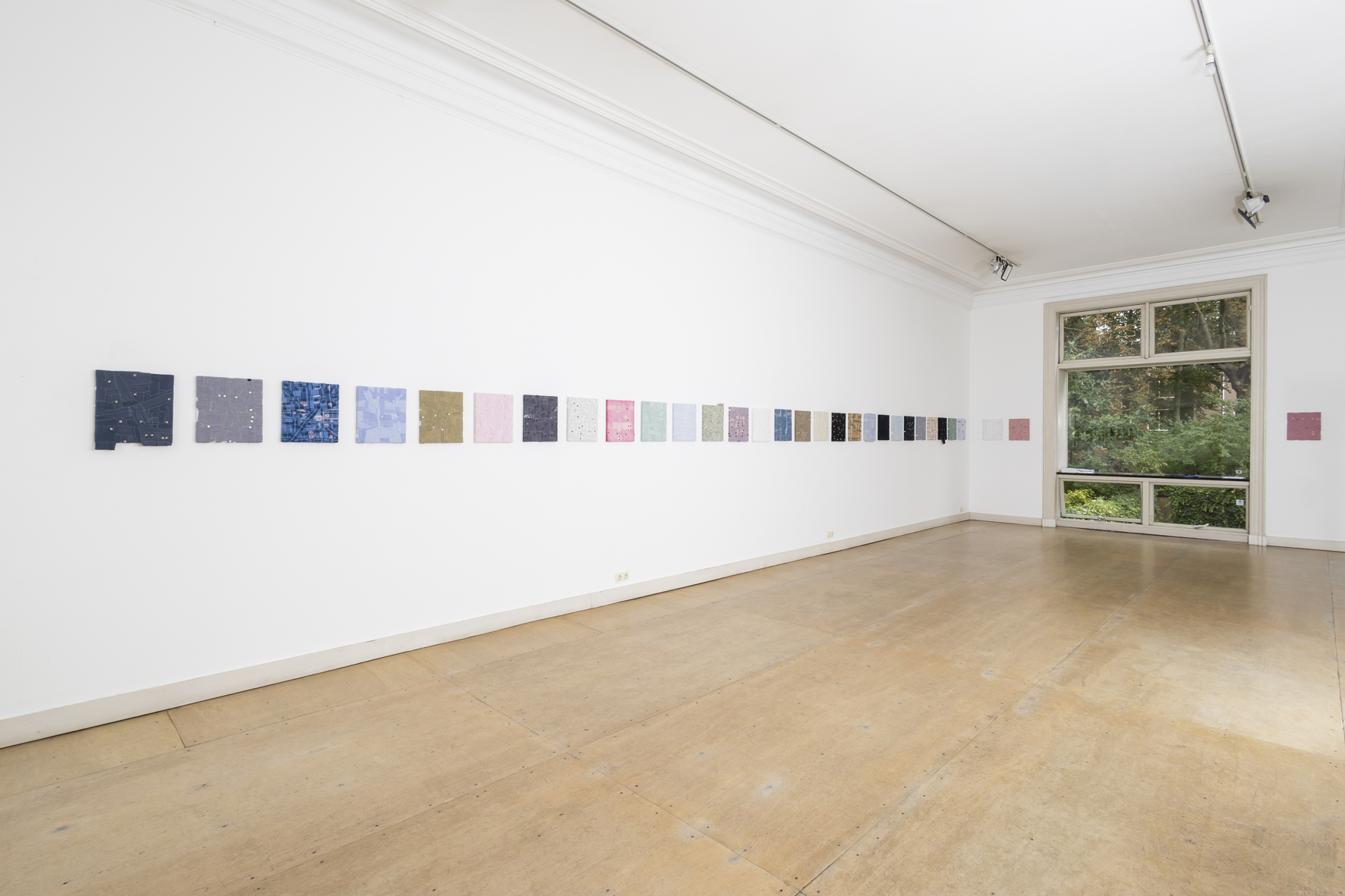
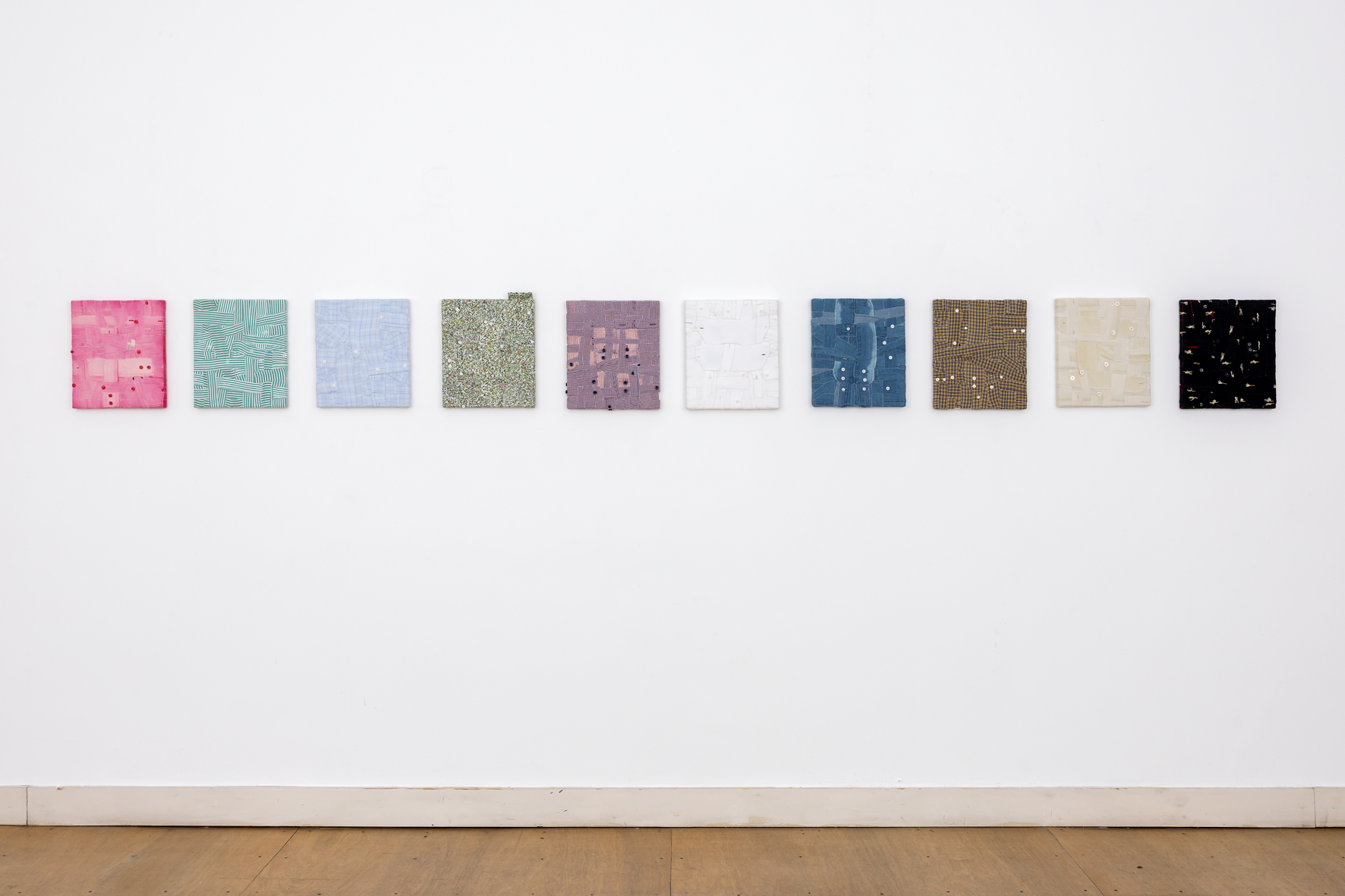
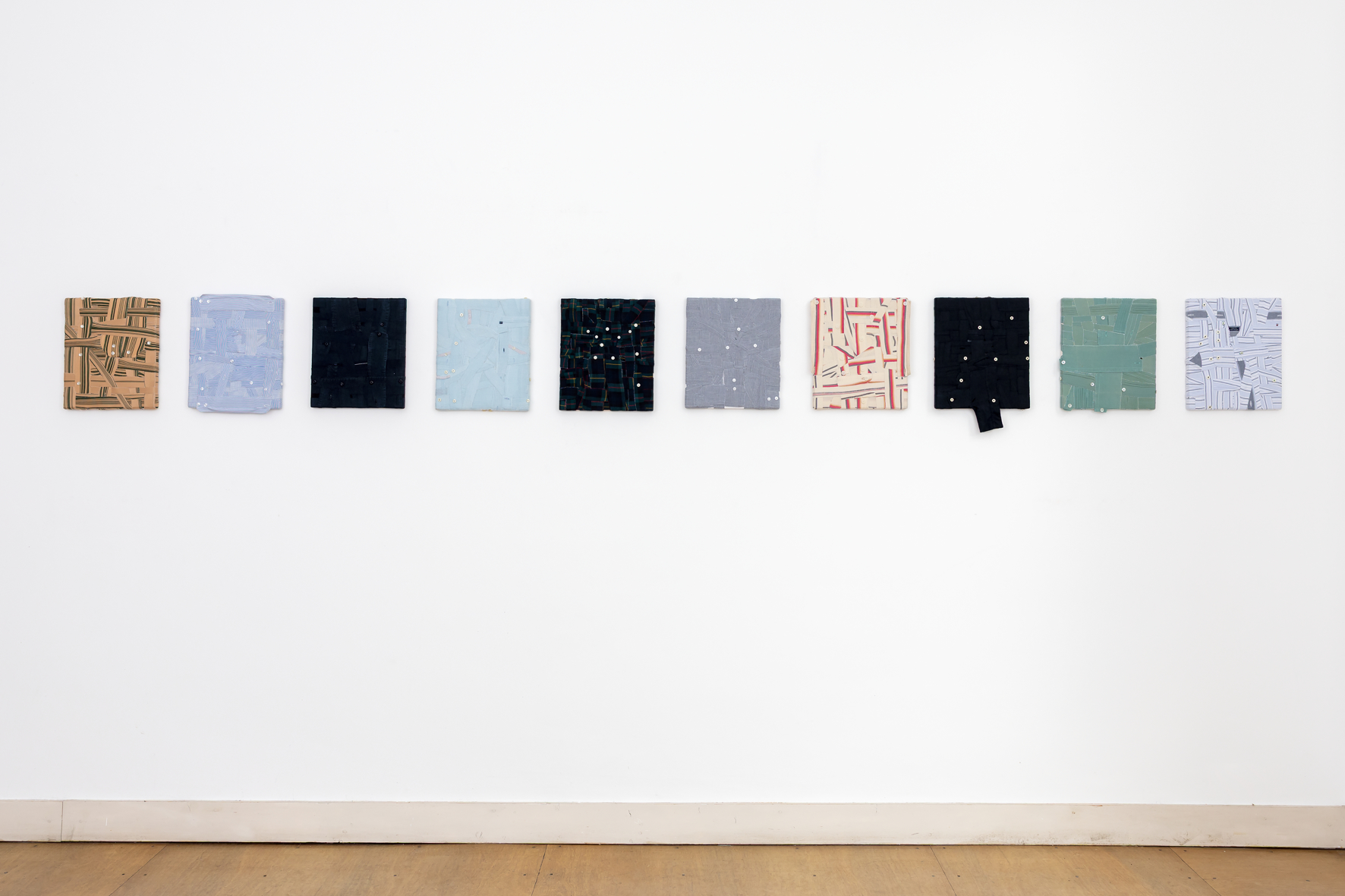
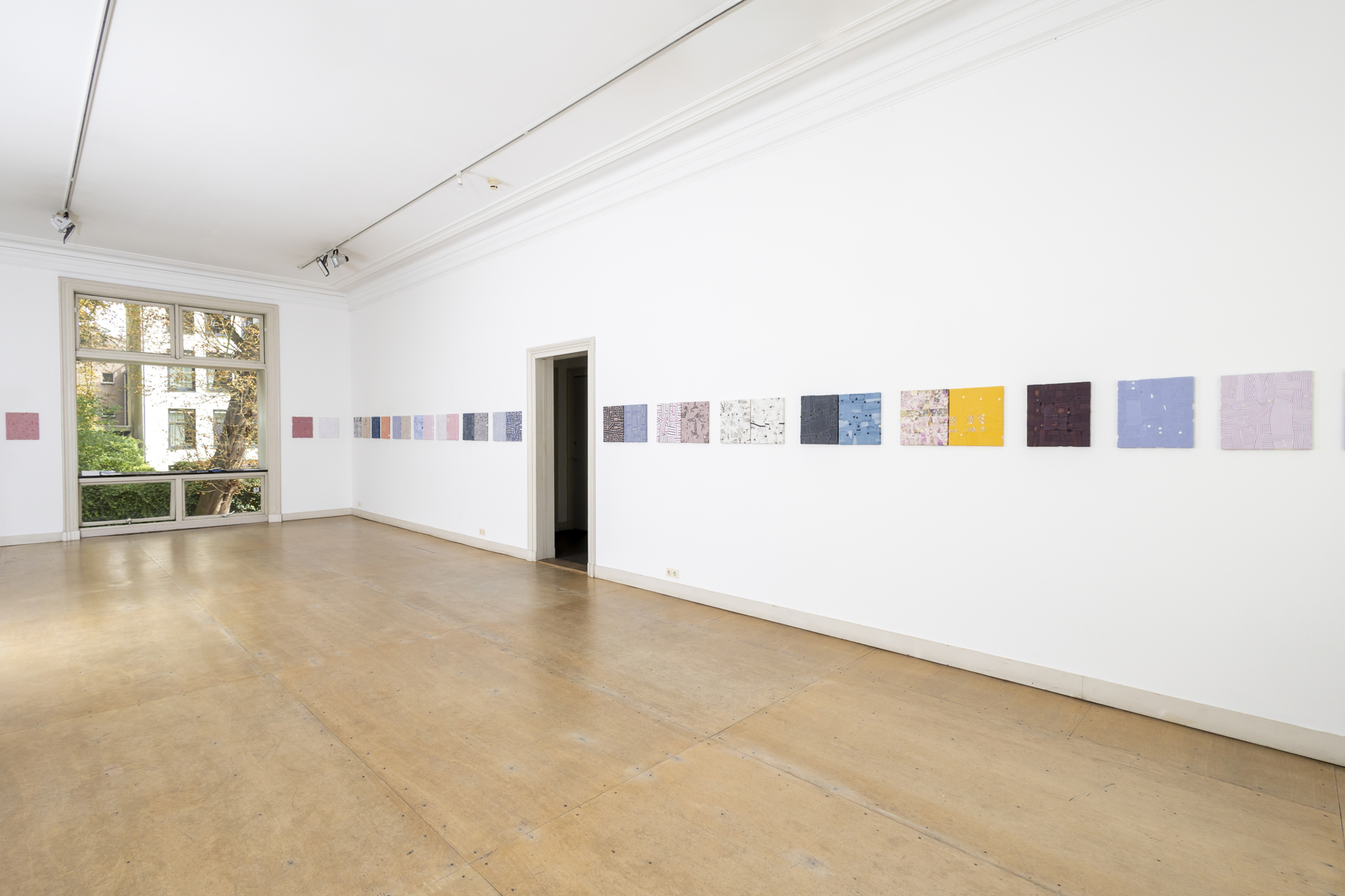
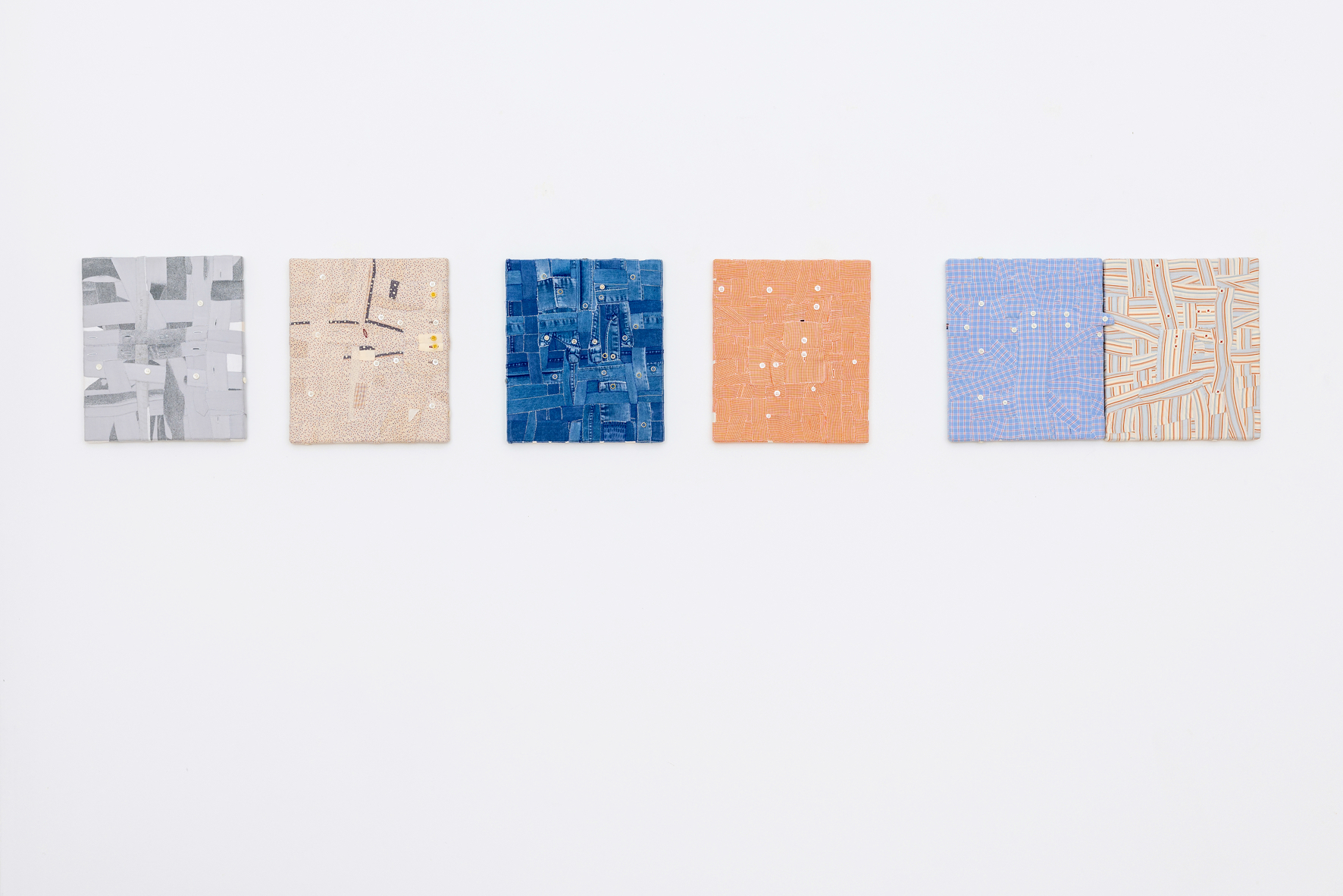
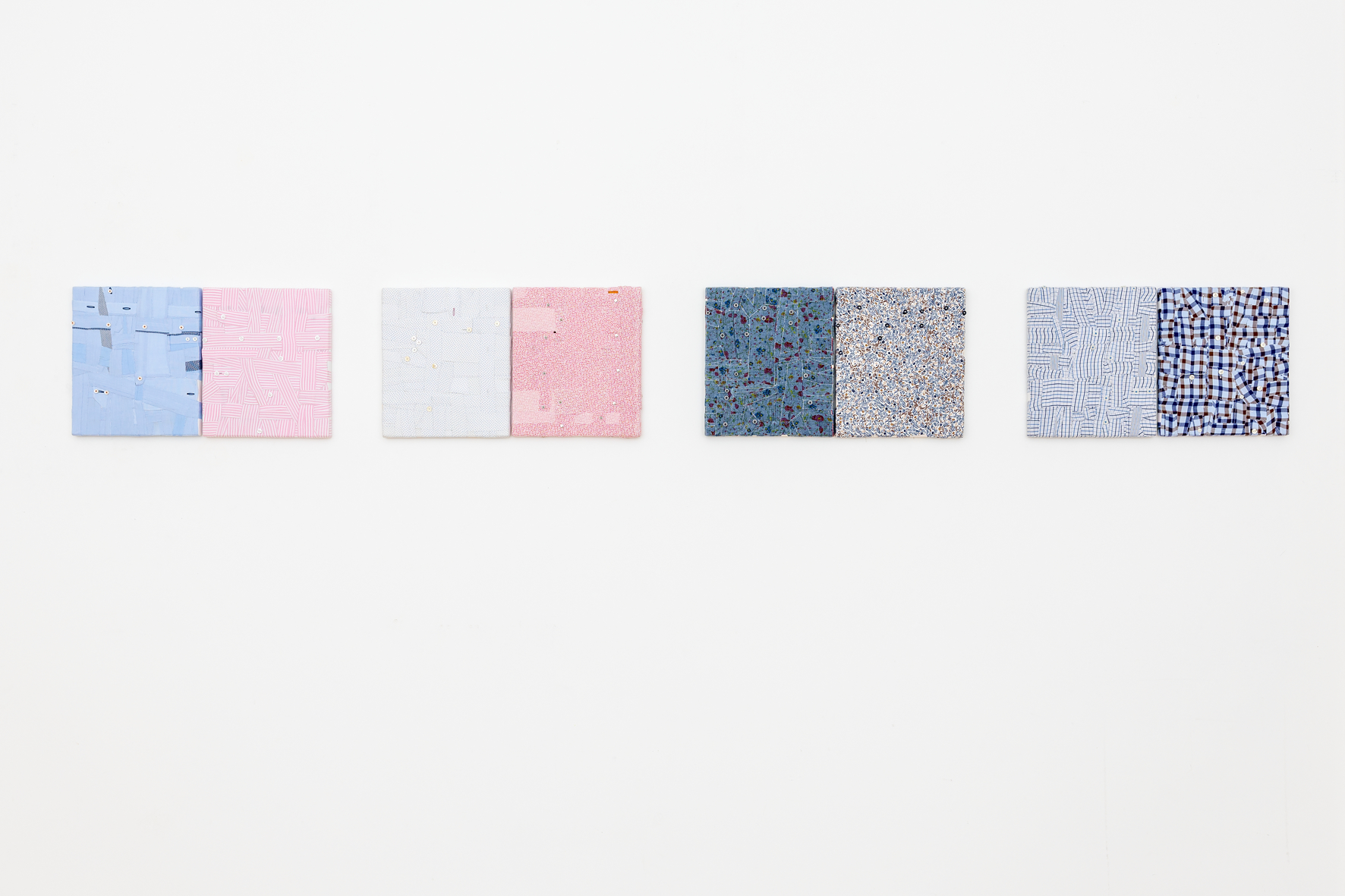
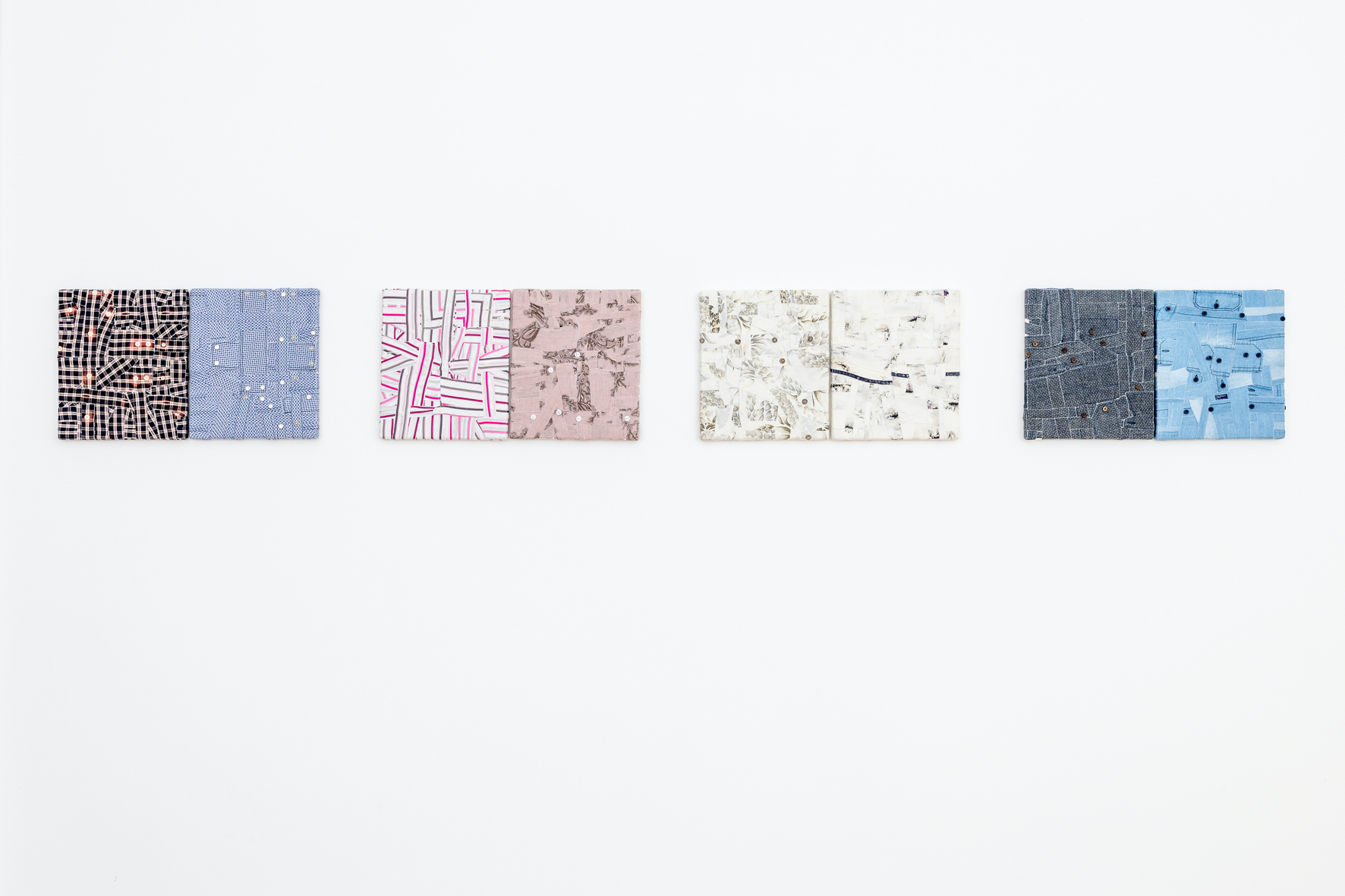
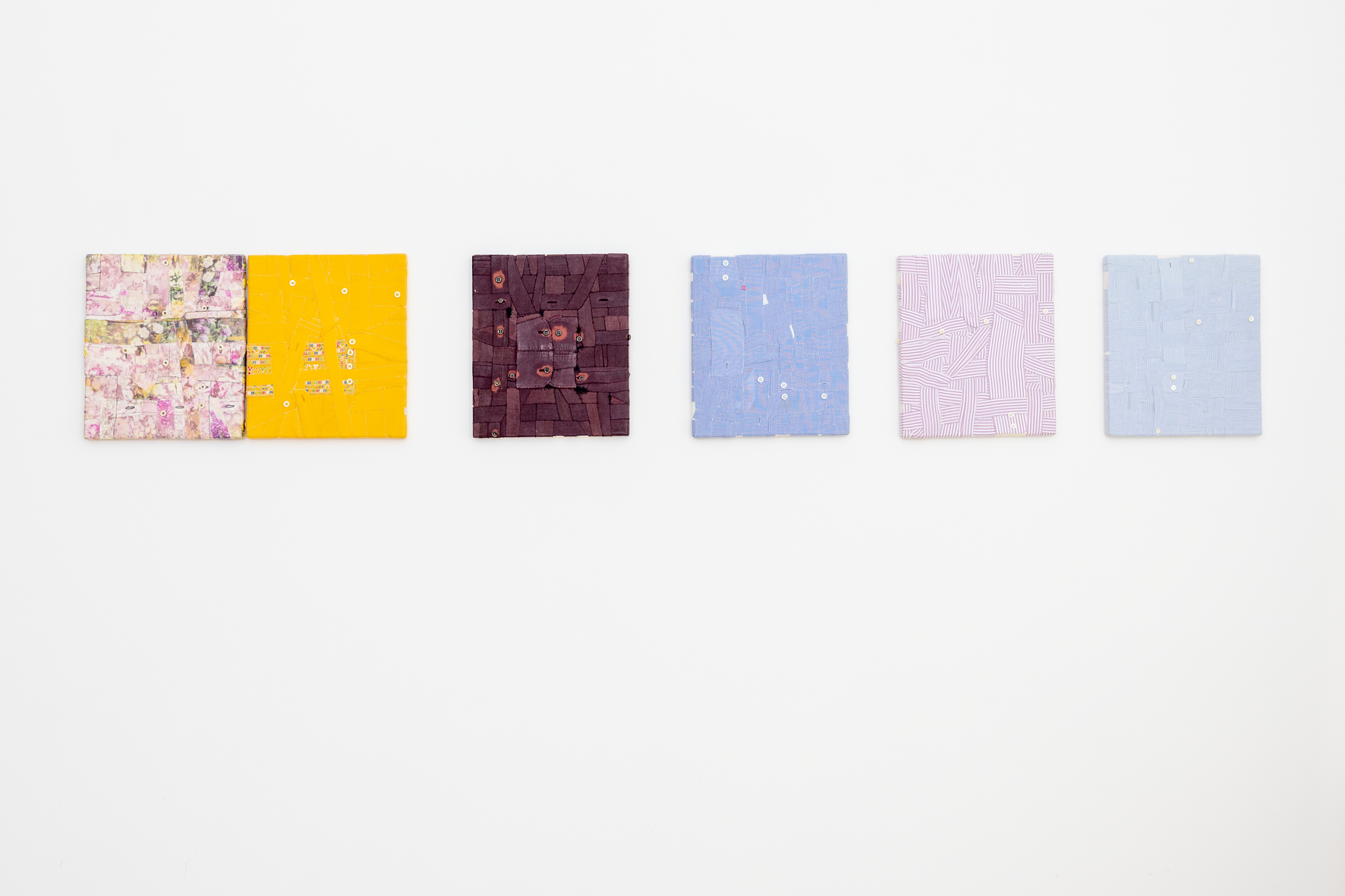
En nu zijn wij hier in zijn tentoonstelling Perfect Friends – Perfect Lovers, en zien we een serie van tientallen ongebruikelijke abstracte portretten van textiel. Ze zijn gemaakt van gedragen en geschonken overhemden van vrienden uit verschillende landen. Hij snijdt de hemden in repen en daarna weeft hij de stroken tot een rechthoek, vervolgens worden de onderdelen met de hand aan elkaar gestikt. Ook knoopjes, knoopsgaten, boordjes, en soms logos, worden meegenomen in het werk maar het is het fragiele samenbindende stiksel dat de aandacht vraagt. Elk hemd leidde tot een andere bewerking, minutieus genaaid met naald en draad en aandacht voor degene van wie het overhemd afkomstig is. Hij bewerkt het textiel zodanig dat het op een huid gaat lijken, en een persoonlijkheid krijgt. Hij stopt zijn eigen bezieling erin maar ook die van zijn vrienden. Ze dragen de namen van die vrienden en vriendenstellen. De maten van de portretten zijn klein en allemaal gelijk, ze hebben de menselijke maat. Ze tonen een andere mannelijkheid, de band en liefde tussen mannen.
De serie is een prachtige hommage aan de man.
Liesbeth den Besten, Rotterdam 7 september 2025
Foto’s zijn er niet van gemaakt, niet door Celio, en niet door mij. Het was het Pre-Digitale Tijdperk, maar ik ben blij met mijn herinneringen, die zijn mij goud waard.
Célio is in 1965 geboren op het Braziliaanse platteland, zo’n 10 uur met de bus van Sao Paolo - waar hij sinds zijn afstuderen de helft van het jaar woont (de andere helft woont hij in Amsterdam). Toen hij afstudeerde op de Rietveld Academie had hij al een hele weg afgelegd in de kunst: via academies in Sao Paolo en Boston (USA) waar hij schilderkunst studeerde, kwam hij in 1996 dankzij Dennis naar Amsterdam om textiel te studeren aan de Rietveld Academy. Na een jaar stapte hij over naar de sieradenafdeling waar hij les had van een fantastisch team docenten Ruudt Peters, Iris Eichenberg, en Marjan Unger.
Toch staat werken met metaal hem tegen en heeft hij nooit gesmede sieraden gemaakt. Het was de aandacht op de afdeling sieraden voor de mens en het lichaam die hem aantrokken. Hij houdt van zachte materialen, materialen die de huid aangeraakt hebben, hemden, lakens, zakdoeken. Een tijdlang werd hij omarmd door de sieradenwereld en exposeerde in de sieradengalerie van Louise Smit. Maar dat jasje paste hem niet.
Over de objecten van textiel, glaskralen en menselijk haar, die hij zo rond 2008 maakte schreef ik eens het volgende:
“ze zijn met de hand gestikt, zorgvuldig, minuut na minuut, uur na uur, in een soort ritueel continuüm. Dit is devotie, toewijding, vergelijkbaar met de manier waarop middeleeuwse monniken zich wijden aan de verluchting van manuscripten.”
Ik vroeg me af wat deze abstracte objecten in een sieradengalerie deden. Moest men ze dragen of niet en zo ja, waar was dan de speld? Hij erkent nu dat hij toen een zekere weerstand tegen sieraden had en dat hij de mensen een beetje wilde plagen, ze een keus wilde laten maken, wil je een object of wil je het kunnen dragen als sieraad. Daar had hij spelden voor maar uiteindelijk werkte het niet echt goed.
Célio was veel breder georiënteerd, hij deed performances, installaties, snijdsels in papier. Hij maakte een intense video, twee video’s tegenover elkaar geplaatst waar de kijker tussen stond, van zijn moeder van heel dichtbij gefilmd na het overlijden van haar dochter – a woman of sorrows. Een intiem portret dat ook in mijn geheugen gegrift staat.
Maar toch komt hij altijd weer bij textiel en borduren en stikken terug. Hij kan met naald en draad beeldhouwen – wat tweedimensionaal en alledaags is een vorm geven, een vorm die in niets meer herinnert aan de oorsprong van het object.
Célio werkte voor het eerst met witte overhemden in 2001-2002, vlak na zijn afstuderen.
Dankzij de introductie van een medicatie die HIV kon stoppen was er een eind aan de AIDS-crisis gekomen. Na een periode van ongeveer 20 jaar waarin de ziekte vreselijke sporen had nagelaten was de angst nog niet voorbij. Célio vroeg zijn vrienden om oude gedragen witte overhemden. Door middel van vouwen, stikken en borduren perste hij ze samen tot langwerpige organische vormen met kleine uitstulpingen en holtes. En met een geborduurde huid, een ragfijn netwerk van borduursels, die als een zich openende cocon gedeeltelijk om de vormen heen zit. Zo ontstond een intrigerende installatie van 28 hangende objecten die associaties met lichamen opriepen – de installatie is in 2023 nog tentoongesteld in Kunstmuseum Den Haag op zijn solotentoonstelling. Je zou ze kunnen zien als amuletten, bezielde beschermende pantsers tegen de kwade buitenwereld. Ze toonden zijn onvoorwaardelijke liefde voor zijn vrienden.
En nu zijn wij hier in zijn tentoonstelling Perfect Friends – Perfect Lovers, en zien we een serie van tientallen ongebruikelijke abstracte portretten van textiel. Ze zijn gemaakt van gedragen en geschonken overhemden van vrienden uit verschillende landen. Hij snijdt de hemden in repen en daarna weeft hij de stroken tot een rechthoek, vervolgens worden de onderdelen met de hand aan elkaar gestikt. Ook knoopjes, knoopsgaten, boordjes, en soms logos, worden meegenomen in het werk maar het is het fragiele samenbindende stiksel dat de aandacht vraagt. Elk hemd leidde tot een andere bewerking, minutieus genaaid met naald en draad en aandacht voor degene van wie het overhemd afkomstig is. Hij bewerkt het textiel zodanig dat het op een huid gaat lijken, en een persoonlijkheid krijgt. Hij stopt zijn eigen bezieling erin maar ook die van zijn vrienden. Ze dragen de namen van die vrienden en vriendenstellen. De maten van de portretten zijn klein en allemaal gelijk, ze hebben de menselijke maat. Ze tonen een andere mannelijkheid, de band en liefde tussen mannen.
De serie is een prachtige hommage aan de man.
Liesbeth den Besten, Rotterdam 7 september 2025
21/
ENVIESADO
Tálisson Melo
Aos 19 anos, no centro de Madri, dediquei uma manhã a passar por lojas de roupas sociais masculinas. Muitas calças pretas e camisas brancas, alguns tons de azul, cinza e marrom formavam uma paisagem sem sobressaltos. A missão era fazer jus ao investimento da minha mãe ao me mandar dinheiro para comprar uma "roupa melhorzinha” já que eu receberia congratulaciones em um evento público na universidade. Busquei uma camisa confortável e barata, mas que poderia “imprimir bem” a seriedade merecedora de honraria. Vestindo a camisa escolhida, a sensação era de que minha pele se fundia com o tecido da roupa e algo em mim se transformava para sempre (?!)… De lá para cá, usei essa camisa por não mais que quatro vezes até meus 26 anos. A guardei inútil no cabide até hoje, o fato de que ainda me caia bem revela uma fôrma persistente em relação ao meu corpo mais adulto.
Agora, aos 34 anos, escrevendo este texto para a exposição de Célio Braga — que decidimos intitular de enviesado —, me conformo com a ideia de entregar a seus cuidados essa camisa carregada de uma memória singular da ritualização de certa masculinidade/civilidade. Sei que essa camisa será desconstruída em rasgos e cortes a serem esticados e enrolados sobre um chassi de madeira, criando um dos 14 retratos têxteis da série perfect friends - perfect lovers. Cada retrato parte dessa mesma operação de desfazer camisas também dadas por homens com quem Célio mantém alguma relação — são amigos, amantes, companheiros, colegas, conhecidos, pais, filhos, irmãos, sobrinhos, mais jovens e mais velhos, brasileiros, estrangeiros, heterossexuais, bissexuais, homossexuais… Depois, o ato de reconstruí-las por meio da costura e bordado em outra configuração, sobre módulos retangulares de 35 x 30 cm. As distintas cores, padronagens, tipos de tecidos e detalhes como pences, pregas, bolsos, carcelas, etiquetas, botões e casas projetam os aspectos próprios de cada retrato.
Célio trabalha sobre coisas ancoradas em memórias de uso, algo que vai tão junto da pele, a cobrindo e protegendo, mas, principalmente, servindo como fôrma do que já está no mundo agindo sobre o corpo e da maneira como o corpo se coloca no mundo. Há ainda o gesto de desapego em doá-las, de algum modo ligado a despir-se e deixar-se ser tocado, algo próprio das variadas relações entre homens que o conjunto reencena pela presença óbvia do toque, de se poder ver o artista habitar nesses corpos pela pele, do avesso. A pele como matéria mediadora que funde eu e o mundo — “be matter itself!”.[1]
Trabalhos anteriores de Célio trazem a pele fotografada e impressa em papel, que ele perfura e sutura, salientando sua porosidade e permeabilidade como prolongação indistinta entre dentro e fora, das e nas relações, trocas e afetações.[2]Ao destruir as camisas e enquadrar seus fragmentos em outra ordenação para, então, costurá-las de novo, bordando meticulosamente as partes que se sobrepõem e se emaranham, a ação criativa de Célio se dá por horas em um corpo a corpo cheio de impulsos e cálculos, uma negociação constante com os materiais, com seu desejo, sua técnica e seu próprio corpo em trabalho.
Ao conhecer mais sobre a trajetória pessoal e artística de Célio e passar a fazer parte do processo em que vem construindo esses retratos imperfeitos de amigos-amantes, retomei as indagações que Michel Foucault devolvera ao ser entrevistado, em 1981, acerca do modo de vida homossexual:[3]
Quais relações podem ser estabelecidas, inventadas, multiplicadas, moduladas através da homossexualidade?
Como é possível para homens estarem juntos? Viver juntos, compartilhar seus tempos, suas refeições, seus quartos, seus lazeres, suas aflições, seus saberes, suas confidências?
O que é isso de estar entre homens, "despidos", fora das relações institucionais, de família, de profissão, de companheirismo obrigatório?
A resposta aberta à sua própria pergunta indica a possibilidade de se reimaginar as relações, a amizade, a intimidade e a vida comunitária. Isso aparece com muita força no trabalho de Célio. Esse desejo-inquietação convida a se reinventar relações variáveis, individualmente moduladas, ainda sem fôrmas, que se projetam para além do ato sexual entre homens ou da ideia de fusão amorosa das identidades — assim, cada retrato vai se fazendo e ganha o nome de quem vestia a peça de roupa desconstruída. Estabelecer um modo de vida homossexual, introduzindo o prazer e o amor onde só se via a lei, a regra ou o hábito, é o que perturba a lógica tradicional da família nuclear e a heteronormatividade. Esse conjunto de retratos bordados pode ser visto como materialização das diversas possibilidades de se tramar relações, construir formas únicas e maleáveis de contatos e conexões com outros homens. Na urdidura do cuidado, do prazer, da intimidade, ética, cumplicidade, companheirismo, erotismo e desejo, as peças evidenciam rearranjos relativamente reversíveis, abertos a outras reconfigurações:
A homossexualidade é uma ocasião histórica de reabrir virtualidades relacionais e afetivas, não tanto pelas qualidades intrínsecas do homossexual, mas pela posição de "enviesado", de alguma forma, as linhas diagonais que ele pode traçar no tecido social, as quais permitem fazer aparecerem essas virtualidades.
Com a fôrma das camisas sociais e com os gestos de ajustá-las e abotoá-las, imagens de um corpo disciplinado rotinizam o estereótipo de masculinidade associado à racionalidade, autoridade, higiene, assepsia, seriedade, profissionalismo, ordem e controle. As camisas brancas de punhos estreitos, em particular, enfatizavam a uniformização de uma identidade coletiva masculina associada ao “neutro”, ao “universal”, valores associados à performance hegemônica de gênero, classe e raça na sociedade burguesa desde pelo menos meados do século XIX.[4] Já contamos com uma história da relação entre moda e cultura queer permeada por expressões de inconformação polivalentes, a apropriação das camisas nas festas, ruas e passarelas afirmam a artificialidade das ordenações binárias do feminino e do masculino, gerando outras configurações, às vezes tão radicais que abalam até mesmo a noção de uma fôrma humana. No entanto, as camisas convencionais empregadas por Célio nesses trabalhos recentes chamam mais atenção para a manutenção dessa fôrma de corpos masculinos, os interstícios ambíguos entre adequação, repressão, docilidade e esconderijo de um lado, e erotismo, despojamento e ironia camp, do outro. Com a desconstrução de cada uma e sua reconstrução “enviesada”, nas direções oblíquas das relações vivas, emerge o desalinho, o entortado, o inadequado.
Em jogo com as casas desabotoadas, alguns buracos e falhas na cobertura da quase-superfície se fazem às vezes mais ou menos evidentes, porém, sempre ruidosos ao olhar mais atento e aproximado. Nitidamente propositais, essas lacunas permitem cada retrato respirar e palpitar na iminência de serem desfeitos novamente ou alterados por mais emendas, outras camadas de pano, alguma pele ou corpo que se interponha ali, antes da parede. A mesma coisa acontece com as sobras ou dobras que se desprendem do retângulo ou do plano como abscessos, apêndices, cicatrizes ou tentáculos. Seriam pistas de um desinteresse ao enquadramento absoluto, evidência da vontade de transbordamento em que cada relação implica. Ambos elementos reforçam o desapego pelo acabamento, o esmero objetivado no bordado também ostenta o erro, o desvio, o remendo e as correções mal-sucedidas, indícios das negociações em termos nunca totalmente sem atritos ou opacidades, entre corpo-mente e objeto-matéria, entre eu e outro — como no que se vive em relação.
A historiadora de arte e psicanalista Rozsika Parker[5] mapeou o processo histórico de declínio do status do bordado do fim da Idade Média até sua consolidação na constelação das “artes menores”. Também no século XIX, com a divisão arte/artesanato, o bordado passava de uma forma de arte elevada praticada por homens e mulheres, particularmente na Inglaterra, para ser visto como ofício inferior e feminino marginalizado ao âmbito doméstico, do que é feito por mulheres e “por amor”. Isso coloca a prática de bordar como central na afirmação de uma ideologia hegemônica da feminilidade. Parker aponta para os dados de pesquisas realizadas no final dos anos 1970 — quando se afirmava que “o bordado é o passatempo preferido de 2% dos homens britânicos, mais ou menos a mesma quantidade daqueles que frequentam a igreja regularmente”. Ela mostra a permanência desse estereótipo e as assimetrias embutidas no interior da divisão sexual do trabalho: “só maricas e mulheres costuram e vão a cultos”.[6]
Mais recentemente, o historiador Joseph McBrinn,[7] e em diálogo direto com Parker, analisa o papel do bordado na criação e subversão da masculinidade: embora se tenha registros da presença do bordado na educação básica de meninos da classe operária no século XIX para acalmá-los; bem como nas dinâmicas tradicionais de ócio dos marinheiros que bordavam presentes para entes queridos sem terem abalada a hipermasculinidade associada a sua profissão; um dos efeitos da centralidade do bordado na “criação da feminilidade” é sua estigmatização como “efeminante” e sua afirmação como uma espécie de “ousado emblema da auto-identificação queer”. Questionando a rigidez da heteronorma em contexto de criminalização da homossexualidade, homens gays bordaram uma codificação íntima de sua vida sexual e afetiva, até mais tarde se ostentar o bordado na celebração camp das possibilidades de sua existência. Longe de afirmar uma essência feminina, gay, queer, dócil e amorosa sobre o bordado, é ainda possível observar como essa prática meticulosa se afirmou historicamente como símbolo de cuidado e amor, sem deixar de se inscrever como uma reivindicação política ruidosa que vai morando nos detalhes.
Ao ver pronto meu retrato, com minha camisa destruída, manchada e recosturada, levando ainda meu nome como título, reconheço algumas dobras de um passado que ainda cabe no corpo, mas que também passa a se desprender de mim. Umas tantas gramas de pó de gesso infiltrado pela pele, entupindo os poros e endurecendo cada articulação, começasse a se esvair. É como se o gesto de Célio pudesse alcançar a musculatura, os nervos, os tendões, liberando o corpo de uma camisa de força interna. No quadro, desfeita e reconfigurada, a camisa chama mais atenção para tudo o que não se conteve e não se moldou. Ao finalizar cada um dos retratos têxteis de perfect friends - perfect lovers com bordado, o trabalho de Célio Braga apresentado em enviesado se insere nessa trama de reinvenções para existência das relações entre homens e da própria ideia de masculinidade, encenando também a repetição do gesto propositivo que vejo enunciado nos últimos versos de um poema de Camila Sosa Villada[8]:
…
Continuemos a nos amar neste pântano de contradições.
Continuemos a nos dar as mãos na rua,
beijos no trem e abraços na grama.
Continuemos a nos vestir de mulheres,
a nos vestir de homem.
Continuemos a perdoar e a amar,
e não nos afastemos do trabalho lento e eficaz do amor…
mesmo que pareça piegas.
A verdade é que há coisas que deixaram de ser óbvias.
[1] Citação direta de As Tentações de Santo Antão de Gustave Flaubert (1874) inscrita na obra Deliriously (2005).
[2] Ernst van Alphen (2006) evoca a noção de skin ego do psicanalista Didier Anzieu para enfatizar a negação da pele como fronteira absoluta entre indivíduo e o mundo no obra de Célio Braga, abordando-a mais como “conectividades íntimas” para afirmar um corpo vulnerável.
[3] De l'amitié comme mode de vie. Entrevista de Michel Foucault a R. de Ceccatty, J. Danet e J. le
Bitoux, publicada no jornal Gai Pied, nº 25, abril de 1981. Tradução por Wanderson Flor do Nascimento e publicada no site Espaço Michel Foucault (2001).
[4] A relação da moda com os estereótipos de gênero é escrutinada por Joanne Entwistle em The Fashionable Body: Fashion, Dress & Modern Social Theory (2015).
[5] Rozsika Parker. The Subversive Stitch: Embroidery and the Making of the Feminine (1984).
[6] Sobre a presença do bordado na arte brasileira, com indicação de outras autorias masculinas que o empregaram, ver o catálogo da exposição Transbordar: transgressões do bordado na arte, curada por Ana Paula Simioni no Sesc Pinheiros, São Paulo, com textos de Rosana Paulino e Carmen Cordero Reiman (2020-2021).
[7] Joseph McBrinn. Queering the Subversive Stitch: Men and the Culture of Needlework (2020).
[8] Publicado primeiramente em 2015, o poema foi traduzido do espanhol por Joca Reiners e publicado na coletânea A namorada de Sandro(2024).
Agora, aos 34 anos, escrevendo este texto para a exposição de Célio Braga — que decidimos intitular de enviesado —, me conformo com a ideia de entregar a seus cuidados essa camisa carregada de uma memória singular da ritualização de certa masculinidade/civilidade. Sei que essa camisa será desconstruída em rasgos e cortes a serem esticados e enrolados sobre um chassi de madeira, criando um dos 14 retratos têxteis da série perfect friends - perfect lovers. Cada retrato parte dessa mesma operação de desfazer camisas também dadas por homens com quem Célio mantém alguma relação — são amigos, amantes, companheiros, colegas, conhecidos, pais, filhos, irmãos, sobrinhos, mais jovens e mais velhos, brasileiros, estrangeiros, heterossexuais, bissexuais, homossexuais… Depois, o ato de reconstruí-las por meio da costura e bordado em outra configuração, sobre módulos retangulares de 35 x 30 cm. As distintas cores, padronagens, tipos de tecidos e detalhes como pences, pregas, bolsos, carcelas, etiquetas, botões e casas projetam os aspectos próprios de cada retrato.
Célio trabalha sobre coisas ancoradas em memórias de uso, algo que vai tão junto da pele, a cobrindo e protegendo, mas, principalmente, servindo como fôrma do que já está no mundo agindo sobre o corpo e da maneira como o corpo se coloca no mundo. Há ainda o gesto de desapego em doá-las, de algum modo ligado a despir-se e deixar-se ser tocado, algo próprio das variadas relações entre homens que o conjunto reencena pela presença óbvia do toque, de se poder ver o artista habitar nesses corpos pela pele, do avesso. A pele como matéria mediadora que funde eu e o mundo — “be matter itself!”.[1]
Trabalhos anteriores de Célio trazem a pele fotografada e impressa em papel, que ele perfura e sutura, salientando sua porosidade e permeabilidade como prolongação indistinta entre dentro e fora, das e nas relações, trocas e afetações.[2]Ao destruir as camisas e enquadrar seus fragmentos em outra ordenação para, então, costurá-las de novo, bordando meticulosamente as partes que se sobrepõem e se emaranham, a ação criativa de Célio se dá por horas em um corpo a corpo cheio de impulsos e cálculos, uma negociação constante com os materiais, com seu desejo, sua técnica e seu próprio corpo em trabalho.
Ao conhecer mais sobre a trajetória pessoal e artística de Célio e passar a fazer parte do processo em que vem construindo esses retratos imperfeitos de amigos-amantes, retomei as indagações que Michel Foucault devolvera ao ser entrevistado, em 1981, acerca do modo de vida homossexual:[3]
Quais relações podem ser estabelecidas, inventadas, multiplicadas, moduladas através da homossexualidade?
Como é possível para homens estarem juntos? Viver juntos, compartilhar seus tempos, suas refeições, seus quartos, seus lazeres, suas aflições, seus saberes, suas confidências?
O que é isso de estar entre homens, "despidos", fora das relações institucionais, de família, de profissão, de companheirismo obrigatório?
A resposta aberta à sua própria pergunta indica a possibilidade de se reimaginar as relações, a amizade, a intimidade e a vida comunitária. Isso aparece com muita força no trabalho de Célio. Esse desejo-inquietação convida a se reinventar relações variáveis, individualmente moduladas, ainda sem fôrmas, que se projetam para além do ato sexual entre homens ou da ideia de fusão amorosa das identidades — assim, cada retrato vai se fazendo e ganha o nome de quem vestia a peça de roupa desconstruída. Estabelecer um modo de vida homossexual, introduzindo o prazer e o amor onde só se via a lei, a regra ou o hábito, é o que perturba a lógica tradicional da família nuclear e a heteronormatividade. Esse conjunto de retratos bordados pode ser visto como materialização das diversas possibilidades de se tramar relações, construir formas únicas e maleáveis de contatos e conexões com outros homens. Na urdidura do cuidado, do prazer, da intimidade, ética, cumplicidade, companheirismo, erotismo e desejo, as peças evidenciam rearranjos relativamente reversíveis, abertos a outras reconfigurações:
A homossexualidade é uma ocasião histórica de reabrir virtualidades relacionais e afetivas, não tanto pelas qualidades intrínsecas do homossexual, mas pela posição de "enviesado", de alguma forma, as linhas diagonais que ele pode traçar no tecido social, as quais permitem fazer aparecerem essas virtualidades.
Com a fôrma das camisas sociais e com os gestos de ajustá-las e abotoá-las, imagens de um corpo disciplinado rotinizam o estereótipo de masculinidade associado à racionalidade, autoridade, higiene, assepsia, seriedade, profissionalismo, ordem e controle. As camisas brancas de punhos estreitos, em particular, enfatizavam a uniformização de uma identidade coletiva masculina associada ao “neutro”, ao “universal”, valores associados à performance hegemônica de gênero, classe e raça na sociedade burguesa desde pelo menos meados do século XIX.[4] Já contamos com uma história da relação entre moda e cultura queer permeada por expressões de inconformação polivalentes, a apropriação das camisas nas festas, ruas e passarelas afirmam a artificialidade das ordenações binárias do feminino e do masculino, gerando outras configurações, às vezes tão radicais que abalam até mesmo a noção de uma fôrma humana. No entanto, as camisas convencionais empregadas por Célio nesses trabalhos recentes chamam mais atenção para a manutenção dessa fôrma de corpos masculinos, os interstícios ambíguos entre adequação, repressão, docilidade e esconderijo de um lado, e erotismo, despojamento e ironia camp, do outro. Com a desconstrução de cada uma e sua reconstrução “enviesada”, nas direções oblíquas das relações vivas, emerge o desalinho, o entortado, o inadequado.
Em jogo com as casas desabotoadas, alguns buracos e falhas na cobertura da quase-superfície se fazem às vezes mais ou menos evidentes, porém, sempre ruidosos ao olhar mais atento e aproximado. Nitidamente propositais, essas lacunas permitem cada retrato respirar e palpitar na iminência de serem desfeitos novamente ou alterados por mais emendas, outras camadas de pano, alguma pele ou corpo que se interponha ali, antes da parede. A mesma coisa acontece com as sobras ou dobras que se desprendem do retângulo ou do plano como abscessos, apêndices, cicatrizes ou tentáculos. Seriam pistas de um desinteresse ao enquadramento absoluto, evidência da vontade de transbordamento em que cada relação implica. Ambos elementos reforçam o desapego pelo acabamento, o esmero objetivado no bordado também ostenta o erro, o desvio, o remendo e as correções mal-sucedidas, indícios das negociações em termos nunca totalmente sem atritos ou opacidades, entre corpo-mente e objeto-matéria, entre eu e outro — como no que se vive em relação.
A historiadora de arte e psicanalista Rozsika Parker[5] mapeou o processo histórico de declínio do status do bordado do fim da Idade Média até sua consolidação na constelação das “artes menores”. Também no século XIX, com a divisão arte/artesanato, o bordado passava de uma forma de arte elevada praticada por homens e mulheres, particularmente na Inglaterra, para ser visto como ofício inferior e feminino marginalizado ao âmbito doméstico, do que é feito por mulheres e “por amor”. Isso coloca a prática de bordar como central na afirmação de uma ideologia hegemônica da feminilidade. Parker aponta para os dados de pesquisas realizadas no final dos anos 1970 — quando se afirmava que “o bordado é o passatempo preferido de 2% dos homens britânicos, mais ou menos a mesma quantidade daqueles que frequentam a igreja regularmente”. Ela mostra a permanência desse estereótipo e as assimetrias embutidas no interior da divisão sexual do trabalho: “só maricas e mulheres costuram e vão a cultos”.[6]
Mais recentemente, o historiador Joseph McBrinn,[7] e em diálogo direto com Parker, analisa o papel do bordado na criação e subversão da masculinidade: embora se tenha registros da presença do bordado na educação básica de meninos da classe operária no século XIX para acalmá-los; bem como nas dinâmicas tradicionais de ócio dos marinheiros que bordavam presentes para entes queridos sem terem abalada a hipermasculinidade associada a sua profissão; um dos efeitos da centralidade do bordado na “criação da feminilidade” é sua estigmatização como “efeminante” e sua afirmação como uma espécie de “ousado emblema da auto-identificação queer”. Questionando a rigidez da heteronorma em contexto de criminalização da homossexualidade, homens gays bordaram uma codificação íntima de sua vida sexual e afetiva, até mais tarde se ostentar o bordado na celebração camp das possibilidades de sua existência. Longe de afirmar uma essência feminina, gay, queer, dócil e amorosa sobre o bordado, é ainda possível observar como essa prática meticulosa se afirmou historicamente como símbolo de cuidado e amor, sem deixar de se inscrever como uma reivindicação política ruidosa que vai morando nos detalhes.
Ao ver pronto meu retrato, com minha camisa destruída, manchada e recosturada, levando ainda meu nome como título, reconheço algumas dobras de um passado que ainda cabe no corpo, mas que também passa a se desprender de mim. Umas tantas gramas de pó de gesso infiltrado pela pele, entupindo os poros e endurecendo cada articulação, começasse a se esvair. É como se o gesto de Célio pudesse alcançar a musculatura, os nervos, os tendões, liberando o corpo de uma camisa de força interna. No quadro, desfeita e reconfigurada, a camisa chama mais atenção para tudo o que não se conteve e não se moldou. Ao finalizar cada um dos retratos têxteis de perfect friends - perfect lovers com bordado, o trabalho de Célio Braga apresentado em enviesado se insere nessa trama de reinvenções para existência das relações entre homens e da própria ideia de masculinidade, encenando também a repetição do gesto propositivo que vejo enunciado nos últimos versos de um poema de Camila Sosa Villada[8]:
…
Continuemos a nos amar neste pântano de contradições.
Continuemos a nos dar as mãos na rua,
beijos no trem e abraços na grama.
Continuemos a nos vestir de mulheres,
a nos vestir de homem.
Continuemos a perdoar e a amar,
e não nos afastemos do trabalho lento e eficaz do amor…
mesmo que pareça piegas.
A verdade é que há coisas que deixaram de ser óbvias.
[1] Citação direta de As Tentações de Santo Antão de Gustave Flaubert (1874) inscrita na obra Deliriously (2005).
[2] Ernst van Alphen (2006) evoca a noção de skin ego do psicanalista Didier Anzieu para enfatizar a negação da pele como fronteira absoluta entre indivíduo e o mundo no obra de Célio Braga, abordando-a mais como “conectividades íntimas” para afirmar um corpo vulnerável.
[3] De l'amitié comme mode de vie. Entrevista de Michel Foucault a R. de Ceccatty, J. Danet e J. le
Bitoux, publicada no jornal Gai Pied, nº 25, abril de 1981. Tradução por Wanderson Flor do Nascimento e publicada no site Espaço Michel Foucault (2001).
[4] A relação da moda com os estereótipos de gênero é escrutinada por Joanne Entwistle em The Fashionable Body: Fashion, Dress & Modern Social Theory (2015).
[5] Rozsika Parker. The Subversive Stitch: Embroidery and the Making of the Feminine (1984).
[6] Sobre a presença do bordado na arte brasileira, com indicação de outras autorias masculinas que o empregaram, ver o catálogo da exposição Transbordar: transgressões do bordado na arte, curada por Ana Paula Simioni no Sesc Pinheiros, São Paulo, com textos de Rosana Paulino e Carmen Cordero Reiman (2020-2021).
[7] Joseph McBrinn. Queering the Subversive Stitch: Men and the Culture of Needlework (2020).
[8] Publicado primeiramente em 2015, o poema foi traduzido do espanhol por Joca Reiners e publicado na coletânea A namorada de Sandro(2024).
20/
ENVIESADO
Tálisson Melo
At nineteen, in downtown Madrid, I spent a morning browsing men’s formalwear shops. Black trousers and white shirts dominated the scene, punctuated by a few muted tones of blue, grey, and brown — a landscape without surprises. My mission was to honor my mother’s investment, as she had sent me money to buy “a nicer outfit” for a public event at the university where I was to receive congratulaciones. I looked for a shirt that was both affordable and comfortable, yet capable of “projecting” the seriousness that such recognition seemed to require. Wearing the chosen shirt, I had the sensation that my skin fused with the fabric and that something in me had shifted forever (?!)… Since then, I wore that shirt no more than four times, up until I turned twenty-six. I’ve kept it uselessly hanging in the closet to this day; the fact that it still fits reveals a persistent mold in relation to my more adult body.
Now, at thirty-four, writing this text for Célio Braga’s exhibition — which we’ve titled Enviesado — I accept the idea of entrusting this shirt to his care. A garment marked by a singular memory of the ritualization of a certain masculinity/civility. I know the shirt will be deconstructed into cuts and strips, stretched and wrapped around a wooden frame to become one of the many textile portraits in the series perfect friends - perfect lovers. Each portrait begins with this same act of undoing shirts offered by men with whom Célio maintains some kind of relationship — friends, lovers, partners, colleagues, acquaintances, fathers, sons, brothers, nephews; younger and older, Brazilian and foreign, heterosexual, bisexual, homosexual… Then, they are reconstructed through sewing and embroidery in a new configuration, on rectangular modules measuring 35 x 30 cm. The various colors, patterns, fabric types, and details — darts, pleats, pockets, plackets, labels, buttons, and buttonholes — give shape to the distinctive features of each portrait.
Célio works with things anchored in memories of use — objects that have lived close to the skin, covering and protecting it, but above all serving as molds for what already exists in the world and acts upon the body, and for the way the body positions itself in the world. There is also a gesture of detachment in offering them up, somehow tied to undressing and allowing oneself to be touched — something inherent to the varied relationships between men, which the work reenacts through the obvious presence of touch, of the artist being seen as inhabiting these bodies through the skin, from the inside out. Skin as a mediating matter that merges self and world — “be matter itself!”.[1]
In earlier works, Célio photographed and printed images of skin on paper, which he then pierced and sutured, highlighting its porosity and permeability as an indistinct extension between inside and outside — of and within relationships, affective exchanges.[2] By destroying shirts and reframing their fragments into a new arrangement before sewing them back together — meticulously embroidering the overlapping and entangled parts — Célio’s creative act unfolds through hours of bodily engagement, full of impulses and calculations: a constant negotiation with the materials, with his desire, his technique, and his own body at work.
Upon learning more about Célio’s personal and artistic trajectory and becoming part of the process through which he has been creating these imperfect portraits of friend-lovers, I revisited the questions Michel Foucault answered in a 1981 interview regarding the homosexual way of life:[3]
What kinds of relationships can be established, invented, multiplied, and modulated through homosexuality? How is it possible for men to be together?
To live together, share their time, meals, rooms, leisure, sufferings, knowledge, confidences?
What does it mean to be among men, “undressed,” outside institutional relations—family, profession, obligatory companionship?
The open-ended answer to his own question points to the possibility of reimagining relationships, friendship, intimacy, and communal life. This resonates strongly in Célio’s work. This desire–unease invites the reinvention of variable, individually modulated relationships, still without fixed forms, which project beyond the sexual act between men or the idea of amorous fusion of identities — thus, each portrait gradually takes shape and receives the name of the person who once wore the deconstructed garment. Establishing a homosexual way of life, introducing pleasure and love where only law, rules, or habit were once seen, disrupts the traditional logic of the nuclear family and heteronormativity. This series of embroidered portraits can be seen as the materialization of diverse possibilities for weaving relationships, constructing unique and malleable forms of contact and connection with other men. In the warp of care, pleasure, intimacy, ethics, complicity, companionship, eroticism, and desire, the pieces reveal relatively reversible rearrangements, open to further reconfigurations:
Homosexuality is a historic occasion to open up a whole range of affective and relational virtualities, not only within a couple but on the scale of life, work, friendship, society; to make diagonal lines [oblique, slanted, bent, biased, enviesado…] function in the social fabric.[4]
With the sartorial structure of dress shirts and the gestures of adjusting and buttoning them, images of a disciplined body routinize the stereotype of masculinity associated with rationality, authority, hygiene, asepsis, seriousness, professionalism, order, and control. Narrow-cuffed white shirts, in particular, emphasized the standardization of a collective masculine identity linked to the “neutral” and the “universal,” values associated with the hegemonic performance of gender, class, and race in bourgeois society at least since the mid-19th century.[5] We already have a history of the relationship between fashion and queer culture permeated by multifaceted expressions of nonconformity; the appropriation of shirts in parties, streets, and runways affirms the artificiality of binary orders of femininity and masculinity, generating other configurations, sometimes so radical that they shake even the notion of a human form. However, the conventional shirts employed by Célio in these recent works draw more attention to the maintenance of this mold of male bodies, the ambiguous interstices between conformity, repression, docility, and concealment on one side, and eroticism, casualness, and camp irony on the other. Through the deconstruction of each shirt and its “enviesada” reconstruction — along the oblique lines of lived relationships — misalignment, distortion, and inadequacy emerge.
Playing with unbuttoned buttonholes, some holes and gaps in the coverage of the near-surface sometimes become more or less evident, yet are always noisy to the attentive and close gaze. Clearly intentional, these openings allow each portrait to breathe and pulse on the verge of being undone again or altered by more patches, other layers of fabric, some skin or body that interposes itself there, before the wall. The same happens with the scraps or folds that detach from the rectangle or plane like abscesses, appendages, scars, or tentacles. These might be clues of a disinterest in absolute framing, evidence of the desire to overflow that each relationship implies. Both elements reinforce the detachment from finish; the careful craftsmanship embodied in the embroidery also displays error, deviation, patching, and unsuccessful corrections—signs of negotiations never fully free of friction or opacity, between body-mind and object-matter, between self and other — as experienced in relation.
The art historian and psychoanalyst Rozsika Parker mapped the historical process of the decline in status of embroidery[6] from the late Middle Ages until its consolidation within the constellation of “minor arts.” Also in the nineteenth century, with the division between art and craft, embroidery shifted from an elevated art form practiced by both men and women—particularly in England—to being seen as an inferior craft and a marginalized feminine activity confined to the domestic sphere, done by women “for love.” This situates the practice of embroidery at the center of the affirmation of a hegemonic ideology of femininity. Parker cites research data from the late 1970s—when it was claimed that “embroidery is the favorite pastime of 2% of British men, roughly the same number who attend church regularly.” She highlights the persistence of this stereotype and the asymmetries embedded within the sexual division of labor: “only queers and women sew and go to church.”[7]
More recently, historian Joseph McBrinn,[8] in direct dialogue with Rozsika Parker, has examined the role of embroidery in both the construction and subversion of masculinity. While there are records of embroidery being part of working-class boys’ basic education in the nineteenth century—as a means to calm them down—and of sailors traditionally practicing embroidery during periods of leisure, making gifts for loved ones without undermining the hypermasculinity associated with their profession, one of the effects of embroidery’s central role in the “construction of femininity” has been its stigmatization as “effeminizing,” as well as its assertion as a kind of “bold emblem of queer self-identification.” Challenging the rigidity of heteronormativity in contexts where homosexuality was criminalized, gay men embroidered intimate codifications of their sexual and affective lives—eventually flaunting embroidery in the camp celebration of the possibilities of their own existence. Far from affirming any essentialized notion of femininity, gayness, queerness, docility, or love through embroidery, it is still possible to recognize how this meticulous practice has historically asserted itself as a symbol of care and affection, while also inscribing a noisy political claim that resides in the details.
Seeing my portrait completed — with my shirt destroyed, stained, and restitched, still bearing my name as its title — I recognize certain folds of a past that still fits my body, but that also begins to detach from me. A few grams of plaster dust, once embedded in the skin, clogging pores and stiffening every joint, start to dissipate. It is as if Célio’s gesture could reach into the musculature, the nerves, the tendons, releasing the body from an inner straitjacket. In the frame, undone and reconfigured, the shirt draws attention to everything that could not be contained or molded. By finishing each of the textile portraits in perfect friends – perfect lovers with embroidery, Célio Braga’s work, presented in Enviesado, becomes part of this weave of reinventions around the existence of relationships between men and the very idea of masculinity—enacting, too, the repetition of that propositional gesture I see articulated in the final lines of a poem by Camila Sosa Villada[9]:
…
Let us go on loving each other in this swamp of contradictions.
Let us keep holding hands in the street,
kissing on the train and hugging on the grass.
Let us go on dressing as women,
go on dressing as men.
Let us go on forgiving and loving,
and may we not turn away from the slow and steady labor of love…
even if it sounds sentimental.
The truth is, some things are no longer obvious.
[1] Direct quotation from The Temptation of Saint Anthony by Gustave Flaubert (1874) inscribed in the work Deliriously (2005).
[2] Ernst van Alphen (2006) evokes the notion of the skin ego by psychoanalyst Didier Anzieu to emphasize the denial of the skin as an absolute boundary between individual and world in Célio Braga’s work, approaching it more as “intimate connectivities” to affirm a vulnerable body.
[3] De l'amitié comme mode de vie. Interview with Michel Foucault by R. de Ceccatty, J. Danet, and J. le Bitoux, published in Gai Pied newspaper, no. 25, April 1981. We read the translation into Portuguese by Wanderson Flor do Nascimento, published on the website Espaço Michel Foucault (2001). S. Lotringer (Ed.), Foucault Live: Interviews, 1961–1984 (1989).
[4] The original text in French says: « L’homosexualité est une occasion historique d’ouvrir toute une série de virtualités affectives et relationnelles, non seulement à l’intérieur d’un couple mais à l’échelle de la vie, du travail, de l’amitié, de la société ; de faire fonctionner des lignes diagonales dans le tissu social. »
[5] A relação da moda com os estereótipos de gênero é escrutinada por Joanne Entwistle em The Fashionable Body: Fashion, Dress & Modern Social Theory (2015).
[6] Rozsika Parker. The Subversive Stitch: Embroidery and the Making of the Feminine (1984).
[7] Regarding the presence of embroidery in Brazilian art, including references to other male artists who have employed the technique, see the exhibition catalogue Transbordar: Transgressions of Embroidery in Art, curated by Ana Paula Simioni at Sesc Pinheiros, São Paulo, featuring texts by Rosana Paulino and Carmen Cordero Reiman (2020–2021).
[8] Joseph McBrinn. Queering the Subversive Stitch: Men and the Culture of Needlework (2020).
[9] Publicado primeiramente em 2015, o poema foi traduzido do espanhol por Joca Reiners e publicado na coletânea A namorada de Sandro(2024).
Now, at thirty-four, writing this text for Célio Braga’s exhibition — which we’ve titled Enviesado — I accept the idea of entrusting this shirt to his care. A garment marked by a singular memory of the ritualization of a certain masculinity/civility. I know the shirt will be deconstructed into cuts and strips, stretched and wrapped around a wooden frame to become one of the many textile portraits in the series perfect friends - perfect lovers. Each portrait begins with this same act of undoing shirts offered by men with whom Célio maintains some kind of relationship — friends, lovers, partners, colleagues, acquaintances, fathers, sons, brothers, nephews; younger and older, Brazilian and foreign, heterosexual, bisexual, homosexual… Then, they are reconstructed through sewing and embroidery in a new configuration, on rectangular modules measuring 35 x 30 cm. The various colors, patterns, fabric types, and details — darts, pleats, pockets, plackets, labels, buttons, and buttonholes — give shape to the distinctive features of each portrait.
Célio works with things anchored in memories of use — objects that have lived close to the skin, covering and protecting it, but above all serving as molds for what already exists in the world and acts upon the body, and for the way the body positions itself in the world. There is also a gesture of detachment in offering them up, somehow tied to undressing and allowing oneself to be touched — something inherent to the varied relationships between men, which the work reenacts through the obvious presence of touch, of the artist being seen as inhabiting these bodies through the skin, from the inside out. Skin as a mediating matter that merges self and world — “be matter itself!”.[1]
In earlier works, Célio photographed and printed images of skin on paper, which he then pierced and sutured, highlighting its porosity and permeability as an indistinct extension between inside and outside — of and within relationships, affective exchanges.[2] By destroying shirts and reframing their fragments into a new arrangement before sewing them back together — meticulously embroidering the overlapping and entangled parts — Célio’s creative act unfolds through hours of bodily engagement, full of impulses and calculations: a constant negotiation with the materials, with his desire, his technique, and his own body at work.
Upon learning more about Célio’s personal and artistic trajectory and becoming part of the process through which he has been creating these imperfect portraits of friend-lovers, I revisited the questions Michel Foucault answered in a 1981 interview regarding the homosexual way of life:[3]
What kinds of relationships can be established, invented, multiplied, and modulated through homosexuality? How is it possible for men to be together?
To live together, share their time, meals, rooms, leisure, sufferings, knowledge, confidences?
What does it mean to be among men, “undressed,” outside institutional relations—family, profession, obligatory companionship?
The open-ended answer to his own question points to the possibility of reimagining relationships, friendship, intimacy, and communal life. This resonates strongly in Célio’s work. This desire–unease invites the reinvention of variable, individually modulated relationships, still without fixed forms, which project beyond the sexual act between men or the idea of amorous fusion of identities — thus, each portrait gradually takes shape and receives the name of the person who once wore the deconstructed garment. Establishing a homosexual way of life, introducing pleasure and love where only law, rules, or habit were once seen, disrupts the traditional logic of the nuclear family and heteronormativity. This series of embroidered portraits can be seen as the materialization of diverse possibilities for weaving relationships, constructing unique and malleable forms of contact and connection with other men. In the warp of care, pleasure, intimacy, ethics, complicity, companionship, eroticism, and desire, the pieces reveal relatively reversible rearrangements, open to further reconfigurations:
Homosexuality is a historic occasion to open up a whole range of affective and relational virtualities, not only within a couple but on the scale of life, work, friendship, society; to make diagonal lines [oblique, slanted, bent, biased, enviesado…] function in the social fabric.[4]
With the sartorial structure of dress shirts and the gestures of adjusting and buttoning them, images of a disciplined body routinize the stereotype of masculinity associated with rationality, authority, hygiene, asepsis, seriousness, professionalism, order, and control. Narrow-cuffed white shirts, in particular, emphasized the standardization of a collective masculine identity linked to the “neutral” and the “universal,” values associated with the hegemonic performance of gender, class, and race in bourgeois society at least since the mid-19th century.[5] We already have a history of the relationship between fashion and queer culture permeated by multifaceted expressions of nonconformity; the appropriation of shirts in parties, streets, and runways affirms the artificiality of binary orders of femininity and masculinity, generating other configurations, sometimes so radical that they shake even the notion of a human form. However, the conventional shirts employed by Célio in these recent works draw more attention to the maintenance of this mold of male bodies, the ambiguous interstices between conformity, repression, docility, and concealment on one side, and eroticism, casualness, and camp irony on the other. Through the deconstruction of each shirt and its “enviesada” reconstruction — along the oblique lines of lived relationships — misalignment, distortion, and inadequacy emerge.
Playing with unbuttoned buttonholes, some holes and gaps in the coverage of the near-surface sometimes become more or less evident, yet are always noisy to the attentive and close gaze. Clearly intentional, these openings allow each portrait to breathe and pulse on the verge of being undone again or altered by more patches, other layers of fabric, some skin or body that interposes itself there, before the wall. The same happens with the scraps or folds that detach from the rectangle or plane like abscesses, appendages, scars, or tentacles. These might be clues of a disinterest in absolute framing, evidence of the desire to overflow that each relationship implies. Both elements reinforce the detachment from finish; the careful craftsmanship embodied in the embroidery also displays error, deviation, patching, and unsuccessful corrections—signs of negotiations never fully free of friction or opacity, between body-mind and object-matter, between self and other — as experienced in relation.
The art historian and psychoanalyst Rozsika Parker mapped the historical process of the decline in status of embroidery[6] from the late Middle Ages until its consolidation within the constellation of “minor arts.” Also in the nineteenth century, with the division between art and craft, embroidery shifted from an elevated art form practiced by both men and women—particularly in England—to being seen as an inferior craft and a marginalized feminine activity confined to the domestic sphere, done by women “for love.” This situates the practice of embroidery at the center of the affirmation of a hegemonic ideology of femininity. Parker cites research data from the late 1970s—when it was claimed that “embroidery is the favorite pastime of 2% of British men, roughly the same number who attend church regularly.” She highlights the persistence of this stereotype and the asymmetries embedded within the sexual division of labor: “only queers and women sew and go to church.”[7]
More recently, historian Joseph McBrinn,[8] in direct dialogue with Rozsika Parker, has examined the role of embroidery in both the construction and subversion of masculinity. While there are records of embroidery being part of working-class boys’ basic education in the nineteenth century—as a means to calm them down—and of sailors traditionally practicing embroidery during periods of leisure, making gifts for loved ones without undermining the hypermasculinity associated with their profession, one of the effects of embroidery’s central role in the “construction of femininity” has been its stigmatization as “effeminizing,” as well as its assertion as a kind of “bold emblem of queer self-identification.” Challenging the rigidity of heteronormativity in contexts where homosexuality was criminalized, gay men embroidered intimate codifications of their sexual and affective lives—eventually flaunting embroidery in the camp celebration of the possibilities of their own existence. Far from affirming any essentialized notion of femininity, gayness, queerness, docility, or love through embroidery, it is still possible to recognize how this meticulous practice has historically asserted itself as a symbol of care and affection, while also inscribing a noisy political claim that resides in the details.
Seeing my portrait completed — with my shirt destroyed, stained, and restitched, still bearing my name as its title — I recognize certain folds of a past that still fits my body, but that also begins to detach from me. A few grams of plaster dust, once embedded in the skin, clogging pores and stiffening every joint, start to dissipate. It is as if Célio’s gesture could reach into the musculature, the nerves, the tendons, releasing the body from an inner straitjacket. In the frame, undone and reconfigured, the shirt draws attention to everything that could not be contained or molded. By finishing each of the textile portraits in perfect friends – perfect lovers with embroidery, Célio Braga’s work, presented in Enviesado, becomes part of this weave of reinventions around the existence of relationships between men and the very idea of masculinity—enacting, too, the repetition of that propositional gesture I see articulated in the final lines of a poem by Camila Sosa Villada[9]:
…
Let us go on loving each other in this swamp of contradictions.
Let us keep holding hands in the street,
kissing on the train and hugging on the grass.
Let us go on dressing as women,
go on dressing as men.
Let us go on forgiving and loving,
and may we not turn away from the slow and steady labor of love…
even if it sounds sentimental.
The truth is, some things are no longer obvious.
[1] Direct quotation from The Temptation of Saint Anthony by Gustave Flaubert (1874) inscribed in the work Deliriously (2005).
[2] Ernst van Alphen (2006) evokes the notion of the skin ego by psychoanalyst Didier Anzieu to emphasize the denial of the skin as an absolute boundary between individual and world in Célio Braga’s work, approaching it more as “intimate connectivities” to affirm a vulnerable body.
[3] De l'amitié comme mode de vie. Interview with Michel Foucault by R. de Ceccatty, J. Danet, and J. le Bitoux, published in Gai Pied newspaper, no. 25, April 1981. We read the translation into Portuguese by Wanderson Flor do Nascimento, published on the website Espaço Michel Foucault (2001). S. Lotringer (Ed.), Foucault Live: Interviews, 1961–1984 (1989).
[4] The original text in French says: « L’homosexualité est une occasion historique d’ouvrir toute une série de virtualités affectives et relationnelles, non seulement à l’intérieur d’un couple mais à l’échelle de la vie, du travail, de l’amitié, de la société ; de faire fonctionner des lignes diagonales dans le tissu social. »
[5] A relação da moda com os estereótipos de gênero é escrutinada por Joanne Entwistle em The Fashionable Body: Fashion, Dress & Modern Social Theory (2015).
[6] Rozsika Parker. The Subversive Stitch: Embroidery and the Making of the Feminine (1984).
[7] Regarding the presence of embroidery in Brazilian art, including references to other male artists who have employed the technique, see the exhibition catalogue Transbordar: Transgressions of Embroidery in Art, curated by Ana Paula Simioni at Sesc Pinheiros, São Paulo, featuring texts by Rosana Paulino and Carmen Cordero Reiman (2020–2021).
[8] Joseph McBrinn. Queering the Subversive Stitch: Men and the Culture of Needlework (2020).
[9] Publicado primeiramente em 2015, o poema foi traduzido do espanhol por Joca Reiners e publicado na coletânea A namorada de Sandro(2024).
19/
Male Skin: On the
Vulnerability of What Looks Armored
In mythologies, but also in cultural
practices like body building, the male body has an armored skin. The hardened
skin makes men not only less vulnerable but, in the case of myths, also
immortal. The Greek myth of Achilles is probably one of the best known
examples. The greatest hero of the Trojan war, Achilles was known for his
physical strength and his mental courage as well as his near-invulnerability.
Nearly invulnerable but not completely, because something went wrong in the
production of it. He was the son of the sea nymph Thetis and Peleus,
king of Phthia. Achilles was invulnerable in all parts of his body except
for one heel, because when his mother Thetis dipped him in the river Styx as
an infant to make him immortal, she held him by one of his heels. As a result,
his heel was his point of weakness; according to some sources he was killed
near the end of the Trojan War by Paris, who shot him in his heel with an
arrow.
Another well-known example stems from the Medieval mythical story The Nibelungenlied (around 1200). The main hero is said to be “horned” and also his skin is invulnerable. He possesses a skin so hard “that no weapon will bite it” (1969, 28). The origin of his invulnerability is slightly different than that of Achilles. He was not bathed in the Stynx, but in the blood of a dragon he had slain. In the words of Claudia Benthien, “the invulnerable skin is a mark of distinction Siegfried receives for his heroic courage and ability to overcome his revulsion at bathing in the dragon blood while it was still steaming hot” (2002: 134). The tanning and anointing of the skin endow it with additional strength and thickness.
Like Achilles, Siegfried has one spot, which he himself describes as his “open door”, on his body, which makes him vulnerable. During the first night with his bride Kriemhild he reveals to her that his otherwise godlike male body has a weak spot, or open door. “Through its placement within the context of the lover’s confessions, the divulging of the vulnerable spot is symbolically equated to the loss of Kriemhild’s virginity on the wedding night: it equals the sacrifice of her erotic surrender and this is also in part a feminization of the hero. (Benthien 134). The naïve Kriemhild reveals Siegfried’s vulnerable spot to Hagen of Troneck, who next kills Siegfried with an arrow between his shoulder blades, which was his vulnerable spot.
In my book Francis Bacon and the Loss of Self (1992), I have argued that the weakest spot of the male body is his penis. The control that a man can get over his body through bodybuilding, for example, he does not have, or has only to a limited degree, over his penis.
These three examples of the idealization of the armored and hardened male body provide an excellent framework for an understanding of the work of Brazilian artist Célio Braga. Not because his work is inspired by these notions of masculinity, on the contrary, but because it can best be seen in its difference from those ideals. For two of his projects, Braga makes use of conventional men’s shirts: for one, he only uses white shirts (2001-2); for the more recent project (2022-23) the shirts are in whatever color or pattern, but always as variations of the conventional men’s shirt. Braga considers the works of both projects as ‘portraits’. The works in the older project for which he only used white shirts are portraits of gay friends. The more recent project also present portraits of friends but not necessarily gay ones. Since the twentieth century, the kind of shirts Braga uses for these projects dress male bodies all over the world and has become an iconic sign of conventional masculinity. But the shirt, especially when it is white, does not only dress the male body respectfully. It also protects the masculinity that it stands for. One could say that this kind of man’s shirt functions as an armored skin protecting a masculinity that is more vulnerable than it seems when it wears a shirt like this.
Before discussing Braga’s two projects with men’s shirts, I will first say a few words about his works on paper, photography and textiles, and more specifically what his work in these different media has in common. This is the wounded body instead of the armored body. In the Western tradition the wounded body is a common sight because it is a favorite theme. Those bodies are mainly, but not exclusively, male: the crucified Christ, St. Sebastian pierced by arrows and many other saints whose wounded bodies demonstrate their devotion to what transgresses the bodily. Braga, however, does endorse a notion of the wounded body very different from the Christian tradition, because his thematic of the wounded body does not establish a relation between body and heavenly transgression; his wounded body is permeable and opens up a relation with other bodies. This makes the wounded body not into something painful and negative, but into a condition that can be endorsed because it is enjoyable and pleasurable.
Let me first say something about his notion of skin and the wounded body as such before assessing the gendered nature of it. Braga’s photograph Bleeding Hair (2005) shows a close-up of human skin. It is the skin of a man, I presume, because it is abundantly hairy. The hairs are, however, red as if blood runs through them; they look like capillaries. The sight of these blood-red hairs on human skin is uncanny; it confuses the reassuring categories of common, everyday life. Confusing categories, the body’s inside shows itself on the outside. Thus, the boundary of the physical body has been transgressed.
This photograph is emblematic of Braga’s work, and this, in many respects[1] . For skin is the central idea that connects his works in the different media in which he operates. Only in some cases, as in the photograph just described, does he represent real skin. More often, he deals with the medium or material he uses (the sheet of paper on which he draws or paints, a photograph) as a kind of skin. They are not “grounds” or “screens” on which the image will be formed. He deals with these surfaces as skins to the extent that they embody a boundary upon which the artist acts. The sheet is not only a surface, it has two sides, and it can be approached, touched, worked upon from both sides. The sheet as boundary surface is cut, perforated and sewn.
The gestures Braga has performed on the surfaces of his works imply a notion of skin that differs from the common one. It is grounded in a phenomenological and psychoanalytical view of skin, although not limited to such a view. French psychoanalyst Didier Anzieu explains this view in his book The Skin Ego: A Psychoanalytic Approach of The Self (1989). According to Anzieu, the skin serves the purposes of containment, protection, and communication:
The primary function of the skin is as the sac which contains and retains inside it the goodness and fullness accumulating there through feeding, care, the bathing in words. Its second function is as the interface which marks the boundary with the outside and keeps that outside out; it is the barrier which protects against penetration by the aggression and greed emanating from others, whether people or objects. Finally, the third function—which the skin shares with the mouth and which it performs at least as often—is as a site and a primary means of communication with others, of establishing signifying relations; it is moreover, an “inscribing surface” for the marks left by those others. (40)
Anzieu is not speaking of the physical properties of the skin but of the metaphoric qualities of flesh. His concept of “skin ego” articulates this beautifully. By “Skin Ego,” Anzieu explains, “I mean a mental image of which the Ego of the child makes use during the early phases of its development to represent itself as an Ego containing psychic contents, on the basis of its experience of the surface of the body”(40), The skin’s functions of containment, protection, and communication are the result of a dual process of interiorization. Two spatial aspects of the skin need to be internalized. First of all, the interface between the bodies of the child and the mothering figure (what Anzieu calls the “psychic envelope”), and second, the mothering environment itself with all its verbal, visual, and emotional properties. Anzieu articulates this concept of skin ego and this dual interface by means of the somewhat odd word combination “the goodness and fullness accumulating there through feeding, care, the bathing in words.”
Of course, this view of a psychoanalyst cannot be unproblematically brought to bear on works of art. But to the extent that it represents a philosophical conception as well, it can be brought into dialogue with art. I contend that Braga’s work engages a dialogue with this rich conception of skin. The artist’s work “on the skin” seems to challenge the skin’s functions of containment and protection. His detail of a male skin suggests that some of the objects of containment, notably the blood on which life depends and which can be cold or hot, are no longer contained by the skin; the “capillaries” are laid bare and have entered the outside world. The identity between hairs on the outside and capillaries on the inside constitutes a visual pun that raises numerous issues of life, touch, and sensation. As a consequence of this pun, he also challenges the common notion of the skin’s metaphorical meaning of ego. His works utterly lack the wholeness such a meaning implies. Thus, while endorsing, or absorbing Anzieu’s extension of the skin into the environment, he declines the totalizing wholeness that retreats back into the skin as a boundary of the human individual.
Instead, in his work, skin is presented as highly permeable. It opens out to the world. It does not mark a boundary; rather it is a zone of contact where spaces and beings are entangled, dissolved, and consequently lose themselves. In Anzieu’s terms this can be understood as “the common skin fantasy.” Anzieu characterizes this fantasy of human relationships as problematic because it is not taking place between autonomous individuals but as mutual symbiotic dependency. Braga, however, enacts the common skin fantasy as attractive and seductive, rather than problematic. In his work he explores the attractions of the fantasy of “a skin we share”.
Another photograph from 2005 conveys this positive notion of depersonalization, or perhaps better, de-individualization, in yet other ways. The photograph is again a close up of human skin. A text has been written on the skin/photograph by means of perforation. It must be noted, however, that the text is not inscribed onto the skin. It bursts out of the skin. The perforations are not penetrations of the skin. They have been performed from the back to the front[2] of the photograph, from the inside to the outside of the skin.
The following text is a quotation from Flaubert’s The Temptation of Saint Anthony:
O joy! O bliss! I have beheld the birth of life. I have seen the beginning of motion! My pulses throb even to the point of bursting. I long to fly, to swim, to bark, to bellow, to howl. Would that I had wings, a carapace, a shell,--that I could breathe out smoke, wield a trunk,--make my body writhe,--divide myself everywhere,--be in everything,--emanate with all odours,--develop myself like the plants,--flow like water,--vibrate like sound—shine like light,--assume all forms—penetrate each atom—descend to the very bottom of matter,--be matter itself!
This pantheistic text can be seen as programmatic of Braga’s work. In the words of Caillois[3] , Anthony feels himself becoming space. He wants to assume all forms, he does not want to be similar to something specific, but just similar. Ultimately, the quotation articulates the absolute negation of boundaries and distinctions, and offers a notion of subjectivity that is not based on differentiation but on intimate connectedness.
The French thinker Roger Caillois[4] has described this “desire to be similar” in a famous essay titled “Mimicry and Legendary Psychastenia.” One speaks of mimicry when organisms adopt the visual looks of their surroundings so that there is no longer a clear-cut distinction between the organism and its surroundings. This idea was widely discussed in the surrealist movement, to which Caillois was related.
Caillois especially uses the example of the praying mantis, an insect that is more or less invisible in its leafy milieu. His discussion of “mimetic insects” leads, however, to a discussion of a specific personality, what he calls the psychology of psychasthenia. He refers to the theoretical and clinical writings of the 19th- century French psychiatrist Pierre Janet to describe this kind of personality. For this personality, mimicry is not a defense mechanism but an inability. Caillois describes it as a form of insectoid psychosis. The animal is unable to keep the distinction between itself and its leafy milieu intact. The psychosis manifests itself as depersonalization by assimilation to space:
The individual breaks the boundary of his skin and occupies the other side of his senses. He tries to look at himself from any point whatever of space. He feels himself becoming space, dark space where things cannot be put. He is similar, not similar to something, but just similar. And he invents spaces of which he is the convulsive possession. (72)
This psychotic case of mimicry addresses the visual condition of figure and ground. For this reason, this idea has been taken up in art-historical reflections. In the words of Krauss: “[it] would cancel all separations of figures from their surrounding spaces or backgrounds to produce a continuum unimaginable for our earthly bodies to traverse” (Bois and Krauss, 75).
This unimaginable continuum is the basis of Braga’s re-conceptualization of drawing. In Braga’s white and black drawings, the figure-ground distinction is no longer at work. The cuts form a distinct shape, not on, but in the paper, but that shape is part of the continuum in which it has come about. This continuum is not only produced by the lack of color distinction but also by the procedures performed on the paper. The sheet of paper is in the most literal way neither the ground nor the surface onto which the drawing is added or applied. The sheet of paper is a site, the place of action of a time-consuming activity that connects front and back of the sheet of paper. Thus, paradoxically, cutting becomes a form of connecting. This includes the association with blood, danger, and pain. The organ-like shapes that are the result of this connecting activity intensify the connotations which were already produced by this activity. The question of boundary is not only put forward by the Deleuzian motif of the organs-without-body but also by the refusal of the figure-ground relationship that produces boundaries as contour. The organs are even deprived of their own precarious delimitations.
So far, this assessment of Braga’s work is not gendered, makes no distinction between a male notion of skin and a female one. In order to better understand Braga’s engagement with male bodies and male skin, I will draw on the diaries and the literary text “In the Penal Colony” (1919) by Franz Kafka. According to Claudia Benthien, Kafka’s diaries (1909-1923) “are a unique document of physiognomic description, a mode of description that uses the structures and qualities of the surface of the body and the face” (112). In his diaries, Kafka frequently writes about the despair over his “physical condition”: “Nothing can be accomplished with such a body” (1990, 668); “I write this very decidedly out of despair over my body and over a future with this body” (1990, 594). His body causes “a loneliness…. that is organic with me—as though I consisted only of bones” (1990, 881). Kafka does not consider his skin but his bones as the bodily part demarcating and determining his self; not the skin as psychic envelope but his bones as psychic scaffolding.
Loneliness is experienced as the absence of contact in the original sense of the word, as the existence of a person who feels only his bones, because the skin is sensually felt and experienced only through touch. Just as the skin of people he sketches in his diaries is described primarily as fleshy material and as such as repulsive, in these passages, as well his own skin is not a place of contact but merely of closure. (Benthien 121)
The notion of his own male skin differs, however from how he looks at female skin. The ordinary condition of his own skin is as if it is hard like bones or steel and closes off his body completely: “For the length of a moment I felt myself clad in steel” (1990, 612). But like Siegfried in The Nibelungenlied, the steel armor has an open door, or in the case of Kafka, several. “When I lay in bed this afternoon and someone quickly turned a key in the lock, for a moment I had locks all over my body, as though at a costume ball, and at short intervals a lock was opened or shut here and there” (1990, 723). Kakfa experiences imaginary openings distributed over his body which are arbitrarily opened and closed by strangers; it is ambivalent if this opening and closing of the body is a secret pleasure or a danger that threatens his self.
In Kafka’s eyes, female skin is formless and fleshy and it needs the second skin of clothing to feel[5] attracted to them. ”Women require an additional skin of sturdy, body-shaping clothes to keep from dissolving. It is only this diaperlike enwrapment in a second skin that makes them erotic” (Benthien, 116). Whereas male skin (his own) is described as one that is stretched over the bones, like a secondary skin and is marked by wounds, birthmarks and other openings, the female skin is fluid, fleshy, and formless. This means that female skin is neither protective nor graspable; it cannot be hardened like leather or steel (117).
Whereas Kafka’s notion of male skin is like scaffolding, Anzieu discusses another body image that seems to be at stake in Kafka’s story “In the Penal Colony” (1919). The skin is now more like a bowl with small holes in it for draining water off vegetables, a colander that is. The skin is perforated and offers no protection of any kind, has no “container function” any more and ultimately results in complete depersonalization. Phantasmatic experiences of perforation of the skin are not forms of fragmentation or dismemberment but concerns an anxiety of a flowing away of vital substances through holes. According to Anzieu, some patients describe themselves as “an egg with a broken shell being emptied of its white (actually of its yolk)” (39). In Kafka’s story, an ingenious torture machine penetrates in a lengthy, elaborate procedure penetrates the offender’s body surface with countless needles, inscribing his sentence on or in the skin and eventually killing him. Whereas most literary scholars have read this story as describing a process by which the law is inscribed in the body as an image for the violent process of internalization, Benthien reads it as staging the dilemma of how to experience skin contact.
According to Anzieu, an infant learns to differentiate between two very different forms of skin contact: those that communicate excitation or in the most negative case pain, and those that communicate information. The former are related to masochism; the latter to narcissism (Anzieu 1989, 43). In Kafka’s story there is a transition from the communication of meaning (the inscription of the law) in the first part of the story, to excitation in the form of perverse, excessive, and lethal stimulation. “What this means, in generalizing terms, is that Kafka does not conceive of touching as message (e.g. the demonstration of affection or hatred) but essentially as pain” (Benthien 120).
Braga’s notion of skin and of skin contact differs in many respects from Kafka’s. The reason why I have paid so much attention to it is that, read through Anzieu’s prism, it offers a discourse that enables me to assess more specifically Braga’s understanding and exploration of skin, and more specially of male skin.
Braga’s first project with male shirts was done in the years 2001-2002, at the end of the AIDS crisis, which had started in the 1980s. Of course, there is no real end to this crisis but due to the development of medication one could prevent HIV developing into AIDS. He asked his gay friends, who were then still extremely vulnerable to the threat of AIDS, for an old white shirt. Of course, the provenance mattered in a situation where purchasing the required shirts was just as easy. He compressed each shirt, stitched it together and added embroidery to it. The surfaces of the resulting knotty and hard objects are elaborately ornate, decorated with loving hands. The resulting organic forms, 28 in total, were hung together from the ceiling. Hung without visible hooks, they appeared as if growing from the ceiling, not fixed to it. The shapes looked like organs or abstracted bodies. But for the absence of hooks, the fact that they were hanging from the ceiling evoked the hanging of slaughtered animals in a butcher shop – or in an old master painting of a butcher shop. The materials and procedures which had resulted in this installation are again emphatically coded. Textiles and embroidery, as well as the performed operations of stitching, embroidering, and folding, are seen as feminine. The provenance of the shirts is an indispensable, performative element in this work, for it is through it that the skin, warmth and all, comes into purview. The white shirts on which these different operations had been performed evoke the skin of his friends’ bodies. When worn by the friends, they protected, contained, and dressed those bodies. Whereas as a social element of a dress code, a white shirt as such is an anonymous object, and the moment we see it in a drawer or in a closet it becomes an index of its owner. The presence of the body is evoked in the most intimate way. But now the bodies are no longer present. This negative suggestion of bodily presence is, however, turned inside out when the embroidered objects are hanging as sculptures from the ceiling. There, the white shirts are no longer presented as the “second skin” of a person’s body. Now, they have body themselves, they are bodies or bodily organs. The shirts no longer function as a second skin or boundary; as the social boundary between nakedness and acceptable clothing. Instead, the inside and the outside of that boundary have become one contiguous field.
Although made of soft textile, the embroidered bodies look hard like steel. Whereas his gay friends were still extremely vulnerable to AIDS, Braga transformed their second skin into an armor that would protect them. The humble aesthetics of embroidery with which textile is transformed into solid organ-like objects demonstrates Braga’s care for his friends.
Although again made of conventional men’s shirts, the project he started in 2022 is very different. First of all, the shirts are no longer just white and the provenance of them is not exclusively of gay friends, but male friends of whatever sexual orientation. And this time Braga does not transform the shirts into hard organ-like objects but composes square, flat objects by weaving textile[6] strips onto wooden frames. In the texture that results from this process, one can still recognize the cuffs and the collar of the shirt, and some strips of textile still have buttons on or buttonholes in them. In each work, the woven texture is slightly different: in some works, the gauze[7] is completely in balance and relaxed; in others, one can notice slight tenses between the woven stripes. The specificity of each shirt but also the differences in how they are woven turn these works into portraits of individual male friends of Braga. But what all these slight differences share and have in common[8] is just as important.
These textures are far from armored. The woven fabric has and suggests openings, “open doors” in the words of The Nibelungenlied’s Siegfried. These portraits of male friends, or their woven skins, are the opposite of invulnerable. Earlier I argued that in Braga’s work the common skin fantasy is not presented as problematic, as clinical disease or perversity, that is, but as attractive and seductive. The woven skins of his male friends are entangled instead of hardened and harnessed. His project made of the white shirts of his gay friends presented their bodies as hard and invulnerable to arm them against AIDS. With his recent male shirt project, Braga is not fighting against AIDS but against the conventional notion of masculinity according to which men should be invulnerable. The portraits of his friends are like enlargements of the proverbial Achilles’ heel; vulnerability all over.
In Braga’s exhibition in the Hague Kunst Museum the two groups of works with men’s shirts were presented opposite each other. In many respects they were the center of the exhibition which showed also many of his other works. They were the center of the exhibition not only because of how they were positioned, but also because they demonstrate most clearly the social and political embedding of Braga’s art.
The transgressed boundaries in Braga’s work that I have discussed, concern the distinctions between self and other, between inside and outside, between form and content, between figure and ground, between sight and other senses, and the absolute boundary between life and death. One boundary should be added now to this list: the one between masculinity and femininity. It is also this last boundary that positions Braga’s work socially and historically, and that provides an interpretive context for the positivity of his notion of a common skin - a skin we share.
Text Editing: Dionea Rocha Watt
Works Cited
Alphen, Ernst van. Francis Bacon and the Loss of Self. Cambridge MA: Harvard University Press, 1992
Anzieu, Didier. The Skin Ego: A Psychoanalytic Approach of the Self. Translated from the French by Chris Turner. New Haven: Yale University Press, 1989
Benthien, Claudia. Skin. On the Cultural Border Between Self and the World. Translated by Thomas Dunlap. New York: Columbia University Press 2002
Bois, Yve-Alain and Rosalind Krauss. Formless: A User’s Guide. New Yrok: Zone Books, 1997
Caillois, Roger. “Mimicry and Legendary Psychasthenia,” translated by John Shepley, October: The First Decade, 1976-1986. edited by Ann Michelson and R. Krauss. Cambridge: MIT press, 1987
Kafka, Franz. “In the Penal Colony”, The Complete Stories. Ed. Nahum N. Glatzer. New York: Schocken, 1983
Kafka, Franz. Schriften, Tagebücher, Briefe. Kritische Ausgabe. Frankfurt: Fischer 1990
The Nibelungenlied. Translated by A.T. Hatto. New York: Penguin, 1969
Another well-known example stems from the Medieval mythical story The Nibelungenlied (around 1200). The main hero is said to be “horned” and also his skin is invulnerable. He possesses a skin so hard “that no weapon will bite it” (1969, 28). The origin of his invulnerability is slightly different than that of Achilles. He was not bathed in the Stynx, but in the blood of a dragon he had slain. In the words of Claudia Benthien, “the invulnerable skin is a mark of distinction Siegfried receives for his heroic courage and ability to overcome his revulsion at bathing in the dragon blood while it was still steaming hot” (2002: 134). The tanning and anointing of the skin endow it with additional strength and thickness.
Like Achilles, Siegfried has one spot, which he himself describes as his “open door”, on his body, which makes him vulnerable. During the first night with his bride Kriemhild he reveals to her that his otherwise godlike male body has a weak spot, or open door. “Through its placement within the context of the lover’s confessions, the divulging of the vulnerable spot is symbolically equated to the loss of Kriemhild’s virginity on the wedding night: it equals the sacrifice of her erotic surrender and this is also in part a feminization of the hero. (Benthien 134). The naïve Kriemhild reveals Siegfried’s vulnerable spot to Hagen of Troneck, who next kills Siegfried with an arrow between his shoulder blades, which was his vulnerable spot.
In my book Francis Bacon and the Loss of Self (1992), I have argued that the weakest spot of the male body is his penis. The control that a man can get over his body through bodybuilding, for example, he does not have, or has only to a limited degree, over his penis.
These three examples of the idealization of the armored and hardened male body provide an excellent framework for an understanding of the work of Brazilian artist Célio Braga. Not because his work is inspired by these notions of masculinity, on the contrary, but because it can best be seen in its difference from those ideals. For two of his projects, Braga makes use of conventional men’s shirts: for one, he only uses white shirts (2001-2); for the more recent project (2022-23) the shirts are in whatever color or pattern, but always as variations of the conventional men’s shirt. Braga considers the works of both projects as ‘portraits’. The works in the older project for which he only used white shirts are portraits of gay friends. The more recent project also present portraits of friends but not necessarily gay ones. Since the twentieth century, the kind of shirts Braga uses for these projects dress male bodies all over the world and has become an iconic sign of conventional masculinity. But the shirt, especially when it is white, does not only dress the male body respectfully. It also protects the masculinity that it stands for. One could say that this kind of man’s shirt functions as an armored skin protecting a masculinity that is more vulnerable than it seems when it wears a shirt like this.
Before discussing Braga’s two projects with men’s shirts, I will first say a few words about his works on paper, photography and textiles, and more specifically what his work in these different media has in common. This is the wounded body instead of the armored body. In the Western tradition the wounded body is a common sight because it is a favorite theme. Those bodies are mainly, but not exclusively, male: the crucified Christ, St. Sebastian pierced by arrows and many other saints whose wounded bodies demonstrate their devotion to what transgresses the bodily. Braga, however, does endorse a notion of the wounded body very different from the Christian tradition, because his thematic of the wounded body does not establish a relation between body and heavenly transgression; his wounded body is permeable and opens up a relation with other bodies. This makes the wounded body not into something painful and negative, but into a condition that can be endorsed because it is enjoyable and pleasurable.
Let me first say something about his notion of skin and the wounded body as such before assessing the gendered nature of it. Braga’s photograph Bleeding Hair (2005) shows a close-up of human skin. It is the skin of a man, I presume, because it is abundantly hairy. The hairs are, however, red as if blood runs through them; they look like capillaries. The sight of these blood-red hairs on human skin is uncanny; it confuses the reassuring categories of common, everyday life. Confusing categories, the body’s inside shows itself on the outside. Thus, the boundary of the physical body has been transgressed.
This photograph is emblematic of Braga’s work, and this, in many respects[1] . For skin is the central idea that connects his works in the different media in which he operates. Only in some cases, as in the photograph just described, does he represent real skin. More often, he deals with the medium or material he uses (the sheet of paper on which he draws or paints, a photograph) as a kind of skin. They are not “grounds” or “screens” on which the image will be formed. He deals with these surfaces as skins to the extent that they embody a boundary upon which the artist acts. The sheet is not only a surface, it has two sides, and it can be approached, touched, worked upon from both sides. The sheet as boundary surface is cut, perforated and sewn.
The gestures Braga has performed on the surfaces of his works imply a notion of skin that differs from the common one. It is grounded in a phenomenological and psychoanalytical view of skin, although not limited to such a view. French psychoanalyst Didier Anzieu explains this view in his book The Skin Ego: A Psychoanalytic Approach of The Self (1989). According to Anzieu, the skin serves the purposes of containment, protection, and communication:
The primary function of the skin is as the sac which contains and retains inside it the goodness and fullness accumulating there through feeding, care, the bathing in words. Its second function is as the interface which marks the boundary with the outside and keeps that outside out; it is the barrier which protects against penetration by the aggression and greed emanating from others, whether people or objects. Finally, the third function—which the skin shares with the mouth and which it performs at least as often—is as a site and a primary means of communication with others, of establishing signifying relations; it is moreover, an “inscribing surface” for the marks left by those others. (40)
Anzieu is not speaking of the physical properties of the skin but of the metaphoric qualities of flesh. His concept of “skin ego” articulates this beautifully. By “Skin Ego,” Anzieu explains, “I mean a mental image of which the Ego of the child makes use during the early phases of its development to represent itself as an Ego containing psychic contents, on the basis of its experience of the surface of the body”(40), The skin’s functions of containment, protection, and communication are the result of a dual process of interiorization. Two spatial aspects of the skin need to be internalized. First of all, the interface between the bodies of the child and the mothering figure (what Anzieu calls the “psychic envelope”), and second, the mothering environment itself with all its verbal, visual, and emotional properties. Anzieu articulates this concept of skin ego and this dual interface by means of the somewhat odd word combination “the goodness and fullness accumulating there through feeding, care, the bathing in words.”
Of course, this view of a psychoanalyst cannot be unproblematically brought to bear on works of art. But to the extent that it represents a philosophical conception as well, it can be brought into dialogue with art. I contend that Braga’s work engages a dialogue with this rich conception of skin. The artist’s work “on the skin” seems to challenge the skin’s functions of containment and protection. His detail of a male skin suggests that some of the objects of containment, notably the blood on which life depends and which can be cold or hot, are no longer contained by the skin; the “capillaries” are laid bare and have entered the outside world. The identity between hairs on the outside and capillaries on the inside constitutes a visual pun that raises numerous issues of life, touch, and sensation. As a consequence of this pun, he also challenges the common notion of the skin’s metaphorical meaning of ego. His works utterly lack the wholeness such a meaning implies. Thus, while endorsing, or absorbing Anzieu’s extension of the skin into the environment, he declines the totalizing wholeness that retreats back into the skin as a boundary of the human individual.
Instead, in his work, skin is presented as highly permeable. It opens out to the world. It does not mark a boundary; rather it is a zone of contact where spaces and beings are entangled, dissolved, and consequently lose themselves. In Anzieu’s terms this can be understood as “the common skin fantasy.” Anzieu characterizes this fantasy of human relationships as problematic because it is not taking place between autonomous individuals but as mutual symbiotic dependency. Braga, however, enacts the common skin fantasy as attractive and seductive, rather than problematic. In his work he explores the attractions of the fantasy of “a skin we share”.
Another photograph from 2005 conveys this positive notion of depersonalization, or perhaps better, de-individualization, in yet other ways. The photograph is again a close up of human skin. A text has been written on the skin/photograph by means of perforation. It must be noted, however, that the text is not inscribed onto the skin. It bursts out of the skin. The perforations are not penetrations of the skin. They have been performed from the back to the front[2] of the photograph, from the inside to the outside of the skin.
The following text is a quotation from Flaubert’s The Temptation of Saint Anthony:
ANTHONY
deliriously
O joy! O bliss! I have beheld the birth of life. I have seen the beginning of motion! My pulses throb even to the point of bursting. I long to fly, to swim, to bark, to bellow, to howl. Would that I had wings, a carapace, a shell,--that I could breathe out smoke, wield a trunk,--make my body writhe,--divide myself everywhere,--be in everything,--emanate with all odours,--develop myself like the plants,--flow like water,--vibrate like sound—shine like light,--assume all forms—penetrate each atom—descend to the very bottom of matter,--be matter itself!
This pantheistic text can be seen as programmatic of Braga’s work. In the words of Caillois[3] , Anthony feels himself becoming space. He wants to assume all forms, he does not want to be similar to something specific, but just similar. Ultimately, the quotation articulates the absolute negation of boundaries and distinctions, and offers a notion of subjectivity that is not based on differentiation but on intimate connectedness.
The French thinker Roger Caillois[4] has described this “desire to be similar” in a famous essay titled “Mimicry and Legendary Psychastenia.” One speaks of mimicry when organisms adopt the visual looks of their surroundings so that there is no longer a clear-cut distinction between the organism and its surroundings. This idea was widely discussed in the surrealist movement, to which Caillois was related.
Caillois especially uses the example of the praying mantis, an insect that is more or less invisible in its leafy milieu. His discussion of “mimetic insects” leads, however, to a discussion of a specific personality, what he calls the psychology of psychasthenia. He refers to the theoretical and clinical writings of the 19th- century French psychiatrist Pierre Janet to describe this kind of personality. For this personality, mimicry is not a defense mechanism but an inability. Caillois describes it as a form of insectoid psychosis. The animal is unable to keep the distinction between itself and its leafy milieu intact. The psychosis manifests itself as depersonalization by assimilation to space:
The individual breaks the boundary of his skin and occupies the other side of his senses. He tries to look at himself from any point whatever of space. He feels himself becoming space, dark space where things cannot be put. He is similar, not similar to something, but just similar. And he invents spaces of which he is the convulsive possession. (72)
This psychotic case of mimicry addresses the visual condition of figure and ground. For this reason, this idea has been taken up in art-historical reflections. In the words of Krauss: “[it] would cancel all separations of figures from their surrounding spaces or backgrounds to produce a continuum unimaginable for our earthly bodies to traverse” (Bois and Krauss, 75).
This unimaginable continuum is the basis of Braga’s re-conceptualization of drawing. In Braga’s white and black drawings, the figure-ground distinction is no longer at work. The cuts form a distinct shape, not on, but in the paper, but that shape is part of the continuum in which it has come about. This continuum is not only produced by the lack of color distinction but also by the procedures performed on the paper. The sheet of paper is in the most literal way neither the ground nor the surface onto which the drawing is added or applied. The sheet of paper is a site, the place of action of a time-consuming activity that connects front and back of the sheet of paper. Thus, paradoxically, cutting becomes a form of connecting. This includes the association with blood, danger, and pain. The organ-like shapes that are the result of this connecting activity intensify the connotations which were already produced by this activity. The question of boundary is not only put forward by the Deleuzian motif of the organs-without-body but also by the refusal of the figure-ground relationship that produces boundaries as contour. The organs are even deprived of their own precarious delimitations.
So far, this assessment of Braga’s work is not gendered, makes no distinction between a male notion of skin and a female one. In order to better understand Braga’s engagement with male bodies and male skin, I will draw on the diaries and the literary text “In the Penal Colony” (1919) by Franz Kafka. According to Claudia Benthien, Kafka’s diaries (1909-1923) “are a unique document of physiognomic description, a mode of description that uses the structures and qualities of the surface of the body and the face” (112). In his diaries, Kafka frequently writes about the despair over his “physical condition”: “Nothing can be accomplished with such a body” (1990, 668); “I write this very decidedly out of despair over my body and over a future with this body” (1990, 594). His body causes “a loneliness…. that is organic with me—as though I consisted only of bones” (1990, 881). Kafka does not consider his skin but his bones as the bodily part demarcating and determining his self; not the skin as psychic envelope but his bones as psychic scaffolding.
Loneliness is experienced as the absence of contact in the original sense of the word, as the existence of a person who feels only his bones, because the skin is sensually felt and experienced only through touch. Just as the skin of people he sketches in his diaries is described primarily as fleshy material and as such as repulsive, in these passages, as well his own skin is not a place of contact but merely of closure. (Benthien 121)
The notion of his own male skin differs, however from how he looks at female skin. The ordinary condition of his own skin is as if it is hard like bones or steel and closes off his body completely: “For the length of a moment I felt myself clad in steel” (1990, 612). But like Siegfried in The Nibelungenlied, the steel armor has an open door, or in the case of Kafka, several. “When I lay in bed this afternoon and someone quickly turned a key in the lock, for a moment I had locks all over my body, as though at a costume ball, and at short intervals a lock was opened or shut here and there” (1990, 723). Kakfa experiences imaginary openings distributed over his body which are arbitrarily opened and closed by strangers; it is ambivalent if this opening and closing of the body is a secret pleasure or a danger that threatens his self.
In Kafka’s eyes, female skin is formless and fleshy and it needs the second skin of clothing to feel[5] attracted to them. ”Women require an additional skin of sturdy, body-shaping clothes to keep from dissolving. It is only this diaperlike enwrapment in a second skin that makes them erotic” (Benthien, 116). Whereas male skin (his own) is described as one that is stretched over the bones, like a secondary skin and is marked by wounds, birthmarks and other openings, the female skin is fluid, fleshy, and formless. This means that female skin is neither protective nor graspable; it cannot be hardened like leather or steel (117).
Whereas Kafka’s notion of male skin is like scaffolding, Anzieu discusses another body image that seems to be at stake in Kafka’s story “In the Penal Colony” (1919). The skin is now more like a bowl with small holes in it for draining water off vegetables, a colander that is. The skin is perforated and offers no protection of any kind, has no “container function” any more and ultimately results in complete depersonalization. Phantasmatic experiences of perforation of the skin are not forms of fragmentation or dismemberment but concerns an anxiety of a flowing away of vital substances through holes. According to Anzieu, some patients describe themselves as “an egg with a broken shell being emptied of its white (actually of its yolk)” (39). In Kafka’s story, an ingenious torture machine penetrates in a lengthy, elaborate procedure penetrates the offender’s body surface with countless needles, inscribing his sentence on or in the skin and eventually killing him. Whereas most literary scholars have read this story as describing a process by which the law is inscribed in the body as an image for the violent process of internalization, Benthien reads it as staging the dilemma of how to experience skin contact.
According to Anzieu, an infant learns to differentiate between two very different forms of skin contact: those that communicate excitation or in the most negative case pain, and those that communicate information. The former are related to masochism; the latter to narcissism (Anzieu 1989, 43). In Kafka’s story there is a transition from the communication of meaning (the inscription of the law) in the first part of the story, to excitation in the form of perverse, excessive, and lethal stimulation. “What this means, in generalizing terms, is that Kafka does not conceive of touching as message (e.g. the demonstration of affection or hatred) but essentially as pain” (Benthien 120).
Braga’s notion of skin and of skin contact differs in many respects from Kafka’s. The reason why I have paid so much attention to it is that, read through Anzieu’s prism, it offers a discourse that enables me to assess more specifically Braga’s understanding and exploration of skin, and more specially of male skin.
Braga’s first project with male shirts was done in the years 2001-2002, at the end of the AIDS crisis, which had started in the 1980s. Of course, there is no real end to this crisis but due to the development of medication one could prevent HIV developing into AIDS. He asked his gay friends, who were then still extremely vulnerable to the threat of AIDS, for an old white shirt. Of course, the provenance mattered in a situation where purchasing the required shirts was just as easy. He compressed each shirt, stitched it together and added embroidery to it. The surfaces of the resulting knotty and hard objects are elaborately ornate, decorated with loving hands. The resulting organic forms, 28 in total, were hung together from the ceiling. Hung without visible hooks, they appeared as if growing from the ceiling, not fixed to it. The shapes looked like organs or abstracted bodies. But for the absence of hooks, the fact that they were hanging from the ceiling evoked the hanging of slaughtered animals in a butcher shop – or in an old master painting of a butcher shop. The materials and procedures which had resulted in this installation are again emphatically coded. Textiles and embroidery, as well as the performed operations of stitching, embroidering, and folding, are seen as feminine. The provenance of the shirts is an indispensable, performative element in this work, for it is through it that the skin, warmth and all, comes into purview. The white shirts on which these different operations had been performed evoke the skin of his friends’ bodies. When worn by the friends, they protected, contained, and dressed those bodies. Whereas as a social element of a dress code, a white shirt as such is an anonymous object, and the moment we see it in a drawer or in a closet it becomes an index of its owner. The presence of the body is evoked in the most intimate way. But now the bodies are no longer present. This negative suggestion of bodily presence is, however, turned inside out when the embroidered objects are hanging as sculptures from the ceiling. There, the white shirts are no longer presented as the “second skin” of a person’s body. Now, they have body themselves, they are bodies or bodily organs. The shirts no longer function as a second skin or boundary; as the social boundary between nakedness and acceptable clothing. Instead, the inside and the outside of that boundary have become one contiguous field.
Although made of soft textile, the embroidered bodies look hard like steel. Whereas his gay friends were still extremely vulnerable to AIDS, Braga transformed their second skin into an armor that would protect them. The humble aesthetics of embroidery with which textile is transformed into solid organ-like objects demonstrates Braga’s care for his friends.
Although again made of conventional men’s shirts, the project he started in 2022 is very different. First of all, the shirts are no longer just white and the provenance of them is not exclusively of gay friends, but male friends of whatever sexual orientation. And this time Braga does not transform the shirts into hard organ-like objects but composes square, flat objects by weaving textile[6] strips onto wooden frames. In the texture that results from this process, one can still recognize the cuffs and the collar of the shirt, and some strips of textile still have buttons on or buttonholes in them. In each work, the woven texture is slightly different: in some works, the gauze[7] is completely in balance and relaxed; in others, one can notice slight tenses between the woven stripes. The specificity of each shirt but also the differences in how they are woven turn these works into portraits of individual male friends of Braga. But what all these slight differences share and have in common[8] is just as important.
These textures are far from armored. The woven fabric has and suggests openings, “open doors” in the words of The Nibelungenlied’s Siegfried. These portraits of male friends, or their woven skins, are the opposite of invulnerable. Earlier I argued that in Braga’s work the common skin fantasy is not presented as problematic, as clinical disease or perversity, that is, but as attractive and seductive. The woven skins of his male friends are entangled instead of hardened and harnessed. His project made of the white shirts of his gay friends presented their bodies as hard and invulnerable to arm them against AIDS. With his recent male shirt project, Braga is not fighting against AIDS but against the conventional notion of masculinity according to which men should be invulnerable. The portraits of his friends are like enlargements of the proverbial Achilles’ heel; vulnerability all over.
In Braga’s exhibition in the Hague Kunst Museum the two groups of works with men’s shirts were presented opposite each other. In many respects they were the center of the exhibition which showed also many of his other works. They were the center of the exhibition not only because of how they were positioned, but also because they demonstrate most clearly the social and political embedding of Braga’s art.
The transgressed boundaries in Braga’s work that I have discussed, concern the distinctions between self and other, between inside and outside, between form and content, between figure and ground, between sight and other senses, and the absolute boundary between life and death. One boundary should be added now to this list: the one between masculinity and femininity. It is also this last boundary that positions Braga’s work socially and historically, and that provides an interpretive context for the positivity of his notion of a common skin - a skin we share.
Text Editing: Dionea Rocha Watt
Works Cited
Alphen, Ernst van. Francis Bacon and the Loss of Self. Cambridge MA: Harvard University Press, 1992
Anzieu, Didier. The Skin Ego: A Psychoanalytic Approach of the Self. Translated from the French by Chris Turner. New Haven: Yale University Press, 1989
Benthien, Claudia. Skin. On the Cultural Border Between Self and the World. Translated by Thomas Dunlap. New York: Columbia University Press 2002
Bois, Yve-Alain and Rosalind Krauss. Formless: A User’s Guide. New Yrok: Zone Books, 1997
Caillois, Roger. “Mimicry and Legendary Psychasthenia,” translated by John Shepley, October: The First Decade, 1976-1986. edited by Ann Michelson and R. Krauss. Cambridge: MIT press, 1987
Kafka, Franz. “In the Penal Colony”, The Complete Stories. Ed. Nahum N. Glatzer. New York: Schocken, 1983
Kafka, Franz. Schriften, Tagebücher, Briefe. Kritische Ausgabe. Frankfurt: Fischer 1990
The Nibelungenlied. Translated by A.T. Hatto. New York: Penguin, 1969